

GIVE THE PERFECT GIFT
Erin Mills Town Centre Gift Cards are the perfect choice for your gift giving needs.Purchase gift cards at kiosks near the food court or centre court, at Guest Services, or click below to purchase online.PURCHASE HEREHome
A Theory of Law and Literature: Across Two Arts of Compromising
Indigo
Loading Inventory...
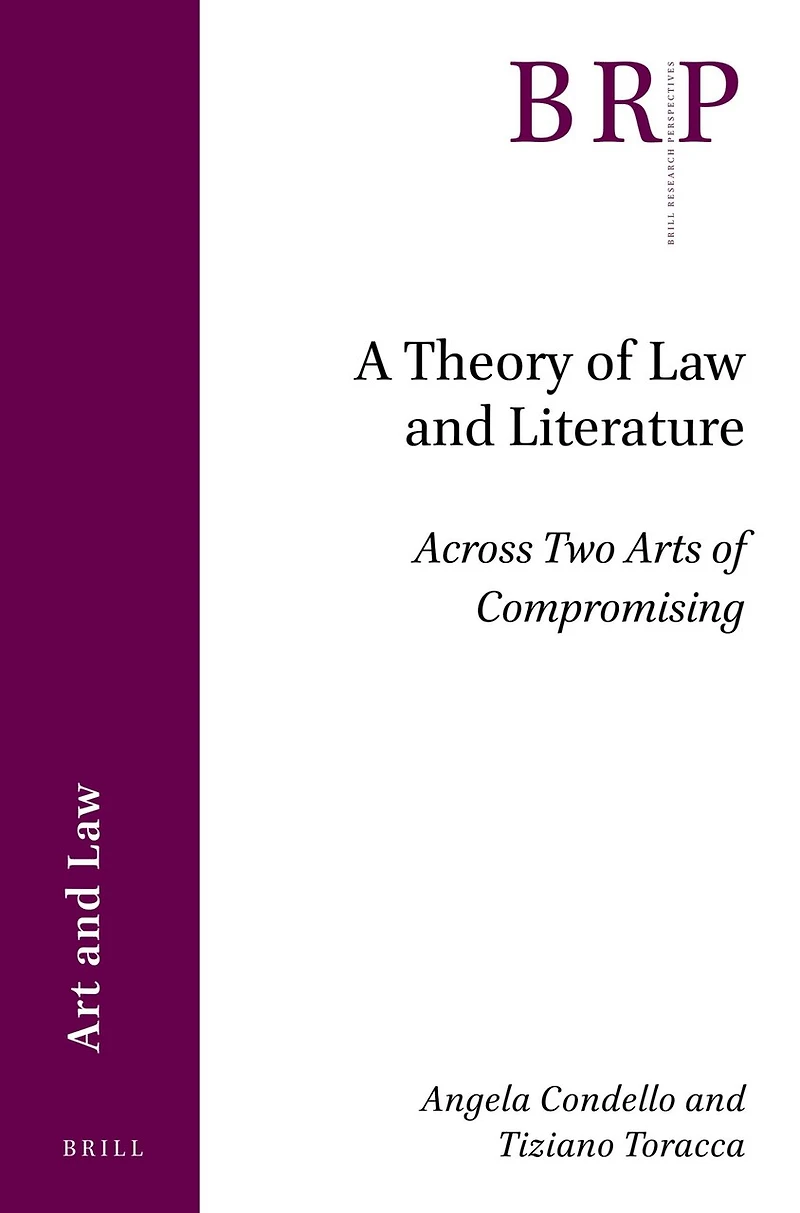
A Theory of Law and Literature: Across Two Arts of Compromising
Current price: $122.99

A Theory of Law and Literature: Across Two Arts of Compromising
Current price: $122.99
Loading Inventory...
Size: Paperback
*Product information may vary - to confirm product availability, pricing, shipping and return information please contact Indigo
In the present work, a legal philosopher (Angela Condello) and a literaray scholar (Tiziano Toracca) develop the idea that a comparison between law and literature must be framed starting from the modes in which law and literature function . In this sense, they read law and literature as arts of compromising characterized by an analogous and yet, at the same time, profoundly different structure. Both, in fact, mediate conflicts between norms and transgressions, and more precisely between a principle of normativity (repression), on the one hand; and a principle of counternormativity (repressed), on the other hand. Through a progression in three steps, aimed at clarifying some peculiarities of law (1) and literature (2), by referring to examples of their interaction (3), the authors finally sketch some relevant hypotheses on why a placement across these two arts of compromising suggests some theoretical itineraries on their threshold.
In the present work, a legal philosopher (Angela Condello) and a literaray scholar (Tiziano Toracca) develop the idea that a comparison between law and literature must be framed starting from the modes in which law and literature function . In this sense, they read law and literature as arts of compromising characterized by an analogous and yet, at the same time, profoundly different structure. Both, in fact, mediate conflicts between norms and transgressions, and more precisely between a principle of normativity (repression), on the one hand; and a principle of counternormativity (repressed), on the other hand. Through a progression in three steps, aimed at clarifying some peculiarities of law (1) and literature (2), by referring to examples of their interaction (3), the authors finally sketch some relevant hypotheses on why a placement across these two arts of compromising suggests some theoretical itineraries on their threshold.
You May Also Like









More About Indigo at Erin Mills Town Centre
The largest book retailer in Canada also offers toys, music, home décor, gifts and lifestyle products. What's Inside...Books, Magazines, CD’s and DVD’s, Toys and Gifts, Home Accents, Electronics, Baby’s and Children’s Section, Bath and Body, Kitchen and Bedroom, Stationary Located outside in the exterior plaza.
5015 Glen Erin Dr, Mississauga, ON L5M 0R7, Canada
Find Indigo at Erin Mills Town Centre in Mississauga ON
Visit Indigo at Erin Mills Town Centre in Mississauga ON