

GIVE THE PERFECT GIFT
Erin Mills Town Centre Gift Cards are the perfect choice for your gift giving needs.Purchase gift cards at kiosks near the food court or centre court, at Guest Services, or click below to purchase online.PURCHASE HEREHome
A Victory for Democracy: NAACP v. Alabama and Freedom of Association
Indigo
Loading Inventory...
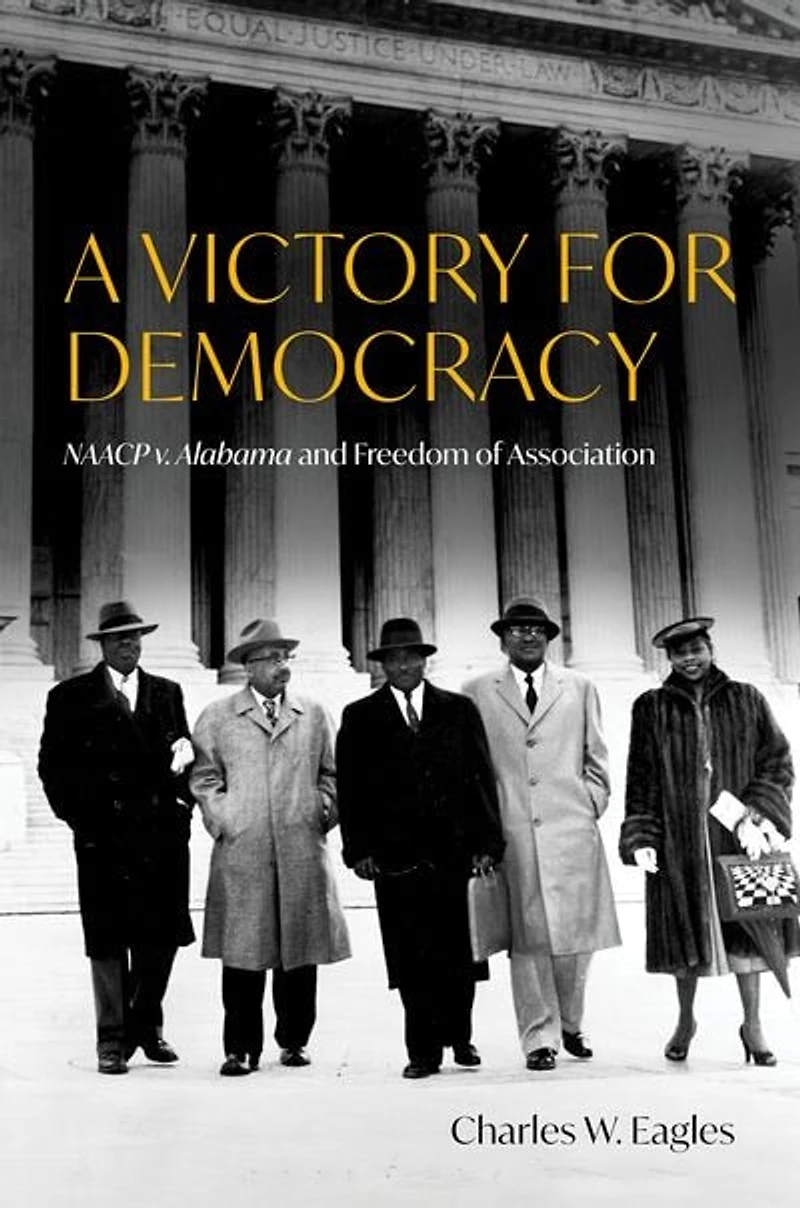
A Victory for Democracy: NAACP v. Alabama and Freedom of Association
Current price: $44.76

A Victory for Democracy: NAACP v. Alabama and Freedom of Association
Current price: $44.76
Loading Inventory...
Size: Hardcover
*Product information may vary - to confirm product availability, pricing, shipping and return information please contact Indigo
In 1956, six months after the start of the Montgomery bus boycott, Alabama Attorney General John Patterson obtained from state circuit court judge Walter B. Jones, an ardent defender of segregation, an order banning the National Association for the Advancement of Colored People (NAACP). On appeal, the case led to the U.S. Supreme Court's declaration of the new constitutional right to freedom of association, the right of individuals to form groups and promote ideas without government interference: Martin Luther King Jr. called it "a victory for democracy." Charles W. Eagles examines the landmark decision in NAACP v. Alabama (1958) that the Court based on the First Amendment's freedoms of speech and assembly and the Fourteenth Amendment's right to due process. Drawing on NAACP papers, court records, the Justices' papers, newspapers, and other court decisions, Eagles follows the case from its origins in thirty years of courageous local NAACP activism and in Alabama white racist politics through the pathbreaking Supreme Court decision. Alabama political and judicial officials fought the 1958 decision with procedural traps in state courts, arbitrary court delays, and three more appeals to the U.S. Supreme Court until the court in 1964 finally ordered Alabama to allow the NAACP, after an eight-year absence, to register and operate in the state. A Victory for Democracy lucidly explains the legal procedures and constitutional questions in the case, depicts the lawyers for the NAACP and for the state of Alabama, and analyzes the Supreme Court deliberations behind Justice John M. Harlan's decisions. This landmark case establishing freedom of association had major unexpected implications for subsequent cases involving birth control, women in the Jaycees, gay men in the Boy Scouts, and the privacy of political contributions.
In 1956, six months after the start of the Montgomery bus boycott, Alabama Attorney General John Patterson obtained from state circuit court judge Walter B. Jones, an ardent defender of segregation, an order banning the National Association for the Advancement of Colored People (NAACP). On appeal, the case led to the U.S. Supreme Court's declaration of the new constitutional right to freedom of association, the right of individuals to form groups and promote ideas without government interference: Martin Luther King Jr. called it "a victory for democracy." Charles W. Eagles examines the landmark decision in NAACP v. Alabama (1958) that the Court based on the First Amendment's freedoms of speech and assembly and the Fourteenth Amendment's right to due process. Drawing on NAACP papers, court records, the Justices' papers, newspapers, and other court decisions, Eagles follows the case from its origins in thirty years of courageous local NAACP activism and in Alabama white racist politics through the pathbreaking Supreme Court decision. Alabama political and judicial officials fought the 1958 decision with procedural traps in state courts, arbitrary court delays, and three more appeals to the U.S. Supreme Court until the court in 1964 finally ordered Alabama to allow the NAACP, after an eight-year absence, to register and operate in the state. A Victory for Democracy lucidly explains the legal procedures and constitutional questions in the case, depicts the lawyers for the NAACP and for the state of Alabama, and analyzes the Supreme Court deliberations behind Justice John M. Harlan's decisions. This landmark case establishing freedom of association had major unexpected implications for subsequent cases involving birth control, women in the Jaycees, gay men in the Boy Scouts, and the privacy of political contributions.
You May Also Like









More About Indigo at Erin Mills Town Centre
The largest book retailer in Canada also offers toys, music, home décor, gifts and lifestyle products. What's Inside...Books, Magazines, CD’s and DVD’s, Toys and Gifts, Home Accents, Electronics, Baby’s and Children’s Section, Bath and Body, Kitchen and Bedroom, Stationary Located outside in the exterior plaza.
5015 Glen Erin Dr, Mississauga, ON L5M 0R7, Canada
Find Indigo at Erin Mills Town Centre in Mississauga ON
Visit Indigo at Erin Mills Town Centre in Mississauga ON