

GIVE THE PERFECT GIFT
Erin Mills Town Centre Gift Cards are the perfect choice for your gift giving needs.Purchase gift cards at kiosks near the food court or centre court, at Guest Services, or click below to purchase online.PURCHASE HEREHome
Abraham Bar Hiyya on Time, History, Exile and Redemption: An Analysis of Megillat ha-Megalleh
Indigo
Loading Inventory...
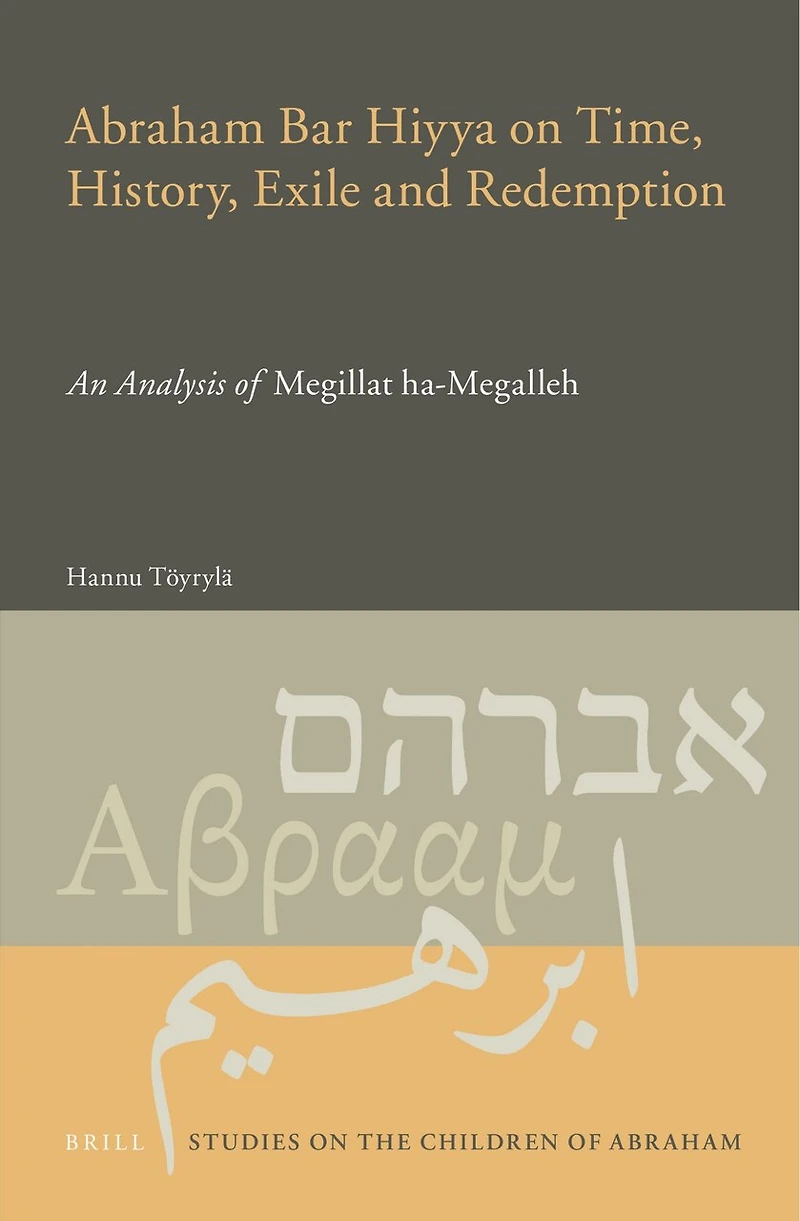
Abraham Bar Hiyya on Time, History, Exile and Redemption: An Analysis of Megillat ha-Megalleh
Current price: $375.99

Abraham Bar Hiyya on Time, History, Exile and Redemption: An Analysis of Megillat ha-Megalleh
Current price: $375.99
Loading Inventory...
Size: Hardcover
*Product information may vary - to confirm product availability, pricing, shipping and return information please contact Indigo
An analysis of Megillat ha-Megalleh by Abraham Bar Hiyya (12th c.) as a complete text in its historical and cultural context, showing that the work - written at a time when Jews increasingly came under Christian influence and dominance – presents a coherent argument for the continuing validity of the Jewish hope for redemption. In his argument, Bar Hiyya presents a view of history, the course of which was planted by God in creation, which runs inevitably towards the future redemption of the Jews. Bar Hiyya uses philosophical, scientific, biblical and astrological material to support his argument, and several times makes use of originally Christian ideas, which he inverts to suit his argument.
An analysis of Megillat ha-Megalleh by Abraham Bar Hiyya (12th c.) as a complete text in its historical and cultural context, showing that the work - written at a time when Jews increasingly came under Christian influence and dominance – presents a coherent argument for the continuing validity of the Jewish hope for redemption. In his argument, Bar Hiyya presents a view of history, the course of which was planted by God in creation, which runs inevitably towards the future redemption of the Jews. Bar Hiyya uses philosophical, scientific, biblical and astrological material to support his argument, and several times makes use of originally Christian ideas, which he inverts to suit his argument.
You May Also Like








More About Indigo at Erin Mills Town Centre
The largest book retailer in Canada also offers toys, music, home décor, gifts and lifestyle products. What's Inside...Books, Magazines, CD’s and DVD’s, Toys and Gifts, Home Accents, Electronics, Baby’s and Children’s Section, Bath and Body, Kitchen and Bedroom, Stationary Located outside in the exterior plaza.
5015 Glen Erin Dr, Mississauga, ON L5M 0R7, Canada
Find Indigo at Erin Mills Town Centre in Mississauga ON
Visit Indigo at Erin Mills Town Centre in Mississauga ON