

GIVE THE PERFECT GIFT
Erin Mills Town Centre Gift Cards are the perfect choice for your gift giving needs.Purchase gift cards at kiosks near the food court or centre court, at Guest Services, or click below to purchase online.PURCHASE HEREHome
Across the Top of the World: The Quest for the Northwest Passage
Indigo
Loading Inventory...
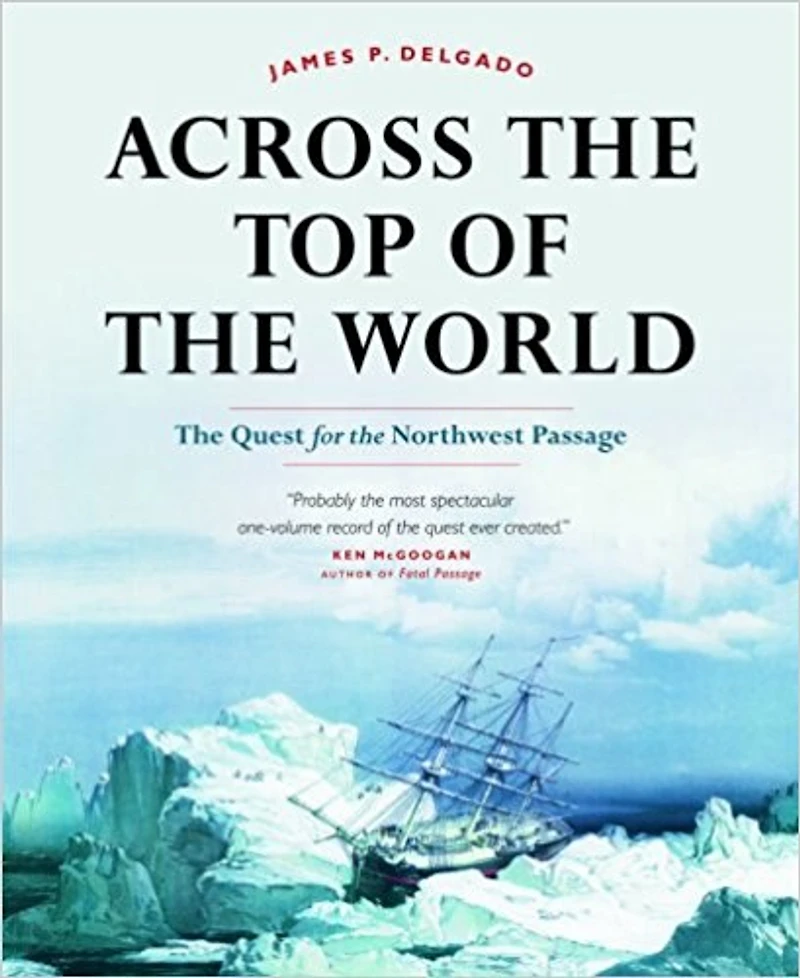
Across the Top of the World: The Quest for the Northwest Passage
Current price: $9.95

Across the Top of the World: The Quest for the Northwest Passage
Current price: $9.95
Loading Inventory...
Size: Paperback
*Product information may vary - to confirm product availability, pricing, shipping and return information please contact Indigo
Across the Top of the World is a tale that rivals the story of Antarctic exploration for heroism, drama and tragedy. In the great age of Exploration, the quest for the fabled Northwest Passage lured bold adventurers to the icy Arctic. They risked and sometimes lost their lives in search of a sea route across the top of the world, connecting Europe with Asia and its riches. This spellbinding saga of Arctic exploration is brought to life by quotations from grim first-hand accounts and by dramatic images, ICC colour and 100 black and white. These paintings, engravings and photos of the intrepid men and their ships, as well as of relics and archaeological sites, provide a poignant and compelling link with the past. Landscapes and seascapes of the harsh yet beautiful Arctic illustrate the challenges that faced explorers. The Inuit, the native people of the Arctic, lived in isolation until Europeans began to arrive in the sixteenth century, and relations were not always cordial. For centuries, nations sent out expedition after expedition to search for the Northwest Passage, each one suffering extreme hardship. The most tragic was the mysterious loss of Sir John Franklin, his 128 men and two ships in the 1840s. Attempts to sail the dangerous, icy maze of the passage ended in defeat until Norwegian explorer Roald Amundsen succeeded in 1903-1906. Then, in the 1940s, to assert Canada's sovereignty in the Arctic, the Royal Canadian Mounted Police schooner, St. Koch, became the second vessel to conquer the passage. This set the stage for the modern phase of Arctic exploration utilizing icebreakers and American nuclear-powered submarines. James Delgado writes with the passion and authority of an underwater archaeologist and historian who has taken part in Arctic expeditions.
Across the Top of the World is a tale that rivals the story of Antarctic exploration for heroism, drama and tragedy. In the great age of Exploration, the quest for the fabled Northwest Passage lured bold adventurers to the icy Arctic. They risked and sometimes lost their lives in search of a sea route across the top of the world, connecting Europe with Asia and its riches. This spellbinding saga of Arctic exploration is brought to life by quotations from grim first-hand accounts and by dramatic images, ICC colour and 100 black and white. These paintings, engravings and photos of the intrepid men and their ships, as well as of relics and archaeological sites, provide a poignant and compelling link with the past. Landscapes and seascapes of the harsh yet beautiful Arctic illustrate the challenges that faced explorers. The Inuit, the native people of the Arctic, lived in isolation until Europeans began to arrive in the sixteenth century, and relations were not always cordial. For centuries, nations sent out expedition after expedition to search for the Northwest Passage, each one suffering extreme hardship. The most tragic was the mysterious loss of Sir John Franklin, his 128 men and two ships in the 1840s. Attempts to sail the dangerous, icy maze of the passage ended in defeat until Norwegian explorer Roald Amundsen succeeded in 1903-1906. Then, in the 1940s, to assert Canada's sovereignty in the Arctic, the Royal Canadian Mounted Police schooner, St. Koch, became the second vessel to conquer the passage. This set the stage for the modern phase of Arctic exploration utilizing icebreakers and American nuclear-powered submarines. James Delgado writes with the passion and authority of an underwater archaeologist and historian who has taken part in Arctic expeditions.
You May Also Like













More About Indigo at Erin Mills Town Centre
The largest book retailer in Canada also offers toys, music, home décor, gifts and lifestyle products. What's Inside...Books, Magazines, CD’s and DVD’s, Toys and Gifts, Home Accents, Electronics, Baby’s and Children’s Section, Bath and Body, Kitchen and Bedroom, Stationary Located outside in the exterior plaza.
5015 Glen Erin Dr, Mississauga, ON L5M 0R7, Canada
Find Indigo at Erin Mills Town Centre in Mississauga ON
Visit Indigo at Erin Mills Town Centre in Mississauga ON