

GIVE THE PERFECT GIFT
Erin Mills Town Centre Gift Cards are the perfect choice for your gift giving needs.Purchase gift cards at kiosks near the food court or centre court, at Guest Services, or click below to purchase online.PURCHASE HEREHome
Adam Smith: A Very Short Introduction
Indigo
Loading Inventory...
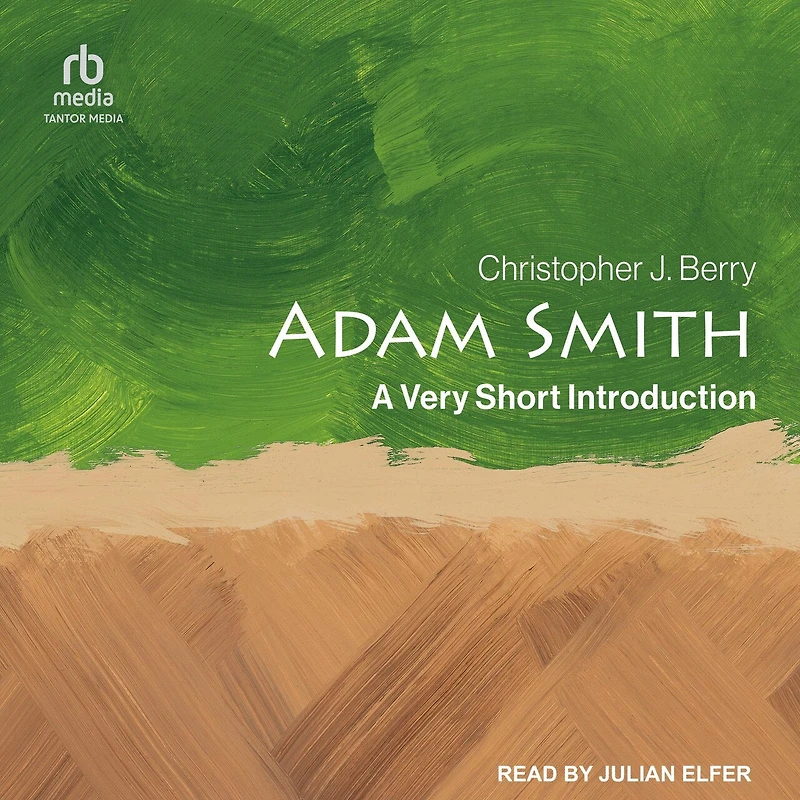
Adam Smith: A Very Short Introduction
Current price: $42.95

Adam Smith: A Very Short Introduction
Current price: $42.95
Loading Inventory...
Size: Audiobook (2022 A)
*Product information may vary - to confirm product availability, pricing, shipping and return information please contact Indigo
In 1776 Adam Smith (1723-90) wrote The Wealth of Nations , a book so foundational that it has led to him being called the "father of economics." Today he is associated with the promotion of self-interest, a defense of greed and a criticism of any governmental "interference" in market transactions which, if left to the "invisible hand," will produce prosperity and liberty. Yet if Smith is actually read these associations are more a caricature than a faithful portrait. In this Very Short Introduction , Christopher Berry offers a balanced and nuanced view of this seminal thinker, embedding his fierce defense of free trade, competition, and assault on special interests in contemporary European history, politics, and philosophy. As Berry explores, Smith was more than an economist. In addition to his two major works he also wrote a pioneering study of the history of astronomy as an illustration of the motivations that drive humans to seek answers to questions. He produced, again derived from his Glasgow classroom, an analysis of the development of grammar and language. As Christopher Berry shows, Adam Smith was no narrow thinker, but rather one who produced not only one of the greatest books in the history of social science, but also a wide-ranging body of work that remains significant today.
In 1776 Adam Smith (1723-90) wrote The Wealth of Nations , a book so foundational that it has led to him being called the "father of economics." Today he is associated with the promotion of self-interest, a defense of greed and a criticism of any governmental "interference" in market transactions which, if left to the "invisible hand," will produce prosperity and liberty. Yet if Smith is actually read these associations are more a caricature than a faithful portrait. In this Very Short Introduction , Christopher Berry offers a balanced and nuanced view of this seminal thinker, embedding his fierce defense of free trade, competition, and assault on special interests in contemporary European history, politics, and philosophy. As Berry explores, Smith was more than an economist. In addition to his two major works he also wrote a pioneering study of the history of astronomy as an illustration of the motivations that drive humans to seek answers to questions. He produced, again derived from his Glasgow classroom, an analysis of the development of grammar and language. As Christopher Berry shows, Adam Smith was no narrow thinker, but rather one who produced not only one of the greatest books in the history of social science, but also a wide-ranging body of work that remains significant today.
You May Also Like







More About Indigo at Erin Mills Town Centre
The largest book retailer in Canada also offers toys, music, home décor, gifts and lifestyle products. What's Inside...Books, Magazines, CD’s and DVD’s, Toys and Gifts, Home Accents, Electronics, Baby’s and Children’s Section, Bath and Body, Kitchen and Bedroom, Stationary Located outside in the exterior plaza.
5015 Glen Erin Dr, Mississauga, ON L5M 0R7, Canada
Find Indigo at Erin Mills Town Centre in Mississauga ON
Visit Indigo at Erin Mills Town Centre in Mississauga ON