

GIVE THE PERFECT GIFT
Erin Mills Town Centre Gift Cards are the perfect choice for your gift giving needs.Purchase gift cards at kiosks near the food court or centre court, at Guest Services, or click below to purchase online.PURCHASE HEREHome
Augustine, Rahner, and Trinitarian Exegesis: An Exploration of Augustine's Exegesis Scripture as a Foundation for Rahner's Project Rule
Indigo
Loading Inventory...
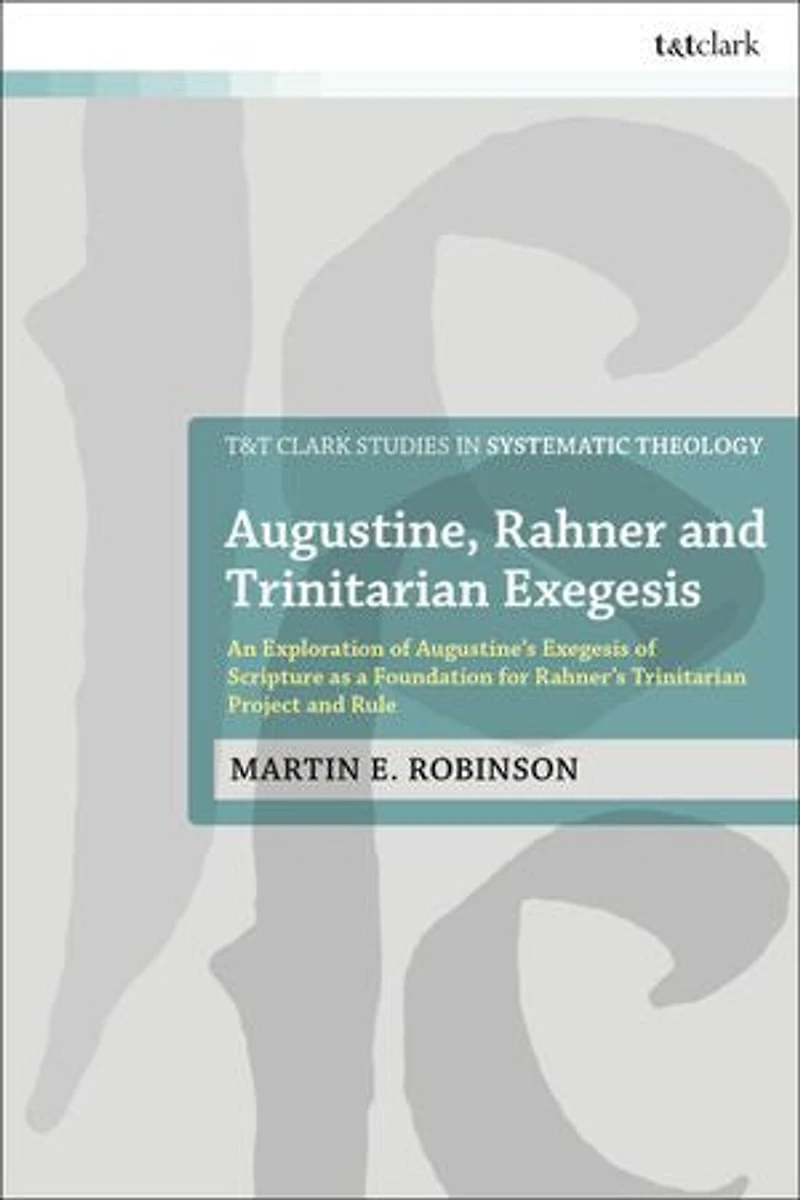

Augustine, Rahner, and Trinitarian Exegesis: An Exploration of Augustine's Exegesis Scripture as a Foundation for Rahner's Project Rule
Current price: $42.19
Original price: $52.65

Augustine, Rahner, and Trinitarian Exegesis: An Exploration of Augustine's Exegesis Scripture as a Foundation for Rahner's Project Rule
Current price: $42.19
Original price: $52.65
Loading Inventory...
Size: Kobo eBook
*Product information may vary - to confirm product availability, pricing, shipping and return information please contact Indigo
Through close and sustained analysis of Augustine's exegesis of Scripture, Robinson argues that Augustine's Trinitarian exegesis offers significant-though not inexhaustible-support for Rahner's Trinitarian project and, particularly, his Grundaxiom . Firstly, he posits that Augustine provides weighty, biblically rich, support for Rahner's Trinitarian agenda at exactly those points where Rahner is explicitly critical of Augustine and the "Augustinian-Western tradition", overcoming various weaknesses detected in the later tradition, and pre-empting many of Rahner's later solutions. Secondly and consequently, Robinson suggests that Augustine offers a scriptural reading strategy that addresses the major exegetical difficulties perceived to emerge from Rahner's Rule. Thus, in Augustine's exegesis of Scripture, the Augustinian-Western tradition has always had the resources at its disposal to avoid or address the most poignant criticisms levelled both by and at Rahner.
Through close and sustained analysis of Augustine's exegesis of Scripture, Robinson argues that Augustine's Trinitarian exegesis offers significant-though not inexhaustible-support for Rahner's Trinitarian project and, particularly, his Grundaxiom . Firstly, he posits that Augustine provides weighty, biblically rich, support for Rahner's Trinitarian agenda at exactly those points where Rahner is explicitly critical of Augustine and the "Augustinian-Western tradition", overcoming various weaknesses detected in the later tradition, and pre-empting many of Rahner's later solutions. Secondly and consequently, Robinson suggests that Augustine offers a scriptural reading strategy that addresses the major exegetical difficulties perceived to emerge from Rahner's Rule. Thus, in Augustine's exegesis of Scripture, the Augustinian-Western tradition has always had the resources at its disposal to avoid or address the most poignant criticisms levelled both by and at Rahner.
You May Also Like








More About Indigo at Erin Mills Town Centre
The largest book retailer in Canada also offers toys, music, home décor, gifts and lifestyle products. What's Inside...Books, Magazines, CD’s and DVD’s, Toys and Gifts, Home Accents, Electronics, Baby’s and Children’s Section, Bath and Body, Kitchen and Bedroom, Stationary Located outside in the exterior plaza.
5015 Glen Erin Dr, Mississauga, ON L5M 0R7, Canada
Find Indigo at Erin Mills Town Centre in Mississauga ON
Visit Indigo at Erin Mills Town Centre in Mississauga ON