

GIVE THE PERFECT GIFT
Erin Mills Town Centre Gift Cards are the perfect choice for your gift giving needs.Purchase gift cards at kiosks near the food court or centre court, at Guest Services, or click below to purchase online.PURCHASE HEREHome
Barbarous Antiquity: Reorienting The Past Poetry Of Early Modern England
Indigo
Loading Inventory...
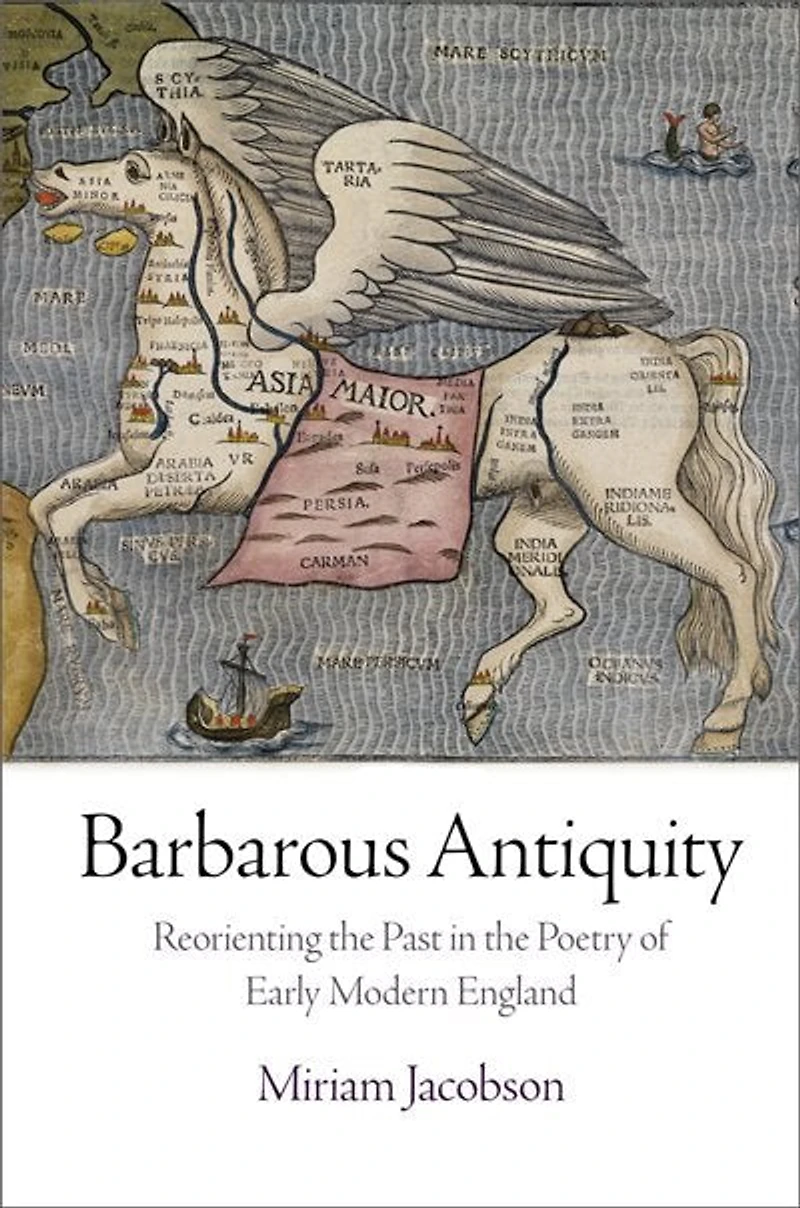
Barbarous Antiquity: Reorienting The Past Poetry Of Early Modern England
Current price: $103.99

Barbarous Antiquity: Reorienting The Past Poetry Of Early Modern England
Current price: $103.99
Loading Inventory...
Size: Hardcover
*Product information may vary - to confirm product availability, pricing, shipping and return information please contact Indigo
In the late sixteenth century, English merchants and diplomats ventured into the eastern Mediterranean to trade directly with the Turks, the keepers of an important emerging empire in the Western Hemisphere, and these initial exchanges had a profound effect on English literature. While the theater investigated representations of religious and ethnic identity in its portrayals of Turks and Muslims, poetry, Miriam Jacobson argues, explored East-West exchanges primarily through language and the material text. Just as English markets were flooded with exotic goods, so was the English language awash in freshly imported words describing items such as sugar, jewels, plants, spices, paints, and dyes, as well as technological advancements such as the use of Arabic numerals in arithmetic and the concept of zero.
Even as these Eastern words and imports found their way into English poetry, poets wrestled with paying homage to classical authors and styles. In Barbarous Antiquity , Jacobson reveals how poems adapted from Latin or Greek sources and set in the ancient classical world were now reoriented to reflect a contemporary, mercantile Ottoman landscape. As Renaissance English writers including Shakespeare, Jonson, Marlowe, and Chapman weighed their reliance on classical poetic models against contemporary cultural exchanges, a new form of poetry developed, positioned at the crossroads of East and West, ancient and modern. Building each chapter around the intersection of an Eastern import and a classical model, Jacobson shows how Renaissance English poetry not only reconstructed the classical past but offered a critique of that very enterprise with a new set of words and metaphors imported from the East.
In the late sixteenth century, English merchants and diplomats ventured into the eastern Mediterranean to trade directly with the Turks, the keepers of an important emerging empire in the Western Hemisphere, and these initial exchanges had a profound effect on English literature. While the theater investigated representations of religious and ethnic identity in its portrayals of Turks and Muslims, poetry, Miriam Jacobson argues, explored East-West exchanges primarily through language and the material text. Just as English markets were flooded with exotic goods, so was the English language awash in freshly imported words describing items such as sugar, jewels, plants, spices, paints, and dyes, as well as technological advancements such as the use of Arabic numerals in arithmetic and the concept of zero.
Even as these Eastern words and imports found their way into English poetry, poets wrestled with paying homage to classical authors and styles. In Barbarous Antiquity , Jacobson reveals how poems adapted from Latin or Greek sources and set in the ancient classical world were now reoriented to reflect a contemporary, mercantile Ottoman landscape. As Renaissance English writers including Shakespeare, Jonson, Marlowe, and Chapman weighed their reliance on classical poetic models against contemporary cultural exchanges, a new form of poetry developed, positioned at the crossroads of East and West, ancient and modern. Building each chapter around the intersection of an Eastern import and a classical model, Jacobson shows how Renaissance English poetry not only reconstructed the classical past but offered a critique of that very enterprise with a new set of words and metaphors imported from the East.
You May Also Like







More About Indigo at Erin Mills Town Centre
The largest book retailer in Canada also offers toys, music, home décor, gifts and lifestyle products. What's Inside...Books, Magazines, CD’s and DVD’s, Toys and Gifts, Home Accents, Electronics, Baby’s and Children’s Section, Bath and Body, Kitchen and Bedroom, Stationary Located outside in the exterior plaza.
5015 Glen Erin Dr, Mississauga, ON L5M 0R7, Canada
Find Indigo at Erin Mills Town Centre in Mississauga ON
Visit Indigo at Erin Mills Town Centre in Mississauga ON