

GIVE THE PERFECT GIFT
Erin Mills Town Centre Gift Cards are the perfect choice for your gift giving needs.Purchase gift cards at kiosks near the food court or centre court, at Guest Services, or click below to purchase online.PURCHASE HEREHome
Fashioning Sixth-Century Constantinople: Text, Translation and Commentary of Book I the Buildings by Prokopios Kaisareia
Indigo
Loading Inventory...
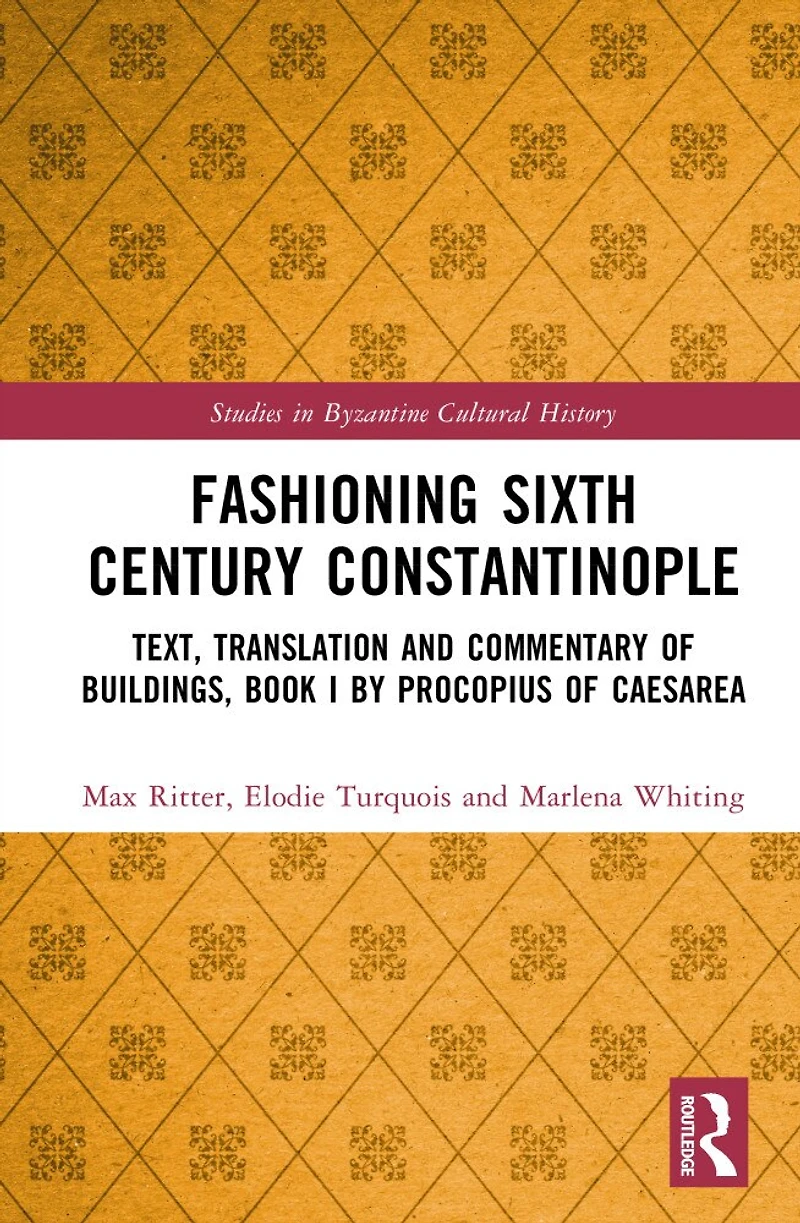
Fashioning Sixth-Century Constantinople: Text, Translation and Commentary of Book I the Buildings by Prokopios Kaisareia
Current price: $346.50

Fashioning Sixth-Century Constantinople: Text, Translation and Commentary of Book I the Buildings by Prokopios Kaisareia
Current price: $346.50
Loading Inventory...
Size: Hardcover
*Product information may vary - to confirm product availability, pricing, shipping and return information please contact Indigo
The Buildings is a sixth-century text by Prokopios of Kaisareia (Caesarea Maritima) on the building works attributed to the eastern Roman emperor Justinian I (r. 527-65 CE), extolling the virtues of good rulership through praise of architecture. Book I centres on the imperial capital Constantinople: rich in its use of rhetoric and aesthetics, it portrays the emperor as a builder-patron, but also portrays the city itself as a place of beauty and delight to its inhabitants. Several of the buildings described in Book I - such as Hagia Sophia - are extant today; they and others are also documented in a range of historical sources that allow us to compare Prokopios's account with that of his contemporaries, and to observe the legacy and changing uses of the spaces he describes into the Middle Ages. Fashioning Sixth-Century Constantinople presents an all-new English translation of Book I paired with a revised edition of the Greek text. It is accompanied by a detailed interdisciplinary commentary, informed by the respective disciplines of philology, history, archaeology and art history, but bringing a new perspective through cross-disciplinary collaboration, especially on points of technical and topographical descriptions, aiming at the most comprehensive and up-to-date commentary of the text. This book will appeal to scholars and students of Byzantine literature, history, art and archaeology, as well as those interested in the florescence of Byzantine Constantinople. This volume originates in the project 'Procopius and the Language of Buildings' (2018-2022), funded by the Deutsche Forschungsgemeinschaft and hosted by the Universities of Mainz and Halle-Wittenberg.
The Buildings is a sixth-century text by Prokopios of Kaisareia (Caesarea Maritima) on the building works attributed to the eastern Roman emperor Justinian I (r. 527-65 CE), extolling the virtues of good rulership through praise of architecture. Book I centres on the imperial capital Constantinople: rich in its use of rhetoric and aesthetics, it portrays the emperor as a builder-patron, but also portrays the city itself as a place of beauty and delight to its inhabitants. Several of the buildings described in Book I - such as Hagia Sophia - are extant today; they and others are also documented in a range of historical sources that allow us to compare Prokopios's account with that of his contemporaries, and to observe the legacy and changing uses of the spaces he describes into the Middle Ages. Fashioning Sixth-Century Constantinople presents an all-new English translation of Book I paired with a revised edition of the Greek text. It is accompanied by a detailed interdisciplinary commentary, informed by the respective disciplines of philology, history, archaeology and art history, but bringing a new perspective through cross-disciplinary collaboration, especially on points of technical and topographical descriptions, aiming at the most comprehensive and up-to-date commentary of the text. This book will appeal to scholars and students of Byzantine literature, history, art and archaeology, as well as those interested in the florescence of Byzantine Constantinople. This volume originates in the project 'Procopius and the Language of Buildings' (2018-2022), funded by the Deutsche Forschungsgemeinschaft and hosted by the Universities of Mainz and Halle-Wittenberg.
You May Also Like







More About Indigo at Erin Mills Town Centre
The largest book retailer in Canada also offers toys, music, home décor, gifts and lifestyle products. What's Inside...Books, Magazines, CD’s and DVD’s, Toys and Gifts, Home Accents, Electronics, Baby’s and Children’s Section, Bath and Body, Kitchen and Bedroom, Stationary Located outside in the exterior plaza.
5015 Glen Erin Dr, Mississauga, ON L5M 0R7, Canada
Find Indigo at Erin Mills Town Centre in Mississauga ON
Visit Indigo at Erin Mills Town Centre in Mississauga ON