

GIVE THE PERFECT GIFT
Erin Mills Town Centre Gift Cards are the perfect choice for your gift giving needs.Purchase gift cards at kiosks near the food court or centre court, at Guest Services, or click below to purchase online.PURCHASE HEREHome
The Smallpox That Killed an Empire: Disease, Collapse, and the Fall of the Aztec World
Indigo
Loading Inventory...
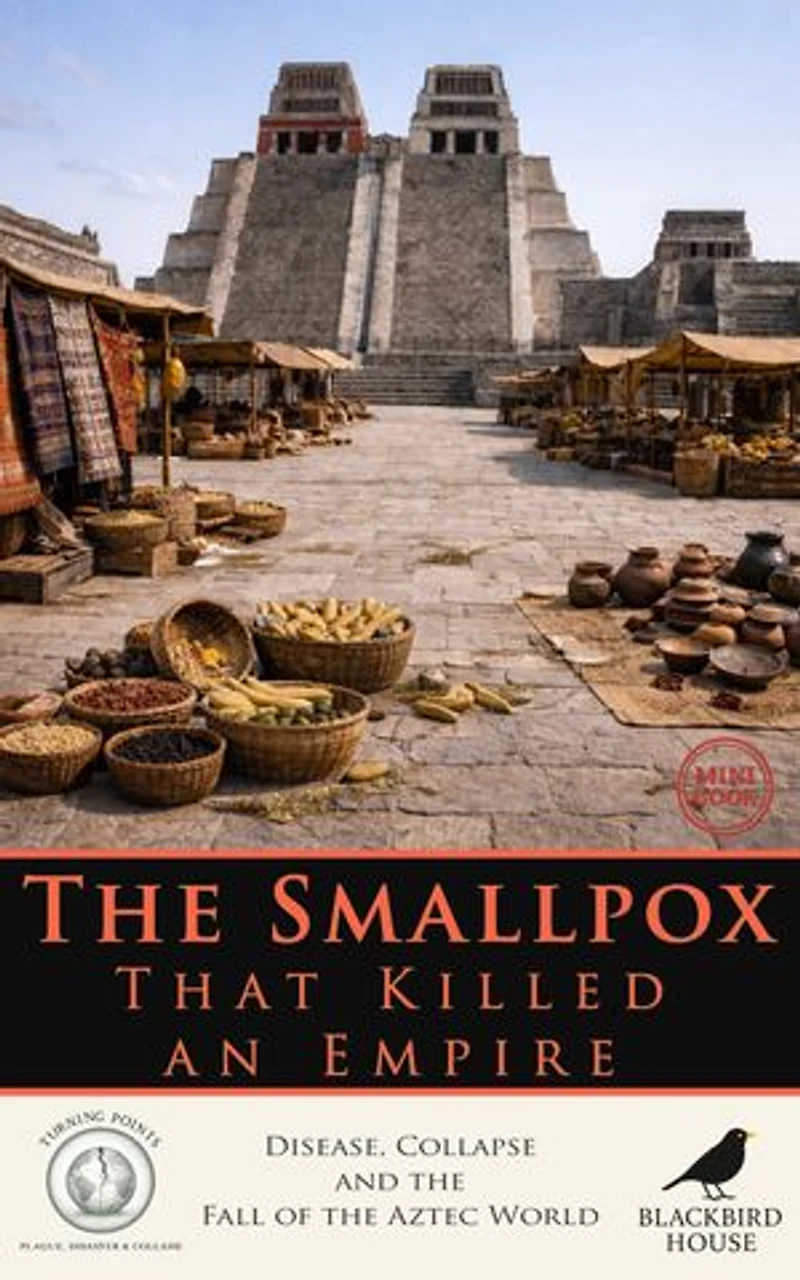
The Smallpox That Killed an Empire: Disease, Collapse, and the Fall of the Aztec World
Current price: $4.82

The Smallpox That Killed an Empire: Disease, Collapse, and the Fall of the Aztec World
Current price: $4.82
Loading Inventory...
Size: Kobo eBook
*Product information may vary - to confirm product availability, pricing, shipping and return information please contact Indigo
The Aztec Empire did not fall simply because it was defeated in battle.
It fell because it lost the ability to function.
In the early sixteenth century, Tenochtitlan stood at the center of one of the most complex political systems in the Americas. Its population was dense, its administration sophisticated, and its economy tightly organized. Yet within a remarkably short time, this imperial structure unraveled.
This book examines the decisive role of smallpox in that collapse.
Rather than retelling the conquest through battles or heroic narratives, The Smallpox That Killed an Empire focuses on how an unintended biological disaster dismantled the demographic, administrative, and social foundations of Aztec power. Smallpox was not introduced as a weapon. It arrived accidentally — and its consequences proved more destructive than any army.
Drawing on Indigenous Nahuatl accounts, early colonial chronicles, and modern historical and epidemiological research, this book explains how disease reshaped leadership, warfare, food systems, and political authority. It shows why the Aztec Empire did not merely lose a war, but lost the capacity to sustain itself as an empire.
Inside this book, you will learn:
• Why smallpox was uniquely devastating in the Aztec world
• How demographic collapse weakened imperial governance
• How disease altered warfare without replacing human agency
• Why the empire unraveled before its final military defeat
• What this case reveals about epidemics and power in world history
Written for thoughtful general readers, this book avoids sensationalism while offering a clear, evidence-based explanation of one of history’s most misunderstood collapses.
Sometimes history does not turn on victories or decisions —
but on what a society can no longer sustain.
The Aztec Empire did not fall simply because it was defeated in battle.
It fell because it lost the ability to function.
In the early sixteenth century, Tenochtitlan stood at the center of one of the most complex political systems in the Americas. Its population was dense, its administration sophisticated, and its economy tightly organized. Yet within a remarkably short time, this imperial structure unraveled.
This book examines the decisive role of smallpox in that collapse.
Rather than retelling the conquest through battles or heroic narratives, The Smallpox That Killed an Empire focuses on how an unintended biological disaster dismantled the demographic, administrative, and social foundations of Aztec power. Smallpox was not introduced as a weapon. It arrived accidentally — and its consequences proved more destructive than any army.
Drawing on Indigenous Nahuatl accounts, early colonial chronicles, and modern historical and epidemiological research, this book explains how disease reshaped leadership, warfare, food systems, and political authority. It shows why the Aztec Empire did not merely lose a war, but lost the capacity to sustain itself as an empire.
Inside this book, you will learn:
• Why smallpox was uniquely devastating in the Aztec world
• How demographic collapse weakened imperial governance
• How disease altered warfare without replacing human agency
• Why the empire unraveled before its final military defeat
• What this case reveals about epidemics and power in world history
Written for thoughtful general readers, this book avoids sensationalism while offering a clear, evidence-based explanation of one of history’s most misunderstood collapses.
Sometimes history does not turn on victories or decisions —
but on what a society can no longer sustain.
You May Also Like







More About Indigo at Erin Mills Town Centre
The largest book retailer in Canada also offers toys, music, home décor, gifts and lifestyle products. What's Inside...Books, Magazines, CD’s and DVD’s, Toys and Gifts, Home Accents, Electronics, Baby’s and Children’s Section, Bath and Body, Kitchen and Bedroom, Stationary Located outside in the exterior plaza.
5015 Glen Erin Dr, Mississauga, ON L5M 0R7, Canada
Find Indigo at Erin Mills Town Centre in Mississauga ON
Visit Indigo at Erin Mills Town Centre in Mississauga ON