

GIVE THE PERFECT GIFT
Erin Mills Town Centre Gift Cards are the perfect choice for your gift giving needs.Purchase gift cards at kiosks near the food court or centre court, at Guest Services, or click below to purchase online.PURCHASE HEREHome
100 Years of Archaeology at the University of Michigan: Essays on the Past, Present, and Future of the Discipline
Indigo
Loading Inventory...
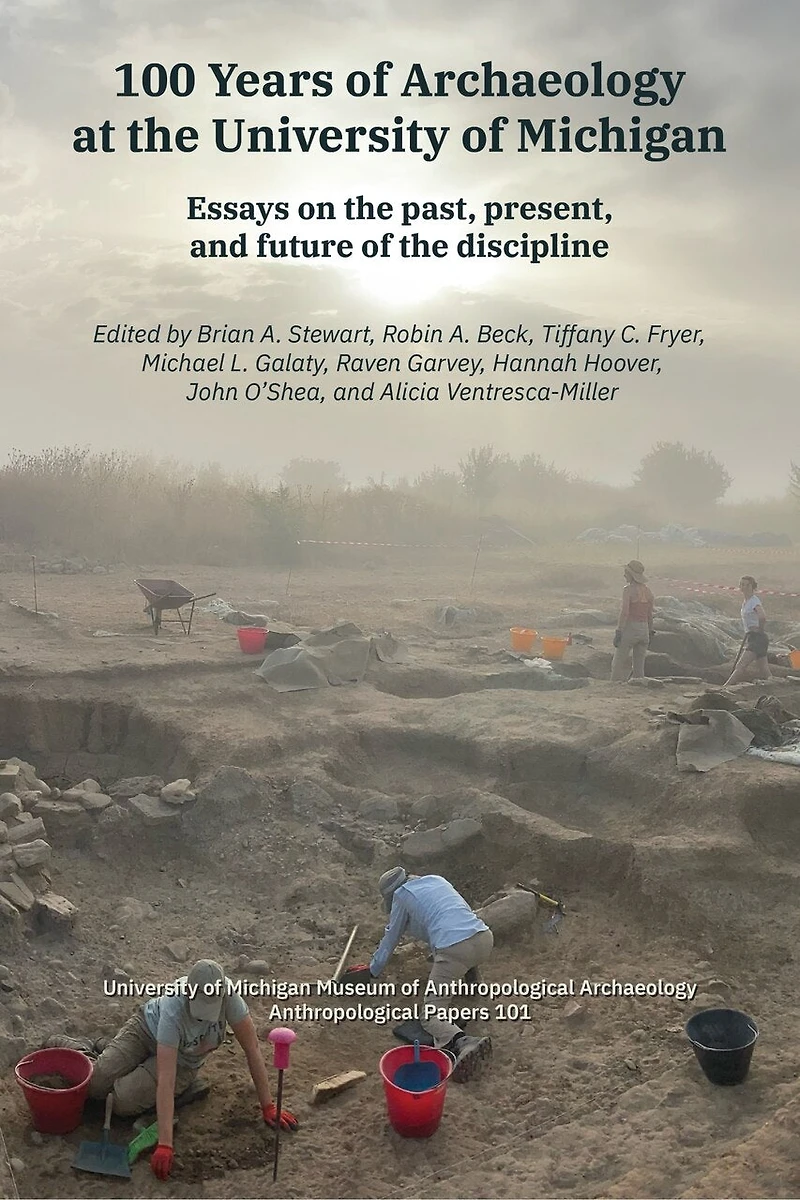
100 Years of Archaeology at the University of Michigan: Essays on the Past, Present, and Future of the Discipline
Current price: $58.50

100 Years of Archaeology at the University of Michigan: Essays on the Past, Present, and Future of the Discipline
Current price: $58.50
Loading Inventory...
Size: Paperback
*Product information may vary - to confirm product availability, pricing, shipping and return information please contact Indigo
The University of Michigan has been at the forefront of archaeological research for more than 100 years, since 1922, when the Museum of Anthropology (now the Museum of Anthropological Archaeology) was established on the Ann Arbor campus. The goal of its curators for many decades was to create a research and teaching program that emphasized methodological rigor in the analysis of archaeological materials, attempting to solve grand questions about human behavior through fieldwork, collections, and laboratory work. About fifty years ago, the Museum's emphasis shifted to developing archaeological theory when a new generation of curators with processualist leanings made Ann Arbor a testing ground for the so-called New Archaeology.
Now, archaeology stands at a crossroads. Some archaeologists refer to the death of archaeological theory. Others stake out opposed camps of generalists and particularists. At U-M, as at many other universities, the past decade has seen a new commitment to collaborative archaeology, working with descendant communities and acknowledging the discipline's roots in colonialism and extraction.
In 2022, to celebrate a century of existence, the University of Michigan Museum of Anthropological Archaeology (UMMAA) hosted an international conference to explore possibilities for a middle way: an archaeology for the next 100 years, combining humanistic and scientific approaches, which allows for both agents and systems, description and explanation, science and heritage. This volume is meant to be a snapshot of that conference and this moment in the development of the discipline. Included are most of the papers and posters presented, as well as photographs of the panels and the proceedings.
The University of Michigan has been at the forefront of archaeological research for more than 100 years, since 1922, when the Museum of Anthropology (now the Museum of Anthropological Archaeology) was established on the Ann Arbor campus. The goal of its curators for many decades was to create a research and teaching program that emphasized methodological rigor in the analysis of archaeological materials, attempting to solve grand questions about human behavior through fieldwork, collections, and laboratory work. About fifty years ago, the Museum's emphasis shifted to developing archaeological theory when a new generation of curators with processualist leanings made Ann Arbor a testing ground for the so-called New Archaeology.
Now, archaeology stands at a crossroads. Some archaeologists refer to the death of archaeological theory. Others stake out opposed camps of generalists and particularists. At U-M, as at many other universities, the past decade has seen a new commitment to collaborative archaeology, working with descendant communities and acknowledging the discipline's roots in colonialism and extraction.
In 2022, to celebrate a century of existence, the University of Michigan Museum of Anthropological Archaeology (UMMAA) hosted an international conference to explore possibilities for a middle way: an archaeology for the next 100 years, combining humanistic and scientific approaches, which allows for both agents and systems, description and explanation, science and heritage. This volume is meant to be a snapshot of that conference and this moment in the development of the discipline. Included are most of the papers and posters presented, as well as photographs of the panels and the proceedings.
You May Also Like







More About Indigo at Erin Mills Town Centre
The largest book retailer in Canada also offers toys, music, home décor, gifts and lifestyle products. What's Inside...Books, Magazines, CD’s and DVD’s, Toys and Gifts, Home Accents, Electronics, Baby’s and Children’s Section, Bath and Body, Kitchen and Bedroom, Stationary Located outside in the exterior plaza.
5015 Glen Erin Dr, Mississauga, ON L5M 0R7, Canada
Find Indigo at Erin Mills Town Centre in Mississauga ON
Visit Indigo at Erin Mills Town Centre in Mississauga ON