

GIVE THE PERFECT GIFT
Erin Mills Town Centre Gift Cards are the perfect choice for your gift giving needs.Purchase gift cards at kiosks near the food court or centre court, at Guest Services, or click below to purchase online.PURCHASE HEREHome
1494: How a Family Feud Medieval Spain Divided the World Half
Indigo
Loading Inventory...
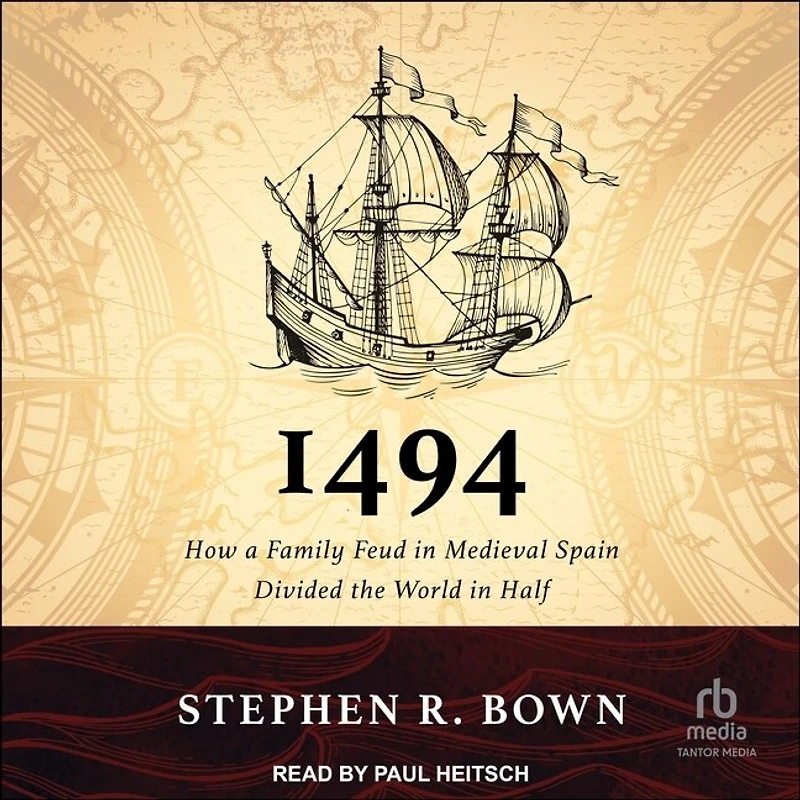
1494: How a Family Feud Medieval Spain Divided the World Half
Current price: $64.95

1494: How a Family Feud Medieval Spain Divided the World Half
Current price: $64.95
Loading Inventory...
Size: Audiobook (2022 A)
*Product information may vary - to confirm product availability, pricing, shipping and return information please contact Indigo
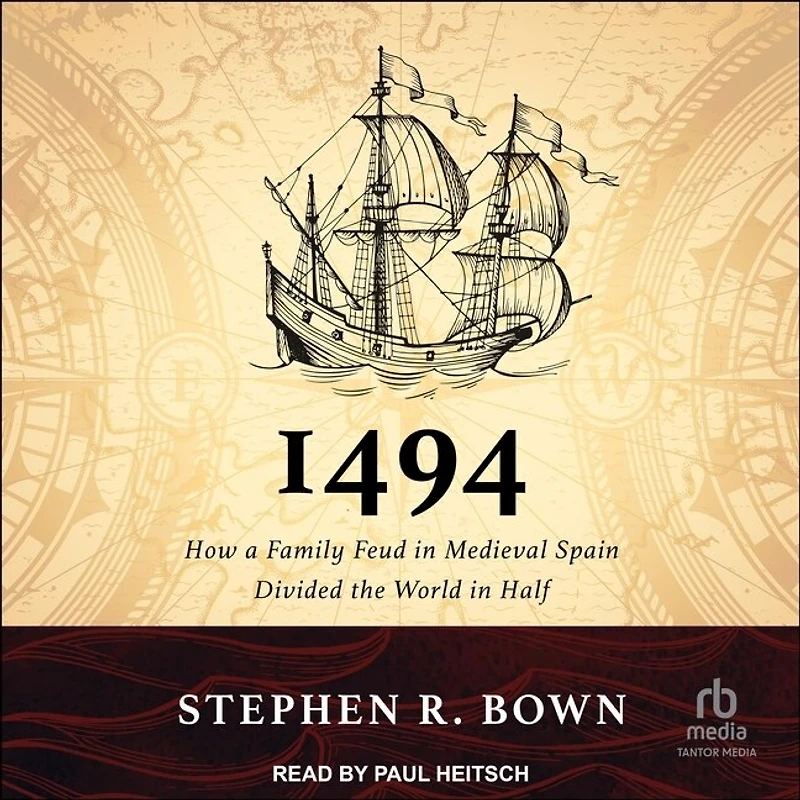
When Columbus triumphantly returned from America to Spain in 1493, his discoveries inflamed an already-smoldering conflict between Spain's renowned monarchs, Ferdinand and Isabella, and Portugal's João II. Which nation was to control the world's oceans? To quell the argument, Pope Alexander VI issued a proclamation laying the foundation for the Treaty of Tordesillas of 1494, an edict that created an imaginary line in the Atlantic Ocean dividing the entire known (and unknown) world between Spain and Portugal. Just as the world's oceans were about to be opened by Columbus's epochal voyage, the treaty sought to limit the seas to these two favored Catholic nations. The edict was to have a profound influence on world history: it propelled Spain and Portugal to superpower status, steered many other European nations on a collision course, and became the central grievance in two centuries of international espionage, piracy, and warfare. The treaty also began the fight for "the freedom of the seas"—the epic struggle to determine whether the world's oceans, and thus global commerce, would be controlled by the decree of an autocrat or be open to the ships of any nation—a distinctly modern notion, championed in the early seventeenth century by the Dutch legal theorist Hugo Grotius, whose arguments became the foundation of international law.
When Columbus triumphantly returned from America to Spain in 1493, his discoveries inflamed an already-smoldering conflict between Spain's renowned monarchs, Ferdinand and Isabella, and Portugal's João II. Which nation was to control the world's oceans? To quell the argument, Pope Alexander VI issued a proclamation laying the foundation for the Treaty of Tordesillas of 1494, an edict that created an imaginary line in the Atlantic Ocean dividing the entire known (and unknown) world between Spain and Portugal. Just as the world's oceans were about to be opened by Columbus's epochal voyage, the treaty sought to limit the seas to these two favored Catholic nations. The edict was to have a profound influence on world history: it propelled Spain and Portugal to superpower status, steered many other European nations on a collision course, and became the central grievance in two centuries of international espionage, piracy, and warfare. The treaty also began the fight for "the freedom of the seas"—the epic struggle to determine whether the world's oceans, and thus global commerce, would be controlled by the decree of an autocrat or be open to the ships of any nation—a distinctly modern notion, championed in the early seventeenth century by the Dutch legal theorist Hugo Grotius, whose arguments became the foundation of international law.
You May Also Like










More About Indigo at Erin Mills Town Centre
The largest book retailer in Canada also offers toys, music, home décor, gifts and lifestyle products. What's Inside...Books, Magazines, CD’s and DVD’s, Toys and Gifts, Home Accents, Electronics, Baby’s and Children’s Section, Bath and Body, Kitchen and Bedroom, Stationary Located outside in the exterior plaza.
5015 Glen Erin Dr, Mississauga, ON L5M 0R7, Canada
Find Indigo at Erin Mills Town Centre in Mississauga ON
Visit Indigo at Erin Mills Town Centre in Mississauga ON