

GIVE THE PERFECT GIFT
Erin Mills Town Centre Gift Cards are the perfect choice for your gift giving needs.Purchase gift cards at kiosks near the food court or centre court, at Guest Services, or click below to purchase online.PURCHASE HEREHome
36 Ways of Writing a Vietnamese Poem
Indigo
Loading Inventory...
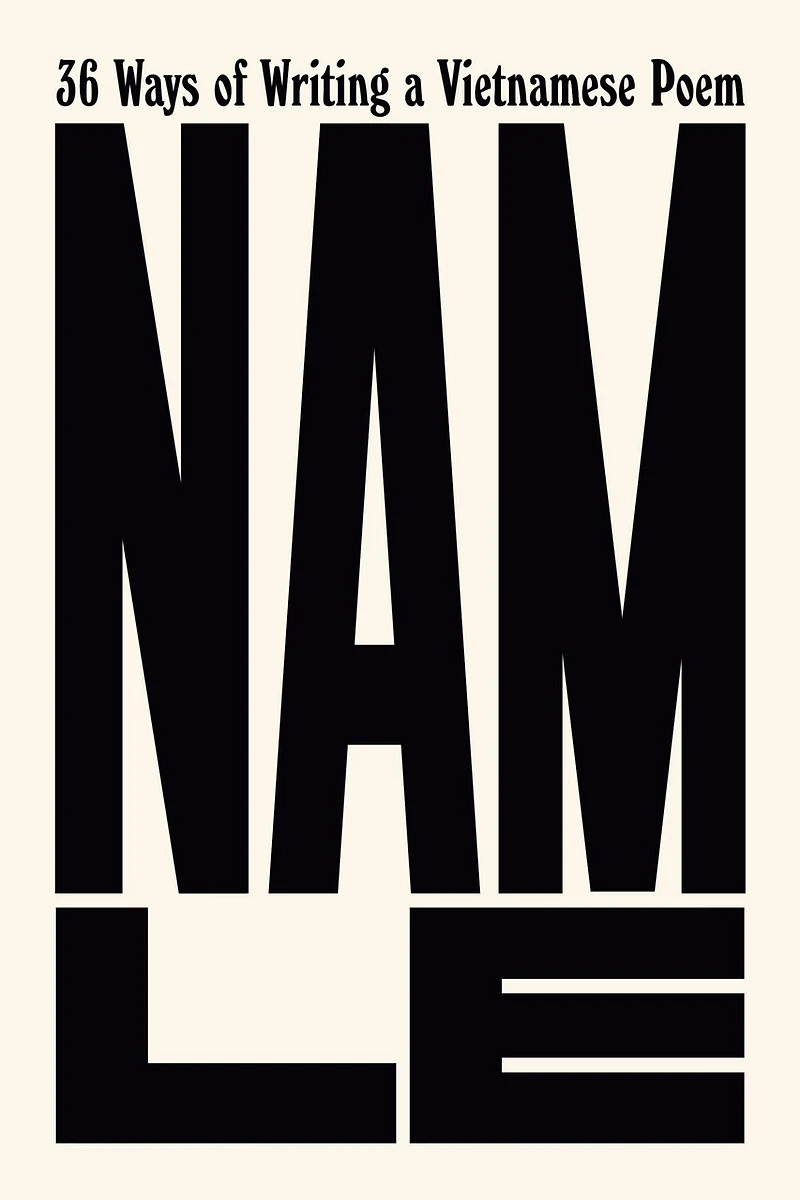
36 Ways of Writing a Vietnamese Poem
Current price: $37.99

36 Ways of Writing a Vietnamese Poem
Current price: $37.99
Loading Inventory...
Size: Hardcover
*Product information may vary - to confirm product availability, pricing, shipping and return information please contact Indigo
An explosive, devastating debut book of poetry from the acclaimed author of The Boat
In his first international release since the award-winning, best-selling The Boat, Nam Le delivers a shot across the bow with a book-length poem that honors every convention of diasporic literature—in a virtuosic array of forms and registers—before shattering the form itself.
In line with the works of Claudia Rankine, Cathy Park Hong, and Theresa Hak Kyung Cha, this book is an urgent, unsettling reckoning with identity—and the violence of identity. For Le, a Vietnamese refugee in the West, this means the assumed violence of racism, oppression, and historical trauma.
But it also means the violence of that assumption. Of being always assumed to be outside one’s home, country, culture, or language. And the complex violence—for the diasporic writer who wants to address any of this—of language itself.
Making use of multiple tones, moods, masks, and camouflages, Le’s poetic debut moves with unpredictable and destabilizing energy between the personal and the political. As self-indicting as it is scathing, hilarious as it is desperately moving, this is a singular, breakthrough book.
An explosive, devastating debut book of poetry from the acclaimed author of The Boat
In his first international release since the award-winning, best-selling The Boat, Nam Le delivers a shot across the bow with a book-length poem that honors every convention of diasporic literature—in a virtuosic array of forms and registers—before shattering the form itself.
In line with the works of Claudia Rankine, Cathy Park Hong, and Theresa Hak Kyung Cha, this book is an urgent, unsettling reckoning with identity—and the violence of identity. For Le, a Vietnamese refugee in the West, this means the assumed violence of racism, oppression, and historical trauma.
But it also means the violence of that assumption. Of being always assumed to be outside one’s home, country, culture, or language. And the complex violence—for the diasporic writer who wants to address any of this—of language itself.
Making use of multiple tones, moods, masks, and camouflages, Le’s poetic debut moves with unpredictable and destabilizing energy between the personal and the political. As self-indicting as it is scathing, hilarious as it is desperately moving, this is a singular, breakthrough book.
You May Also Like







More About Indigo at Erin Mills Town Centre
The largest book retailer in Canada also offers toys, music, home décor, gifts and lifestyle products. What's Inside...Books, Magazines, CD’s and DVD’s, Toys and Gifts, Home Accents, Electronics, Baby’s and Children’s Section, Bath and Body, Kitchen and Bedroom, Stationary Located outside in the exterior plaza.
5015 Glen Erin Dr, Mississauga, ON L5M 0R7, Canada
Find Indigo at Erin Mills Town Centre in Mississauga ON
Visit Indigo at Erin Mills Town Centre in Mississauga ON