

GIVE THE PERFECT GIFT
Erin Mills Town Centre Gift Cards are the perfect choice for your gift giving needs.Purchase gift cards at kiosks near the food court or centre court, at Guest Services, or click below to purchase online.PURCHASE HEREHome
3D Reconstruction from Multiple Images: Part 1: Principles
Indigo
Loading Inventory...
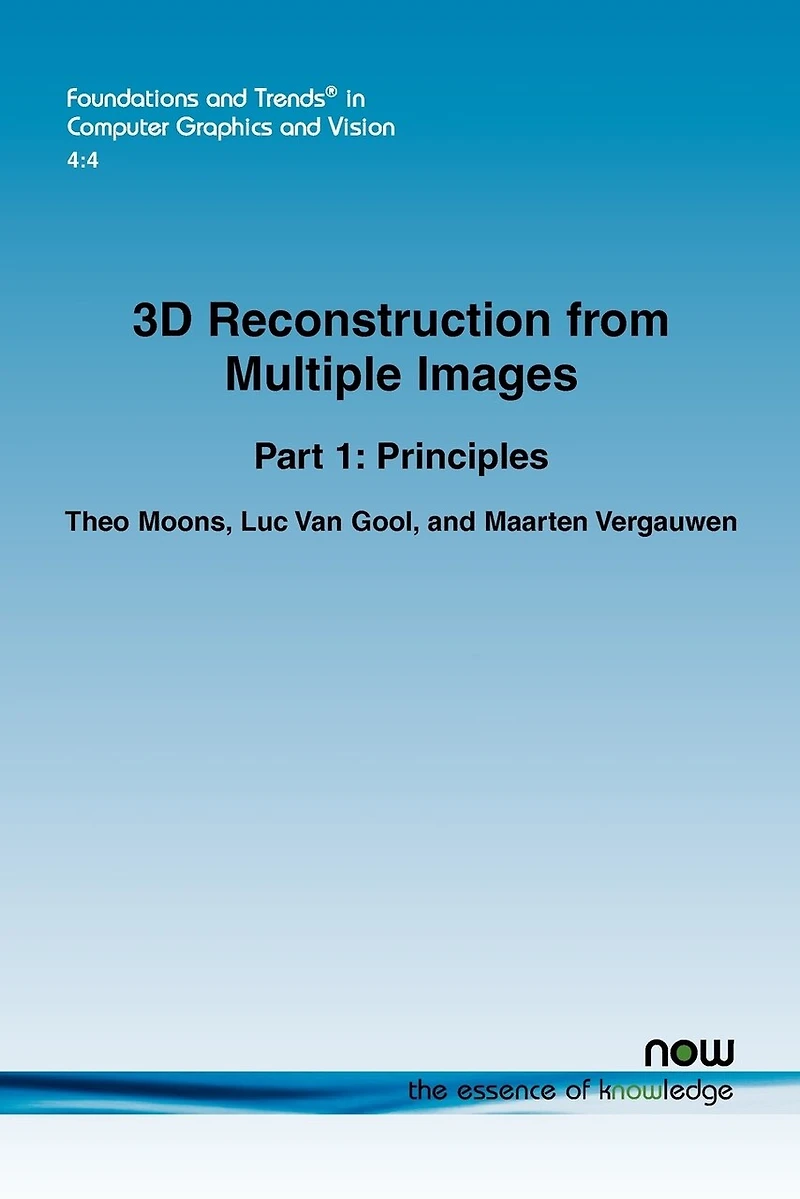
3D Reconstruction from Multiple Images: Part 1: Principles
Current price: $110.50

3D Reconstruction from Multiple Images: Part 1: Principles
Current price: $110.50
Loading Inventory...
Size: Paperback
*Product information may vary - to confirm product availability, pricing, shipping and return information please contact Indigo
The issue discusses methods to extract 3-dimensional (3D) models from plain images. In particular, the 3D information is obtained from images for which the camera parameters are unknown. The principles underlying such uncalibrated structure-from-motion methods are outlined. First, a short review of 3D acquisition technologies puts such methods in a wider context, and highlights their important advantages. Then, the actual theory behind this line of research is given. The authors have tried to keep the text maximally self-contained, therefore also avoiding to rely on an extensive knowledge of the projective concepts that usually appear in texts about self-calibration 3D methods. Rather, mathematical explanations that are more amenable to intuition are given. The explanation of the theory includes the stratification of reconstructions obtained from image pairs as well as metric reconstruction on the basis of more than 2 images combined with some additional knowledge about the cameras used. Readers who want to obtain more practical information about how to implement such uncalibrated structure-from-motion pipelines may be interested in two more Foundations and Trends issues written by the same authors. Together with this issue they can be read as a single tutorial on the subject.
The issue discusses methods to extract 3-dimensional (3D) models from plain images. In particular, the 3D information is obtained from images for which the camera parameters are unknown. The principles underlying such uncalibrated structure-from-motion methods are outlined. First, a short review of 3D acquisition technologies puts such methods in a wider context, and highlights their important advantages. Then, the actual theory behind this line of research is given. The authors have tried to keep the text maximally self-contained, therefore also avoiding to rely on an extensive knowledge of the projective concepts that usually appear in texts about self-calibration 3D methods. Rather, mathematical explanations that are more amenable to intuition are given. The explanation of the theory includes the stratification of reconstructions obtained from image pairs as well as metric reconstruction on the basis of more than 2 images combined with some additional knowledge about the cameras used. Readers who want to obtain more practical information about how to implement such uncalibrated structure-from-motion pipelines may be interested in two more Foundations and Trends issues written by the same authors. Together with this issue they can be read as a single tutorial on the subject.
You May Also Like

















More About Indigo at Erin Mills Town Centre
The largest book retailer in Canada also offers toys, music, home décor, gifts and lifestyle products. What's Inside...Books, Magazines, CD’s and DVD’s, Toys and Gifts, Home Accents, Electronics, Baby’s and Children’s Section, Bath and Body, Kitchen and Bedroom, Stationary Located outside in the exterior plaza.
5015 Glen Erin Dr, Mississauga, ON L5M 0R7, Canada
Find Indigo at Erin Mills Town Centre in Mississauga ON
Visit Indigo at Erin Mills Town Centre in Mississauga ON