

GIVE THE PERFECT GIFT
Erin Mills Town Centre Gift Cards are the perfect choice for your gift giving needs.Purchase gift cards at kiosks near the food court or centre court, at Guest Services, or click below to purchase online.PURCHASE HEREHome
4d Electron Microscopy: Imaging Space And Time
Indigo
Loading Inventory...
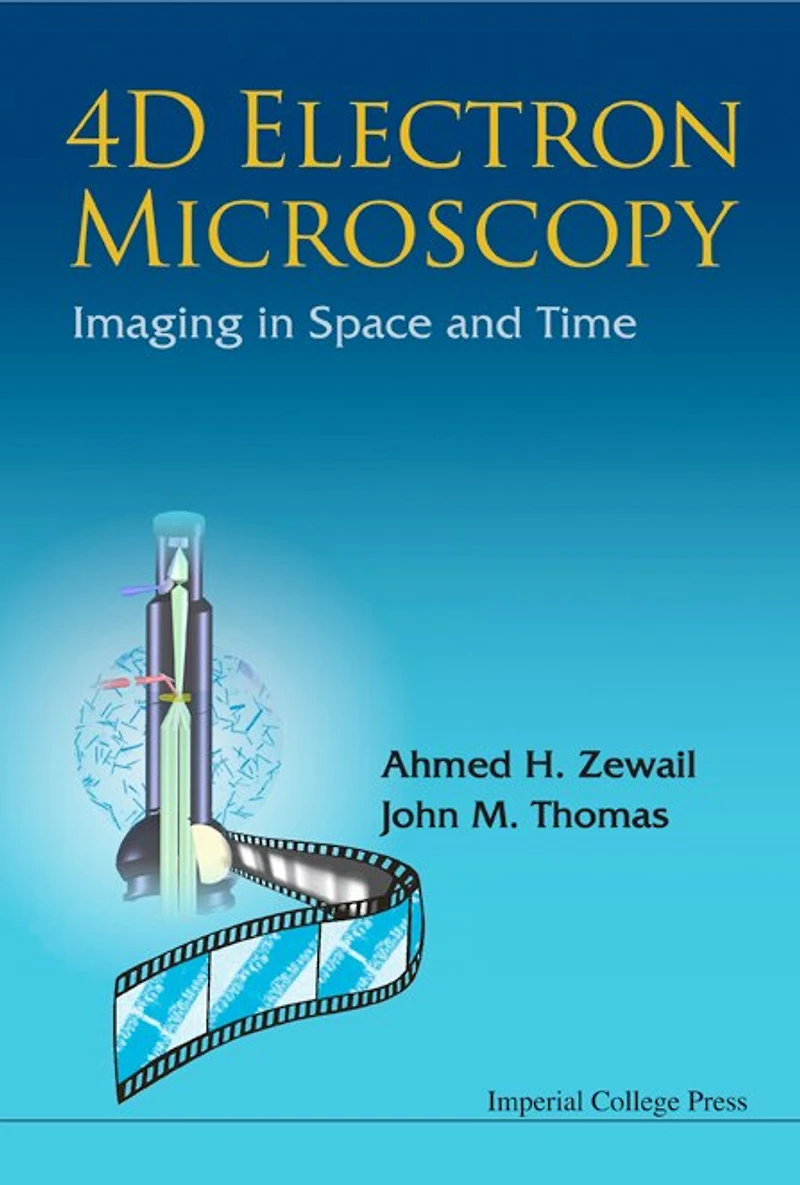
4d Electron Microscopy: Imaging Space And Time
Current price: $189.95

4d Electron Microscopy: Imaging Space And Time
Current price: $189.95
Loading Inventory...
Size: Hardcover
*Product information may vary - to confirm product availability, pricing, shipping and return information please contact Indigo
The modern electron microscope, as a result of recent revolutionary developments and many evolutionary ones, now yields a wealth of quantitative knowledge pertaining to structure, dynamics, and function barely matched by any other single scientific instrument. It is also poised to contribute much new spatially-resolved and time-resolved insights of central importance in the exploration of most aspects of condensed matter, ranging from the physical to the biological sciences.Whereas in all conventional EM methods, imaging, diffraction, and chemical analyses have been conducted in a static — time-integrated — manner, now it has become possible to unite the time domain with the spatial one, thereby creating four-dimensional (4D) electron microscopy. This advance is based on the fundamental concept of timed, coherent single-electron packets, or electron pulses, which are liberated with femtosecond durations. Structural phase transitions, mechanical deformations, and the embryonic stages of melting and crystallization are examples of phenomena that can now be imaged in unprecedented structural detail with high spatial resolution, and ten orders of magnitude as fast as hitherto.No monograph in existence attempts to cover the revolutionary dimensions that EM in its various modes of operation nowadays makes possible. The authors of this book chart these developments, and also compare the merits of coherent electron waves with those of synchrotron radiation. They judge it prudent to recall some important basic procedural and theoretical aspects of imaging and diffraction so that the reader may better comprehend the significance of the new vistas and applications now afoot.This book is not a vade mecum — numerous other texts are available for the practitioner for that purpose. It is instead an in-depth exposé of the paradigm concepts and the developed techniques that can now be executed to gain new knowledge in the entire domain of biological and physical science, and in the four dimensions of space and time.
The modern electron microscope, as a result of recent revolutionary developments and many evolutionary ones, now yields a wealth of quantitative knowledge pertaining to structure, dynamics, and function barely matched by any other single scientific instrument. It is also poised to contribute much new spatially-resolved and time-resolved insights of central importance in the exploration of most aspects of condensed matter, ranging from the physical to the biological sciences.Whereas in all conventional EM methods, imaging, diffraction, and chemical analyses have been conducted in a static — time-integrated — manner, now it has become possible to unite the time domain with the spatial one, thereby creating four-dimensional (4D) electron microscopy. This advance is based on the fundamental concept of timed, coherent single-electron packets, or electron pulses, which are liberated with femtosecond durations. Structural phase transitions, mechanical deformations, and the embryonic stages of melting and crystallization are examples of phenomena that can now be imaged in unprecedented structural detail with high spatial resolution, and ten orders of magnitude as fast as hitherto.No monograph in existence attempts to cover the revolutionary dimensions that EM in its various modes of operation nowadays makes possible. The authors of this book chart these developments, and also compare the merits of coherent electron waves with those of synchrotron radiation. They judge it prudent to recall some important basic procedural and theoretical aspects of imaging and diffraction so that the reader may better comprehend the significance of the new vistas and applications now afoot.This book is not a vade mecum — numerous other texts are available for the practitioner for that purpose. It is instead an in-depth exposé of the paradigm concepts and the developed techniques that can now be executed to gain new knowledge in the entire domain of biological and physical science, and in the four dimensions of space and time.
You May Also Like













More About Indigo at Erin Mills Town Centre
The largest book retailer in Canada also offers toys, music, home décor, gifts and lifestyle products. What's Inside...Books, Magazines, CD’s and DVD’s, Toys and Gifts, Home Accents, Electronics, Baby’s and Children’s Section, Bath and Body, Kitchen and Bedroom, Stationary Located outside in the exterior plaza.
5015 Glen Erin Dr, Mississauga, ON L5M 0R7, Canada
Find Indigo at Erin Mills Town Centre in Mississauga ON
Visit Indigo at Erin Mills Town Centre in Mississauga ON