

GIVE THE PERFECT GIFT
Erin Mills Town Centre Gift Cards are the perfect choice for your gift giving needs.Purchase gift cards at kiosks near the food court or centre court, at Guest Services, or click below to purchase online.PURCHASE HEREHome
A Biosystems Approach to Industrial Patient Monitoring and Diagnostic Devices
Indigo
Loading Inventory...
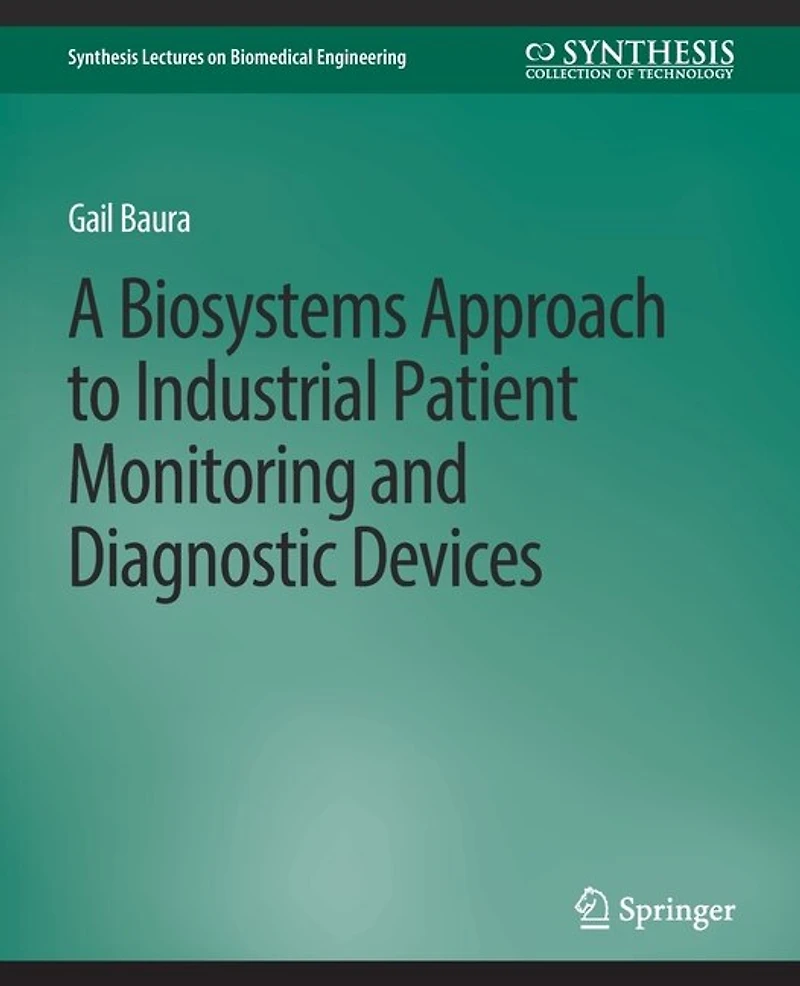
A Biosystems Approach to Industrial Patient Monitoring and Diagnostic Devices
Current price: $49.50

A Biosystems Approach to Industrial Patient Monitoring and Diagnostic Devices
Current price: $49.50
Loading Inventory...
Size: Paperback
*Product information may vary - to confirm product availability, pricing, shipping and return information please contact Indigo
A medical device is an apparatus that uses engineering and scientific principles to interface to physiology and diagnose or treat a disease. In this Lecture, we specifically consider thosemedical devices that are computer based, and are therefore referred to as medical instruments. Further, the medical instruments we discuss are those that incorporate system theory into their designs. We divide these types of instruments into those that provide continuous observation and those that provide a single snapshot of health information. These instruments are termed patient monitoring devices and diagnostic devices, respectively.Within this Lecture, we highlight some of the common system theory techniques that are part of the toolkit of medical device engineers in industry. These techniques include the pseudorandom binary sequence, adaptive filtering, wavelet transforms, the autoregressive moving average model with exogenous input, artificial neural networks, fuzzy models, and fuzzy control. Because the clinical usage requirements for patient monitoring and diagnostic devices are so high, system theory is the preferred substitute for heuristic, empirical processing during noise artifact minimization and classification. Table of Contents: Preface / Medical Devices / System Theory / Patient Monitoring Devices / Diagnostic Devices / Conclusion / Author Biography
A medical device is an apparatus that uses engineering and scientific principles to interface to physiology and diagnose or treat a disease. In this Lecture, we specifically consider thosemedical devices that are computer based, and are therefore referred to as medical instruments. Further, the medical instruments we discuss are those that incorporate system theory into their designs. We divide these types of instruments into those that provide continuous observation and those that provide a single snapshot of health information. These instruments are termed patient monitoring devices and diagnostic devices, respectively.Within this Lecture, we highlight some of the common system theory techniques that are part of the toolkit of medical device engineers in industry. These techniques include the pseudorandom binary sequence, adaptive filtering, wavelet transforms, the autoregressive moving average model with exogenous input, artificial neural networks, fuzzy models, and fuzzy control. Because the clinical usage requirements for patient monitoring and diagnostic devices are so high, system theory is the preferred substitute for heuristic, empirical processing during noise artifact minimization and classification. Table of Contents: Preface / Medical Devices / System Theory / Patient Monitoring Devices / Diagnostic Devices / Conclusion / Author Biography
You May Also Like














More About Indigo at Erin Mills Town Centre
The largest book retailer in Canada also offers toys, music, home décor, gifts and lifestyle products. What's Inside...Books, Magazines, CD’s and DVD’s, Toys and Gifts, Home Accents, Electronics, Baby’s and Children’s Section, Bath and Body, Kitchen and Bedroom, Stationary Located outside in the exterior plaza.
5015 Glen Erin Dr, Mississauga, ON L5M 0R7, Canada
Find Indigo at Erin Mills Town Centre in Mississauga ON
Visit Indigo at Erin Mills Town Centre in Mississauga ON