

GIVE THE PERFECT GIFT
Erin Mills Town Centre Gift Cards are the perfect choice for your gift giving needs.Purchase gift cards at kiosks near the food court or centre court, at Guest Services, or click below to purchase online.PURCHASE HEREHome
A Civic Biology
Indigo
Loading Inventory...
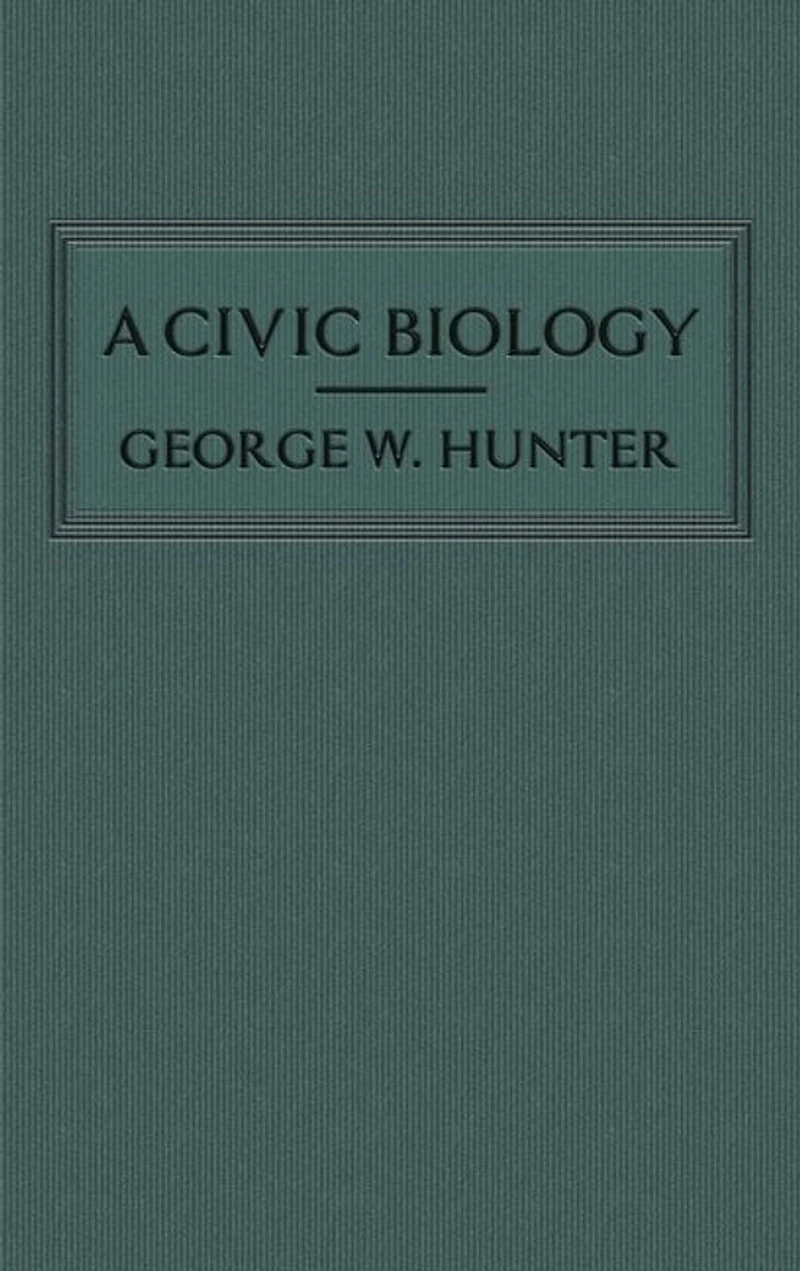
A Civic Biology
Current price: $52.00

A Civic Biology
Current price: $52.00
Loading Inventory...
Size: Hardcover
*Product information may vary - to confirm product availability, pricing, shipping and return information please contact Indigo
About a hundred years ago, it was generally agreed that evolution and Darwinism logically entailed eliminating weak humans from the gene pool, either outright by killing them, or by sterilization or segregation. This view was so common, it was in the actual science text books which were placed in high schools. George Hunter's "A Civic Biology" was one such textbook. Published in 1914, he describes large numbers of Americans as 'parasites' who are harming the gene pool and lauds the Europeans for their advances in 'eugenics.' Such views were considered obvious applications of Darwinian principles. Not surprisingly, such views met with resistance. It was Hunter's textbook which John Scopes used in violation of Tennessee law, which led to the infamous 'Scopes Monkey Trial.' Not surprisingly, no one remembers today that there was a time when it was considered perfectly reasonable to apply the 'science' of evolution to 'unfit' human beings. Having "A Civic Biology" on your shelf can serve as a daily reminder of the theory of evolution's darker past.
About a hundred years ago, it was generally agreed that evolution and Darwinism logically entailed eliminating weak humans from the gene pool, either outright by killing them, or by sterilization or segregation. This view was so common, it was in the actual science text books which were placed in high schools. George Hunter's "A Civic Biology" was one such textbook. Published in 1914, he describes large numbers of Americans as 'parasites' who are harming the gene pool and lauds the Europeans for their advances in 'eugenics.' Such views were considered obvious applications of Darwinian principles. Not surprisingly, such views met with resistance. It was Hunter's textbook which John Scopes used in violation of Tennessee law, which led to the infamous 'Scopes Monkey Trial.' Not surprisingly, no one remembers today that there was a time when it was considered perfectly reasonable to apply the 'science' of evolution to 'unfit' human beings. Having "A Civic Biology" on your shelf can serve as a daily reminder of the theory of evolution's darker past.
You May Also Like









More About Indigo at Erin Mills Town Centre
The largest book retailer in Canada also offers toys, music, home décor, gifts and lifestyle products. What's Inside...Books, Magazines, CD’s and DVD’s, Toys and Gifts, Home Accents, Electronics, Baby’s and Children’s Section, Bath and Body, Kitchen and Bedroom, Stationary Located outside in the exterior plaza.
5015 Glen Erin Dr, Mississauga, ON L5M 0R7, Canada
Find Indigo at Erin Mills Town Centre in Mississauga ON
Visit Indigo at Erin Mills Town Centre in Mississauga ON