

GIVE THE PERFECT GIFT
Erin Mills Town Centre Gift Cards are the perfect choice for your gift giving needs.Purchase gift cards at kiosks near the food court or centre court, at Guest Services, or click below to purchase online.PURCHASE HEREHome
A Curriculum for Social Justice: Promoting Success Low-Attaining Youth
Indigo
Loading Inventory...
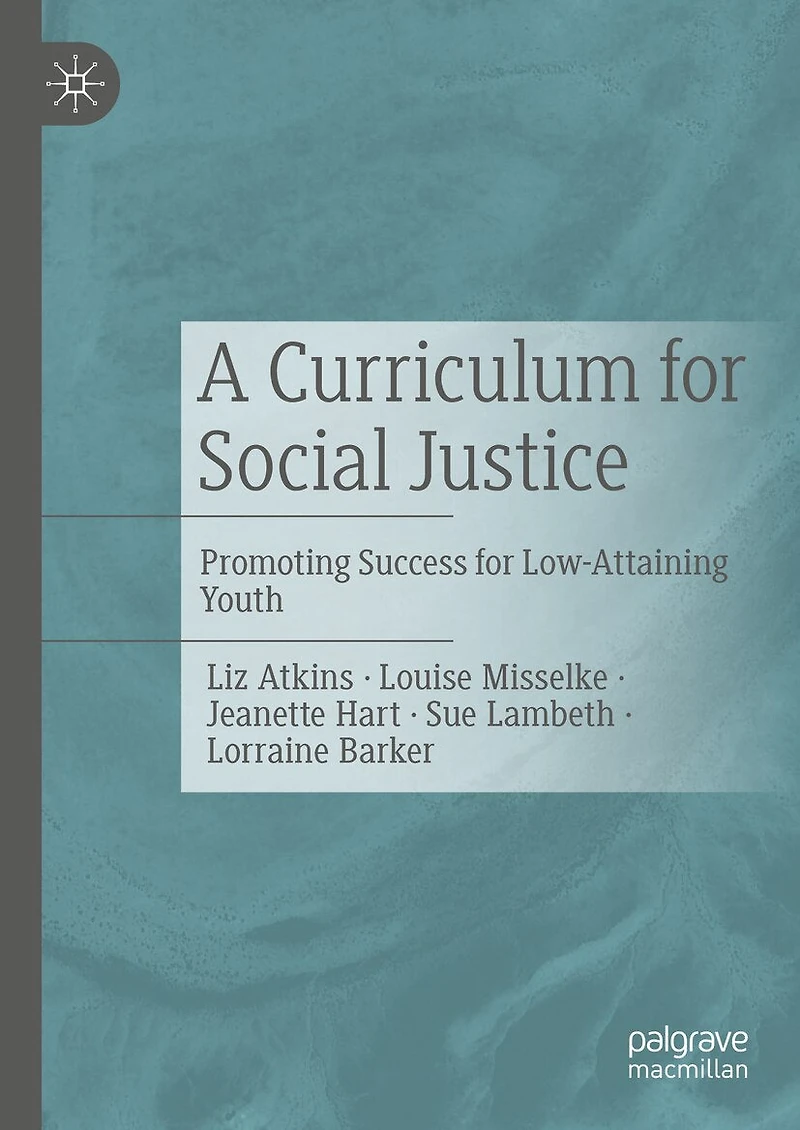
A Curriculum for Social Justice: Promoting Success Low-Attaining Youth
Current price: $160.95

A Curriculum for Social Justice: Promoting Success Low-Attaining Youth
Current price: $160.95
Loading Inventory...
Size: Hardcover
*Product information may vary - to confirm product availability, pricing, shipping and return information please contact Indigo
This book reports the outcomes of a research project which involved developing and implementing a research-informed curriculum for low-attaining further education students. Key aims of the curriculum were to ameliorate some of the social and educational disadvantages faced by the students, and to support secure and sustainable transitions to employment or further education. The book begins by outlining the characteristics of the lowest-attaining young people and considering the challenges they face. Subsequent chapters describe the educational and geographic contexts, the curriculum, and the pedagogical approaches adopted. It moves on to describe the outcomes of the project, drawing on narratives of individual students and staff to illustrate the benefits of a broader curriculum which acknowledges earlier disadvantage. The book concludes with a discussion of how the curriculum could be adapted in different contexts and considers the implications of such change in terms of policy, practice, future research and social justice.
This book reports the outcomes of a research project which involved developing and implementing a research-informed curriculum for low-attaining further education students. Key aims of the curriculum were to ameliorate some of the social and educational disadvantages faced by the students, and to support secure and sustainable transitions to employment or further education. The book begins by outlining the characteristics of the lowest-attaining young people and considering the challenges they face. Subsequent chapters describe the educational and geographic contexts, the curriculum, and the pedagogical approaches adopted. It moves on to describe the outcomes of the project, drawing on narratives of individual students and staff to illustrate the benefits of a broader curriculum which acknowledges earlier disadvantage. The book concludes with a discussion of how the curriculum could be adapted in different contexts and considers the implications of such change in terms of policy, practice, future research and social justice.
You May Also Like








More About Indigo at Erin Mills Town Centre
The largest book retailer in Canada also offers toys, music, home décor, gifts and lifestyle products. What's Inside...Books, Magazines, CD’s and DVD’s, Toys and Gifts, Home Accents, Electronics, Baby’s and Children’s Section, Bath and Body, Kitchen and Bedroom, Stationary Located outside in the exterior plaza.
5015 Glen Erin Dr, Mississauga, ON L5M 0R7, Canada
Find Indigo at Erin Mills Town Centre in Mississauga ON
Visit Indigo at Erin Mills Town Centre in Mississauga ON