

GIVE THE PERFECT GIFT
Erin Mills Town Centre Gift Cards are the perfect choice for your gift giving needs.Purchase gift cards at kiosks near the food court or centre court, at Guest Services, or click below to purchase online.PURCHASE HEREHome
A Decomposition Approach for the Multi-Modal, Resource-Constrained, Multi-Project Scheduling Problem with Generalized Precedence and Expediting Resources
Indigo
Loading Inventory...
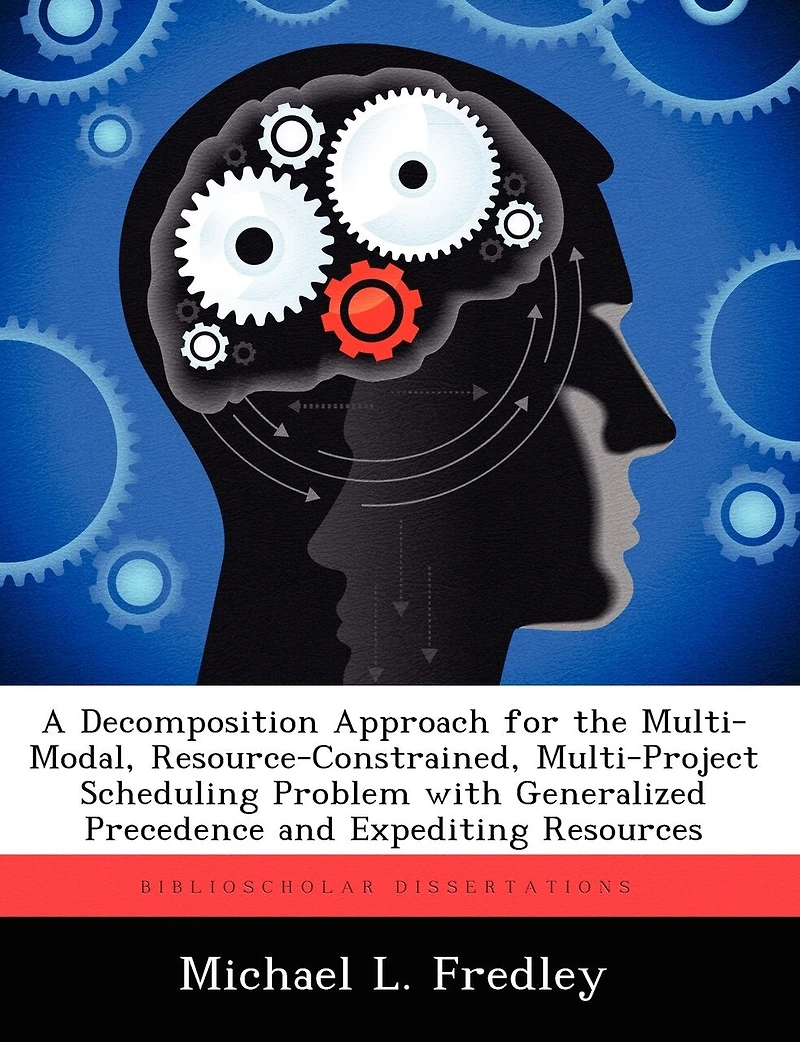
A Decomposition Approach for the Multi-Modal, Resource-Constrained, Multi-Project Scheduling Problem with Generalized Precedence and Expediting Resources
Current price: $59.00

A Decomposition Approach for the Multi-Modal, Resource-Constrained, Multi-Project Scheduling Problem with Generalized Precedence and Expediting Resources
Current price: $59.00
Loading Inventory...
Size: Paperback
*Product information may vary - to confirm product availability, pricing, shipping and return information please contact Indigo
The field of project scheduling has received a great deal of study for many years with a steady evolution of problem complexity and solution methodologies. As solution methodologies and technologies improve, increasingly complex, real-world problems are addressed, presenting researchers a continuing challenge to find ever more effective means for approaching project scheduling. This dissertation introduces a project scheduling problem which is applicable across a broad spectrum of real-world situations. The problem is based on the well-known Resource-Constrained Project Scheduling Problem, extended in this dissertation to include generalized precedence with minimal and maximal time lags and expediting resources. The problem is further extended to include multiple projects which have generalized precedence, renewable and nonrenewable resources, and expediting resources at the program level.
The field of project scheduling has received a great deal of study for many years with a steady evolution of problem complexity and solution methodologies. As solution methodologies and technologies improve, increasingly complex, real-world problems are addressed, presenting researchers a continuing challenge to find ever more effective means for approaching project scheduling. This dissertation introduces a project scheduling problem which is applicable across a broad spectrum of real-world situations. The problem is based on the well-known Resource-Constrained Project Scheduling Problem, extended in this dissertation to include generalized precedence with minimal and maximal time lags and expediting resources. The problem is further extended to include multiple projects which have generalized precedence, renewable and nonrenewable resources, and expediting resources at the program level.
You May Also Like












More About Indigo at Erin Mills Town Centre
The largest book retailer in Canada also offers toys, music, home décor, gifts and lifestyle products. What's Inside...Books, Magazines, CD’s and DVD’s, Toys and Gifts, Home Accents, Electronics, Baby’s and Children’s Section, Bath and Body, Kitchen and Bedroom, Stationary Located outside in the exterior plaza.
5015 Glen Erin Dr, Mississauga, ON L5M 0R7, Canada
Find Indigo at Erin Mills Town Centre in Mississauga ON
Visit Indigo at Erin Mills Town Centre in Mississauga ON