

GIVE THE PERFECT GIFT
Erin Mills Town Centre Gift Cards are the perfect choice for your gift giving needs.Purchase gift cards at kiosks near the food court or centre court, at Guest Services, or click below to purchase online.PURCHASE HEREHome
A Defence of Free-Thinking in Mathematics
Indigo
Loading Inventory...
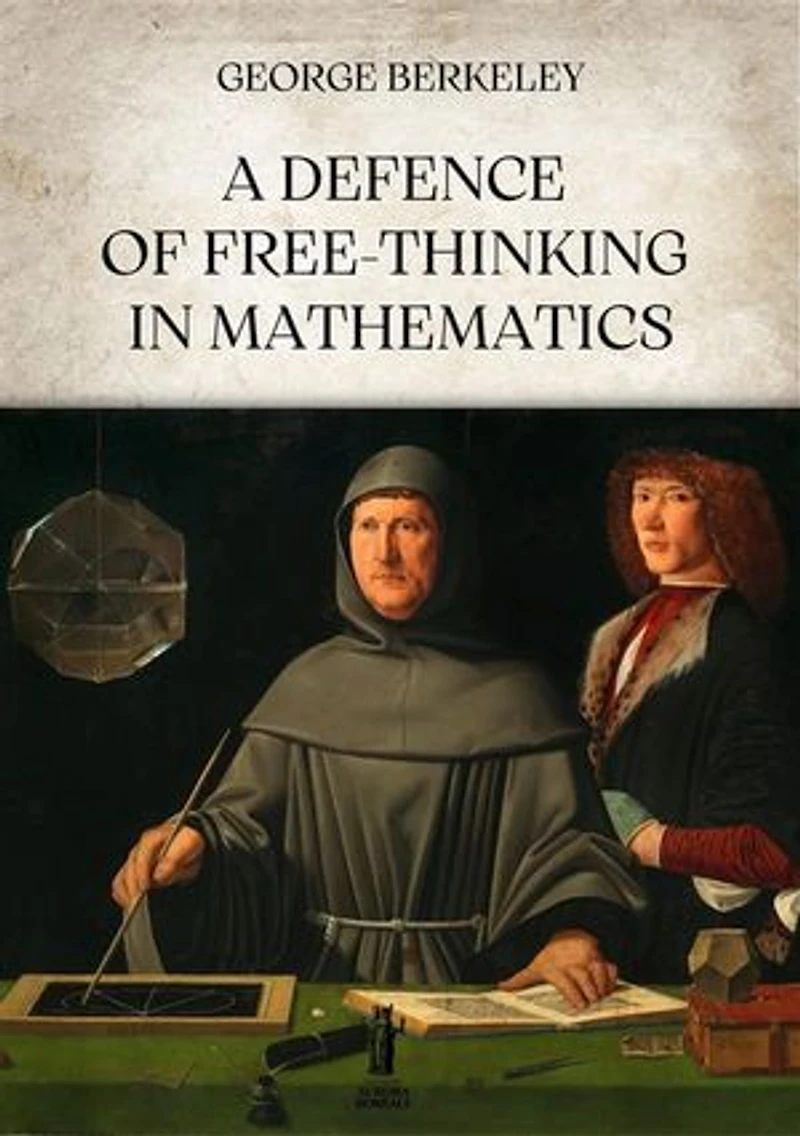
A Defence of Free-Thinking in Mathematics
Current price: $8.99

A Defence of Free-Thinking in Mathematics
Current price: $8.99
Loading Inventory...
Size: Kobo eBook
*Product information may vary - to confirm product availability, pricing, shipping and return information please contact Indigo
George Berkeley (1685-1753) was an Irish philosopher, an anglican bishop and one of the three great British empiricists along with John Locke and David Hume. Ignored and derided in life, he is now widely re-evaluated and considered as a sort of indirect precursor of Ernst Mach, Albert Einstein and Niels Bohr for his thesis on the non-existence of matter and the impossibility of an objectively absolute time and space. His critiques of mathematics and science are among the most controversial, brilliant and revolutionary in the history of philosophy.
The Berkley’s essay A Defence of Free-Thinking in Mathematics was written and published in 1735 in response to criticisms of The Analyst in Geometry no Friend to Infidelity; or a Defence of Sir Isaac Newton and the British Mathematicians , by “Philalethes Cantabrigiensis” (Dr. James Jurin, a noted Cambridge scientist and physician), and Vindication of Sir Isaac Newton’s Principles of Fluxions , by Jacob Walton. Berkeley responded to a subsequent pamphlet of Walton with Reasons for not replying to Mr. Walton’s Full Answer .
George Berkeley (1685-1753) was an Irish philosopher, an anglican bishop and one of the three great British empiricists along with John Locke and David Hume. Ignored and derided in life, he is now widely re-evaluated and considered as a sort of indirect precursor of Ernst Mach, Albert Einstein and Niels Bohr for his thesis on the non-existence of matter and the impossibility of an objectively absolute time and space. His critiques of mathematics and science are among the most controversial, brilliant and revolutionary in the history of philosophy.
The Berkley’s essay A Defence of Free-Thinking in Mathematics was written and published in 1735 in response to criticisms of The Analyst in Geometry no Friend to Infidelity; or a Defence of Sir Isaac Newton and the British Mathematicians , by “Philalethes Cantabrigiensis” (Dr. James Jurin, a noted Cambridge scientist and physician), and Vindication of Sir Isaac Newton’s Principles of Fluxions , by Jacob Walton. Berkeley responded to a subsequent pamphlet of Walton with Reasons for not replying to Mr. Walton’s Full Answer .
You May Also Like








More About Indigo at Erin Mills Town Centre
The largest book retailer in Canada also offers toys, music, home décor, gifts and lifestyle products. What's Inside...Books, Magazines, CD’s and DVD’s, Toys and Gifts, Home Accents, Electronics, Baby’s and Children’s Section, Bath and Body, Kitchen and Bedroom, Stationary Located outside in the exterior plaza.
5015 Glen Erin Dr, Mississauga, ON L5M 0R7, Canada
Find Indigo at Erin Mills Town Centre in Mississauga ON
Visit Indigo at Erin Mills Town Centre in Mississauga ON