

GIVE THE PERFECT GIFT
Erin Mills Town Centre Gift Cards are the perfect choice for your gift giving needs.Purchase gift cards at kiosks near the food court or centre court, at Guest Services, or click below to purchase online.PURCHASE HEREHome
A Description of Westminster Bridge: To Which Are Added, an Account of the Methods Made Use of in Laying the Foundations of its Piers
Indigo
Loading Inventory...
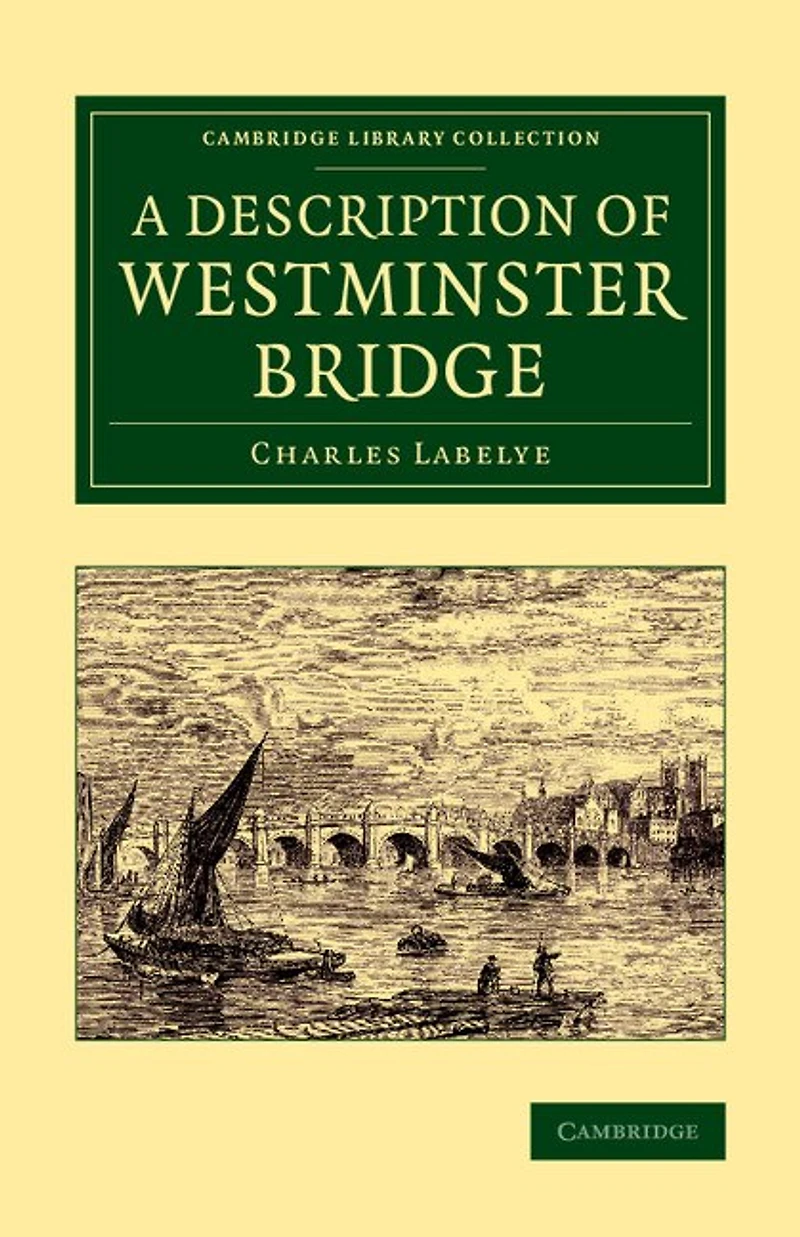
A Description of Westminster Bridge: To Which Are Added, an Account of the Methods Made Use of in Laying the Foundations of its Piers
Current price: $48.33

A Description of Westminster Bridge: To Which Are Added, an Account of the Methods Made Use of in Laying the Foundations of its Piers
Current price: $48.33
Loading Inventory...
Size: Paperback
*Product information may vary - to confirm product availability, pricing, shipping and return information please contact Indigo
The construction of the first Westminster Bridge, upon which Wordsworth composed his famous sonnet, presented many challenges in terms of the materials and methods with which a sturdy bridge could be built in tidal water and on a gravelly riverbed. A number of candidates presented their surveys to the commissioners of the bridge, but it was the Swiss-born Charles Labelye (1705–62) who was appointed to oversee construction in 1738. The bridge opened to traffic in 1750. This 1751 publication expands upon the shorter work that Labelye had prepared in 1739 to address the laying of the foundations. Significantly, he used caissons - vast wooden structures sunk into the riverbed - within which the stone piers were built. Although the promised illustrations did not appear in this work, the book provides a valuable insight into the technical problems of a major engineering project, and the solutions available at that time.
The construction of the first Westminster Bridge, upon which Wordsworth composed his famous sonnet, presented many challenges in terms of the materials and methods with which a sturdy bridge could be built in tidal water and on a gravelly riverbed. A number of candidates presented their surveys to the commissioners of the bridge, but it was the Swiss-born Charles Labelye (1705–62) who was appointed to oversee construction in 1738. The bridge opened to traffic in 1750. This 1751 publication expands upon the shorter work that Labelye had prepared in 1739 to address the laying of the foundations. Significantly, he used caissons - vast wooden structures sunk into the riverbed - within which the stone piers were built. Although the promised illustrations did not appear in this work, the book provides a valuable insight into the technical problems of a major engineering project, and the solutions available at that time.
You May Also Like

![A Description of the Safety Lamp, Invented by George Stephenson. to Which Is Added, an Account of the Lamp Constructed by Sir H. Davy. [With] a Collection of All the Letters Which Have Appeared in the Newcastle Papers, With Other Documents, Relating to Th](https://cdn.mall.adeptmind.ai/https%253A%252F%252Fcdn.shopify.com%252Fs%252Ffiles%252F1%252F0655%252F8980%252F5233%252Ffiles%252F1_76e40862-a2fe-4a94-8d2e-f37459e59f23.jpg_medium.webp)











More About Indigo at Erin Mills Town Centre
The largest book retailer in Canada also offers toys, music, home décor, gifts and lifestyle products. What's Inside...Books, Magazines, CD’s and DVD’s, Toys and Gifts, Home Accents, Electronics, Baby’s and Children’s Section, Bath and Body, Kitchen and Bedroom, Stationary Located outside in the exterior plaza.
5015 Glen Erin Dr, Mississauga, ON L5M 0R7, Canada
Find Indigo at Erin Mills Town Centre in Mississauga ON
Visit Indigo at Erin Mills Town Centre in Mississauga ON