

GIVE THE PERFECT GIFT
Erin Mills Town Centre Gift Cards are the perfect choice for your gift giving needs.Purchase gift cards at kiosks near the food court or centre court, at Guest Services, or click below to purchase online.PURCHASE HEREHome
A Grammar of the Multitude: For an Analysis Contemporary Forms Life
Indigo
Loading Inventory...
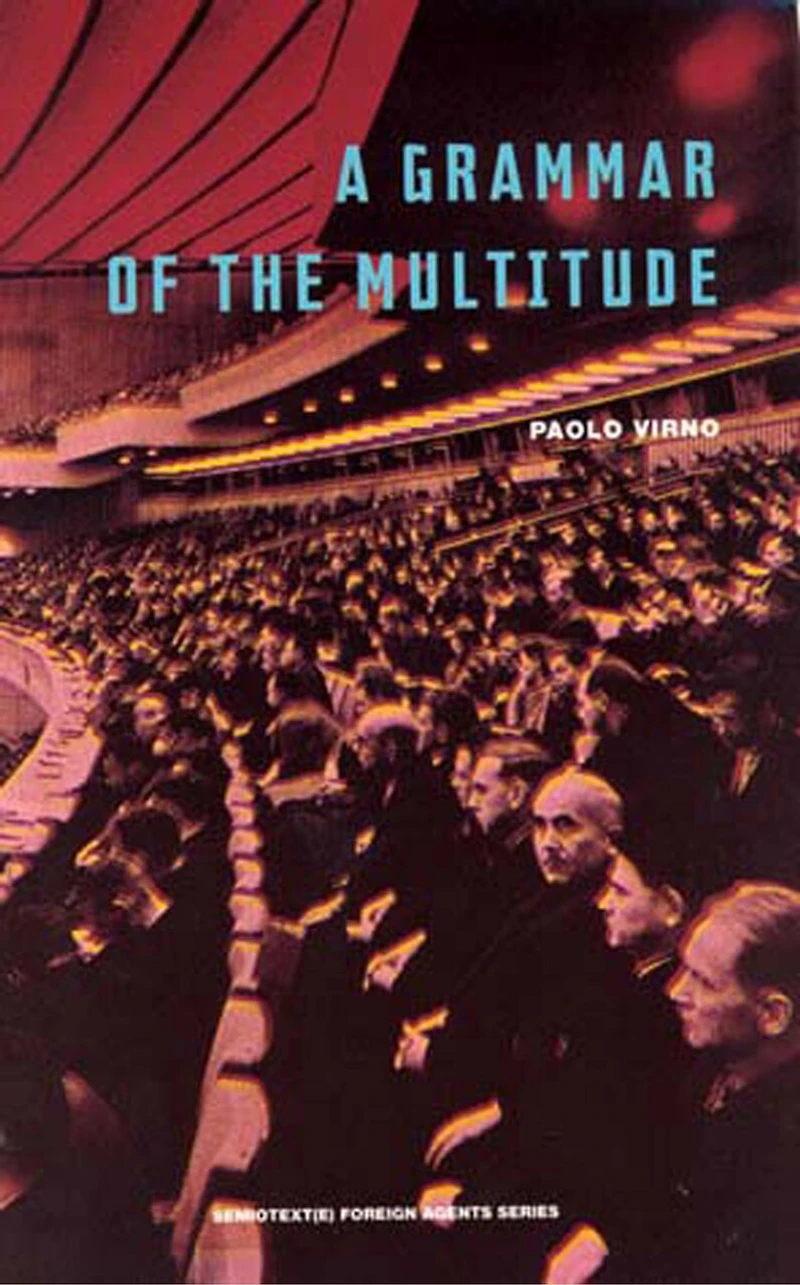
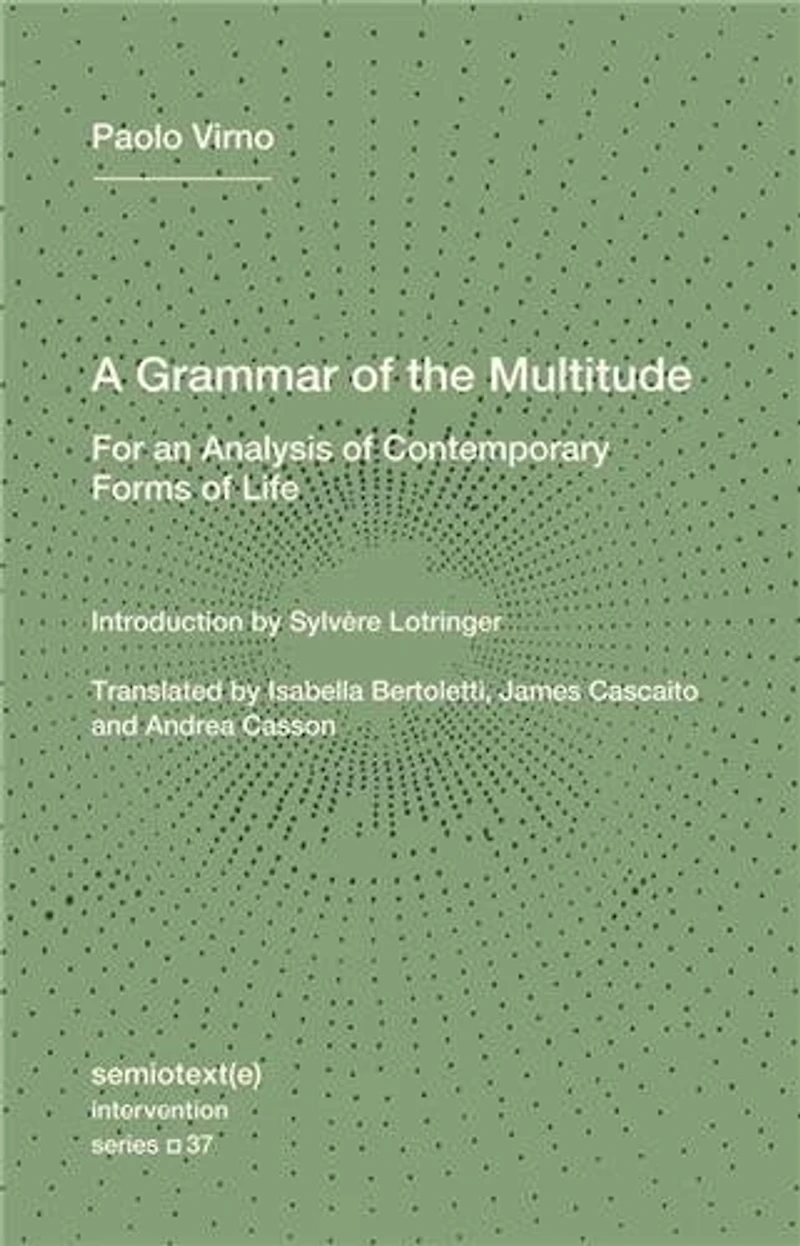
A Grammar of the Multitude: For an Analysis Contemporary Forms Life
Current price: $21.95

A Grammar of the Multitude: For an Analysis Contemporary Forms Life
Current price: $21.95
Loading Inventory...
Size: Paperback (2004)
*Product information may vary - to confirm product availability, pricing, shipping and return information please contact Indigo
Paolo Virno on the rich concept of the “multitude” as crucial to understanding contemporary life.
Paolo Virno’s A Grammar of the Multitude became the Italian theorist’s best-known work in English, influencing a generation of activists and performance artists, when it was first published by Semiotext(e) in 2004. Two decades later, this new edition proves Virno’s conception of contemporary life—as a cartography of virtualities made possible by post-Fordism—to have been strikingly prescient.
At the start of the twenty-first century, globalization forced a rethinking of some of the categories—such as “the people”—that had been traditionally associated with the now-eroding state. Virno argues that the category of “multitude,” elaborated by Spinoza and for the most part left fallow since the seventeenth century, is a far better tool to analyze contemporary issues than the Hobbesian concept of “people” favored by classical political philosophy. Hobbes, who detested the notion of multitude, defined it as shunning political unity, resisting authority, and never entering into lasting agreements. “When they rebel against the state,” Hobbes wrote, “the citizens are the multitude against the people.” But the multitude isn’t just a negative notion; it is a rich concept that allows us to examine anew plural experiences and forms of nonrepresentative democracy. Drawing from philosophy of language, political economics, and ethics, Virno shows that being foreign, “not-feeling-at-home-anywhere,” is a condition that forces the multitude to place its trust in the intellect. In conclusion, Virno suggests that the metamorphosis of the social systems in the West during the 1980s and 1990s precipitated a paradoxical “Communism of the Capital.”
Paolo Virno on the rich concept of the “multitude” as crucial to understanding contemporary life.
Paolo Virno’s A Grammar of the Multitude became the Italian theorist’s best-known work in English, influencing a generation of activists and performance artists, when it was first published by Semiotext(e) in 2004. Two decades later, this new edition proves Virno’s conception of contemporary life—as a cartography of virtualities made possible by post-Fordism—to have been strikingly prescient.
At the start of the twenty-first century, globalization forced a rethinking of some of the categories—such as “the people”—that had been traditionally associated with the now-eroding state. Virno argues that the category of “multitude,” elaborated by Spinoza and for the most part left fallow since the seventeenth century, is a far better tool to analyze contemporary issues than the Hobbesian concept of “people” favored by classical political philosophy. Hobbes, who detested the notion of multitude, defined it as shunning political unity, resisting authority, and never entering into lasting agreements. “When they rebel against the state,” Hobbes wrote, “the citizens are the multitude against the people.” But the multitude isn’t just a negative notion; it is a rich concept that allows us to examine anew plural experiences and forms of nonrepresentative democracy. Drawing from philosophy of language, political economics, and ethics, Virno shows that being foreign, “not-feeling-at-home-anywhere,” is a condition that forces the multitude to place its trust in the intellect. In conclusion, Virno suggests that the metamorphosis of the social systems in the West during the 1980s and 1990s precipitated a paradoxical “Communism of the Capital.”
You May Also Like









More About Indigo at Erin Mills Town Centre
The largest book retailer in Canada also offers toys, music, home décor, gifts and lifestyle products. What's Inside...Books, Magazines, CD’s and DVD’s, Toys and Gifts, Home Accents, Electronics, Baby’s and Children’s Section, Bath and Body, Kitchen and Bedroom, Stationary Located outside in the exterior plaza.
5015 Glen Erin Dr, Mississauga, ON L5M 0R7, Canada
Find Indigo at Erin Mills Town Centre in Mississauga ON
Visit Indigo at Erin Mills Town Centre in Mississauga ON