

GIVE THE PERFECT GIFT
Erin Mills Town Centre Gift Cards are the perfect choice for your gift giving needs.Purchase gift cards at kiosks near the food court or centre court, at Guest Services, or click below to purchase online.PURCHASE HEREHome
A Guided Tour of Artificial Intelligence Research: Volume I: Knowledge Representation, Reasoning and Learning
Indigo
Loading Inventory...
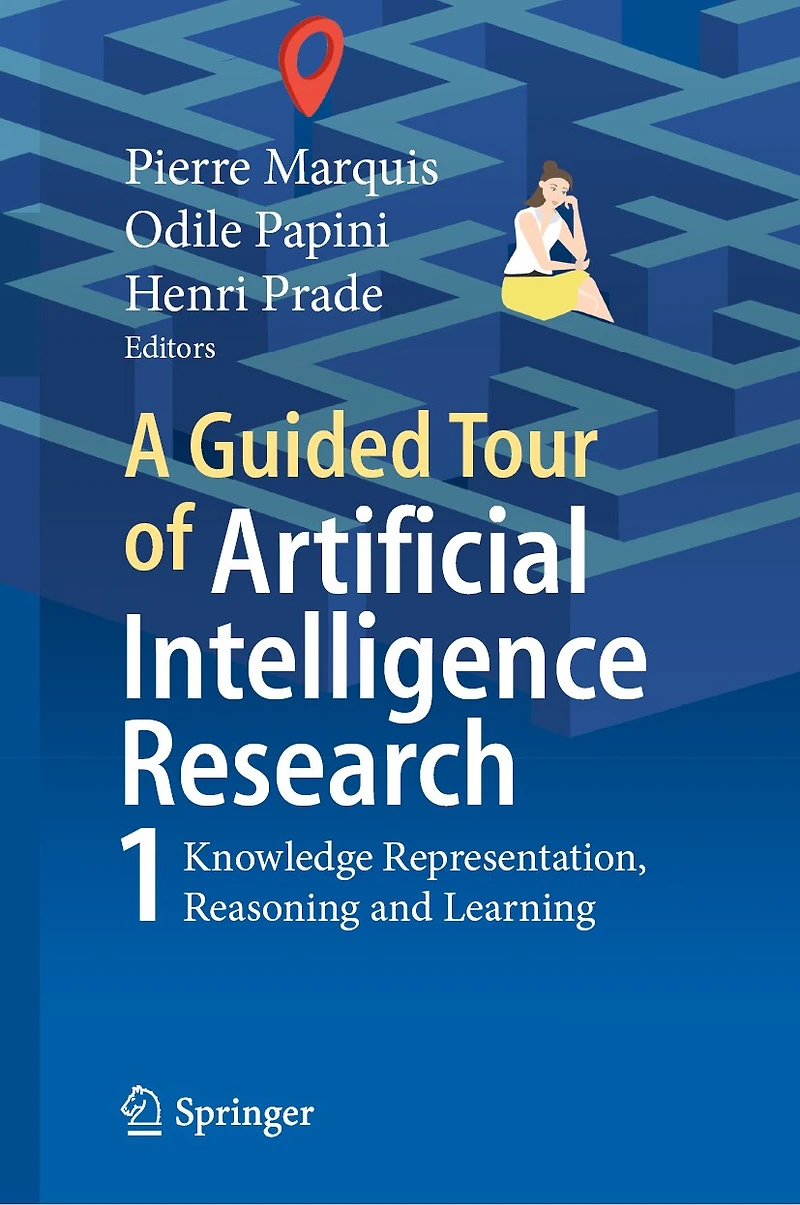
A Guided Tour of Artificial Intelligence Research: Volume I: Knowledge Representation, Reasoning and Learning
Current price: $364.95

A Guided Tour of Artificial Intelligence Research: Volume I: Knowledge Representation, Reasoning and Learning
Current price: $364.95
Loading Inventory...
Size: Hardcover
*Product information may vary - to confirm product availability, pricing, shipping and return information please contact Indigo
The purpose of this book is to provide an overview of AI research, ranging from basic work to interfaces and applications, with as much emphasis on results as on current issues. It is aimed at an audience of master students and Ph.D. students, and can be of interest as well for researchers and engineers who want to know more about AI. The book is split into three volumes: - the first volume brings together twenty-three chapters dealing with the foundations of knowledge representation and the formalization of reasoning and learning (Volume 1. Knowledge representation, reasoning and learning) - the second volume offers a view of AI, in fourteen chapters, from the side of the algorithms (Volume 2. AI Algorithms) - the third volume, composed of sixteen chapters, describes the main interfaces and applications of AI (Volume 3. Interfaces and applications of AI). Implementing reasoning or decision making processes requires an appropriate representation of the pieces of information to be exploited. This first volume starts with a historical chapter sketching the slow emergence of building blocks of AI along centuries. Then the volume provides an organized overview of different logical, numerical, or graphical representation formalisms able to handle incomplete information, rules having exceptions, probabilistic and possibilistic uncertainty (and beyond), as well as taxonomies, time, space, preferences, norms, causality, and even trust and emotions among agents. Different types of reasoning, beyond classical deduction, are surveyed including nonmonotonic reasoning, belief revision, updating, information fusion, reasoning based on similarity (case-based, interpolative, or analogical), as well as reasoning about actions, reasoning about ontologies (description logics), argumentation, and negotiation or persuasion between agents. Three chapters deal with decision making, be it multiple criteria, collective, or under uncertainty. Two chapters cover statistical computational learning and reinforcement learning (other machine learning topics are covered in Volume 2). Chapters on diagnosis and supervision, validation and explanation, and knowledge base acquisition complete the volume.
The purpose of this book is to provide an overview of AI research, ranging from basic work to interfaces and applications, with as much emphasis on results as on current issues. It is aimed at an audience of master students and Ph.D. students, and can be of interest as well for researchers and engineers who want to know more about AI. The book is split into three volumes: - the first volume brings together twenty-three chapters dealing with the foundations of knowledge representation and the formalization of reasoning and learning (Volume 1. Knowledge representation, reasoning and learning) - the second volume offers a view of AI, in fourteen chapters, from the side of the algorithms (Volume 2. AI Algorithms) - the third volume, composed of sixteen chapters, describes the main interfaces and applications of AI (Volume 3. Interfaces and applications of AI). Implementing reasoning or decision making processes requires an appropriate representation of the pieces of information to be exploited. This first volume starts with a historical chapter sketching the slow emergence of building blocks of AI along centuries. Then the volume provides an organized overview of different logical, numerical, or graphical representation formalisms able to handle incomplete information, rules having exceptions, probabilistic and possibilistic uncertainty (and beyond), as well as taxonomies, time, space, preferences, norms, causality, and even trust and emotions among agents. Different types of reasoning, beyond classical deduction, are surveyed including nonmonotonic reasoning, belief revision, updating, information fusion, reasoning based on similarity (case-based, interpolative, or analogical), as well as reasoning about actions, reasoning about ontologies (description logics), argumentation, and negotiation or persuasion between agents. Three chapters deal with decision making, be it multiple criteria, collective, or under uncertainty. Two chapters cover statistical computational learning and reinforcement learning (other machine learning topics are covered in Volume 2). Chapters on diagnosis and supervision, validation and explanation, and knowledge base acquisition complete the volume.
You May Also Like









More About Indigo at Erin Mills Town Centre
The largest book retailer in Canada also offers toys, music, home décor, gifts and lifestyle products. What's Inside...Books, Magazines, CD’s and DVD’s, Toys and Gifts, Home Accents, Electronics, Baby’s and Children’s Section, Bath and Body, Kitchen and Bedroom, Stationary Located outside in the exterior plaza.
5015 Glen Erin Dr, Mississauga, ON L5M 0R7, Canada
Find Indigo at Erin Mills Town Centre in Mississauga ON
Visit Indigo at Erin Mills Town Centre in Mississauga ON