

GIVE THE PERFECT GIFT
Erin Mills Town Centre Gift Cards are the perfect choice for your gift giving needs.Purchase gift cards at kiosks near the food court or centre court, at Guest Services, or click below to purchase online.PURCHASE HEREHome
A History of German Business: Global Context from the late 19th Century until End Second World War
Indigo
Loading Inventory...
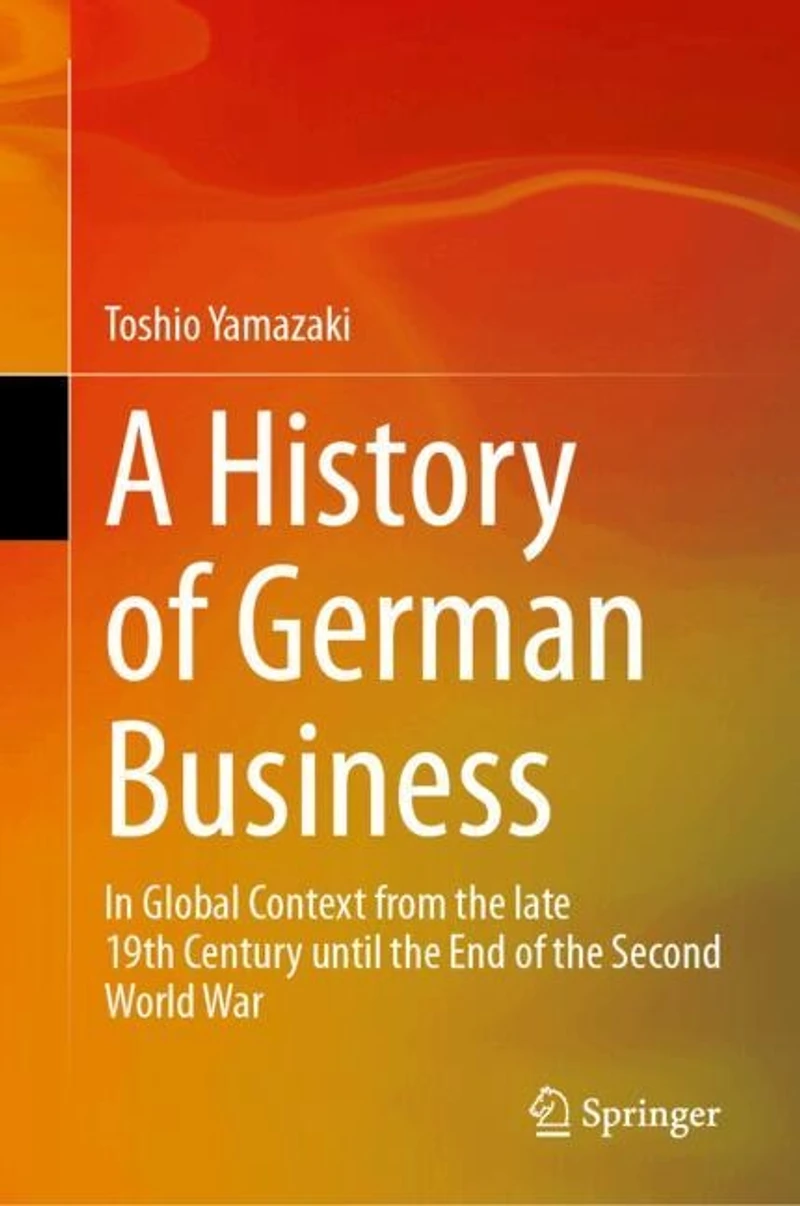

A History of German Business: Global Context from the late 19th Century until End Second World War
Current price: $204.50

A History of German Business: Global Context from the late 19th Century until End Second World War
Current price: $204.50
Loading Inventory...
Size: Hardcover
*Product information may vary - to confirm product availability, pricing, shipping and return information please contact Indigo
This book aims to provide insights regarding business management and corporate expansion in Germany from the late 19th century until the end of World War II (periods of the Second Reich, the Weimar Republic, and National Socialism) from the perspective of comparative management studies. This book elucidates Germany&s specific development through analysis from two viewpoints. The first perspective is the historical context of the global economy and German capitalism. The second viewpoint concerns international economic relations-such as linkages in both market and capital-as well as influences of hegemonic nations and Germany&s pursuit of globalism. This book utilizes a comparative perspective among industries, enterprises, and the United States. It is the first to comprehensively explore various fields related to business administration, including business concentration, management systems, production systems, corporate strategy, and organizational structure. This book considers (1) the concentration of enterprises and the corresponding system of industrial concentration, (2) the labor management system and the deployment of the Taylor system, (3) the deployment of the Ford system and the transformation toward mass production, and (4) changes in enterprise and organizational structures. This book analyzes the development of business management in Germany, focusing on the interrelationships between (1) the factors determining business management changes, (2) the actual conditions of business management changes, and (3) the significance of such phenomena for developing companies and a capitalistic economy. This book investigates the interrelationships among three areas (enterprise, industry, and economy) to clarify the historical process of corporate expansion. This book elucidates the significance and limitations of Germany&s specific business management and enterprise development from the following important perspectives: (1) the historical conditions of global capitalism and German capitalism; (2) the influences of a hegemonic nation&s globalism as the principle and "ism" for competition over establishing global hegemony, world economic order, and Germany&s pursuit of globalism; (3) regional conditions in Europe; (4) the influences of American management methods; (5) the expansion of the munitions market during National Socialism; (6) "continuity" and "discontinuity" in business management before and after World War II and their significance; and (7) the characteristics of various industries. Through these analyses, this book strives to clarify the overall view of business management, industrial concentration, and corporate expansion in Germany before the end of World War -¡ . This book clarifies business management in Germany during this period, its roles in corporate expansion, and its contributions to the development after the war, providing an instructive visual perspective for studying the postwar period.
This book aims to provide insights regarding business management and corporate expansion in Germany from the late 19th century until the end of World War II (periods of the Second Reich, the Weimar Republic, and National Socialism) from the perspective of comparative management studies. This book elucidates Germany&s specific development through analysis from two viewpoints. The first perspective is the historical context of the global economy and German capitalism. The second viewpoint concerns international economic relations-such as linkages in both market and capital-as well as influences of hegemonic nations and Germany&s pursuit of globalism. This book utilizes a comparative perspective among industries, enterprises, and the United States. It is the first to comprehensively explore various fields related to business administration, including business concentration, management systems, production systems, corporate strategy, and organizational structure. This book considers (1) the concentration of enterprises and the corresponding system of industrial concentration, (2) the labor management system and the deployment of the Taylor system, (3) the deployment of the Ford system and the transformation toward mass production, and (4) changes in enterprise and organizational structures. This book analyzes the development of business management in Germany, focusing on the interrelationships between (1) the factors determining business management changes, (2) the actual conditions of business management changes, and (3) the significance of such phenomena for developing companies and a capitalistic economy. This book investigates the interrelationships among three areas (enterprise, industry, and economy) to clarify the historical process of corporate expansion. This book elucidates the significance and limitations of Germany&s specific business management and enterprise development from the following important perspectives: (1) the historical conditions of global capitalism and German capitalism; (2) the influences of a hegemonic nation&s globalism as the principle and "ism" for competition over establishing global hegemony, world economic order, and Germany&s pursuit of globalism; (3) regional conditions in Europe; (4) the influences of American management methods; (5) the expansion of the munitions market during National Socialism; (6) "continuity" and "discontinuity" in business management before and after World War II and their significance; and (7) the characteristics of various industries. Through these analyses, this book strives to clarify the overall view of business management, industrial concentration, and corporate expansion in Germany before the end of World War -¡ . This book clarifies business management in Germany during this period, its roles in corporate expansion, and its contributions to the development after the war, providing an instructive visual perspective for studying the postwar period.
You May Also Like

















More About Indigo at Erin Mills Town Centre
The largest book retailer in Canada also offers toys, music, home décor, gifts and lifestyle products. What's Inside...Books, Magazines, CD’s and DVD’s, Toys and Gifts, Home Accents, Electronics, Baby’s and Children’s Section, Bath and Body, Kitchen and Bedroom, Stationary Located outside in the exterior plaza.
5015 Glen Erin Dr, Mississauga, ON L5M 0R7, Canada
Find Indigo at Erin Mills Town Centre in Mississauga ON
Visit Indigo at Erin Mills Town Centre in Mississauga ON