

GIVE THE PERFECT GIFT
Erin Mills Town Centre Gift Cards are the perfect choice for your gift giving needs.Purchase gift cards at kiosks near the food court or centre court, at Guest Services, or click below to purchase online.PURCHASE HEREHome
A History of Hegelianism in Golden Age Denmark, Tome I: The Heiberg Period: 1824-1836, 2nd Revised and Augmented Edition
Indigo
Loading Inventory...
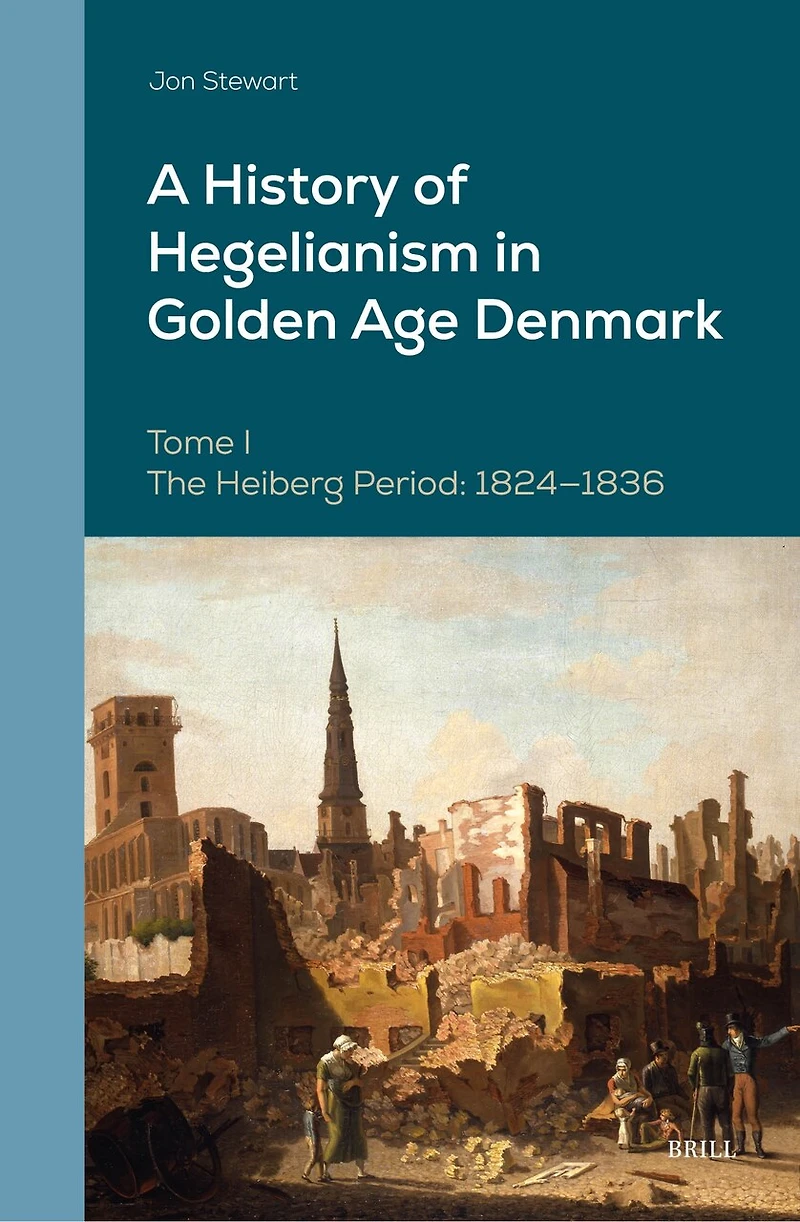
A History of Hegelianism in Golden Age Denmark, Tome I: The Heiberg Period: 1824-1836, 2nd Revised and Augmented Edition
Current price: $466.99

A History of Hegelianism in Golden Age Denmark, Tome I: The Heiberg Period: 1824-1836, 2nd Revised and Augmented Edition
Current price: $466.99
Loading Inventory...
Size: Hardcover
*Product information may vary - to confirm product availability, pricing, shipping and return information please contact Indigo
This is the first of a three-volume work dedicated to exploring the influence of G.W.F. Hegel’s philosophical thinking in Golden Age Denmark. The work demonstrates that the largely overlooked tradition of Danish Hegelianism played a profound and indeed constitutive role in many spheres of Golden Age culture.
This initial tome covers the period from the beginning of the Hegel reception in the Danish Kingdom in the 1820s until the end of 1836. The dominant figure from this period is the poet and critic Johan Ludvig Heiberg, who attended Hegel’s lectures in Berlin in 1824 and then launched a campaign to popularize Hegel’s philosophy among his fellow countrymen. Using his journal Kjøbenhavns flyvende Post as a platform, Heiberg published numerous articles containing ideas that he had borrowed from Hegel. Several readers felt provoked by Heiberg’s Hegelianism and wrote critical responses to him, many of which appeared in Kjøbenhavnsposten , the rival of Heiberg’s journal. Through these debates Hegel’s philosophy became an important part of Danish cultural life.
This is the first of a three-volume work dedicated to exploring the influence of G.W.F. Hegel’s philosophical thinking in Golden Age Denmark. The work demonstrates that the largely overlooked tradition of Danish Hegelianism played a profound and indeed constitutive role in many spheres of Golden Age culture.
This initial tome covers the period from the beginning of the Hegel reception in the Danish Kingdom in the 1820s until the end of 1836. The dominant figure from this period is the poet and critic Johan Ludvig Heiberg, who attended Hegel’s lectures in Berlin in 1824 and then launched a campaign to popularize Hegel’s philosophy among his fellow countrymen. Using his journal Kjøbenhavns flyvende Post as a platform, Heiberg published numerous articles containing ideas that he had borrowed from Hegel. Several readers felt provoked by Heiberg’s Hegelianism and wrote critical responses to him, many of which appeared in Kjøbenhavnsposten , the rival of Heiberg’s journal. Through these debates Hegel’s philosophy became an important part of Danish cultural life.
You May Also Like













More About Indigo at Erin Mills Town Centre
The largest book retailer in Canada also offers toys, music, home décor, gifts and lifestyle products. What's Inside...Books, Magazines, CD’s and DVD’s, Toys and Gifts, Home Accents, Electronics, Baby’s and Children’s Section, Bath and Body, Kitchen and Bedroom, Stationary Located outside in the exterior plaza.
5015 Glen Erin Dr, Mississauga, ON L5M 0R7, Canada
Find Indigo at Erin Mills Town Centre in Mississauga ON
Visit Indigo at Erin Mills Town Centre in Mississauga ON