

GIVE THE PERFECT GIFT
Erin Mills Town Centre Gift Cards are the perfect choice for your gift giving needs.Purchase gift cards at kiosks near the food court or centre court, at Guest Services, or click below to purchase online.PURCHASE HEREHome
A History of the Electron: J. J. and G. P. Thomson
Indigo
Loading Inventory...
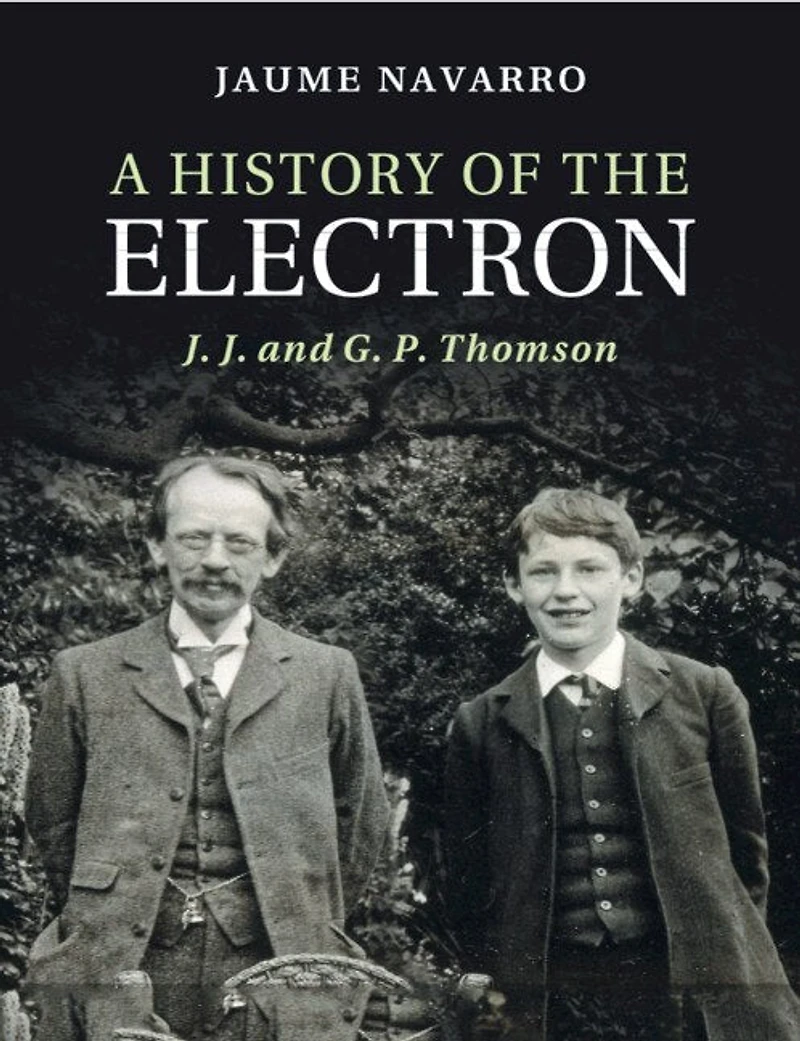
A History of the Electron: J. J. and G. P. Thomson
Current price: $60.95

A History of the Electron: J. J. and G. P. Thomson
Current price: $60.95
Loading Inventory...
Size: Paperback
*Product information may vary - to confirm product availability, pricing, shipping and return information please contact Indigo
Two landmarks in the history of physics are the discovery of the particulate nature of cathode rays (the electron) by J. J. Thomson in 1897 and the experimental demonstration by his son G. P. Thomson in 1927 that the electron exhibits the properties of a wave. Together, the Thomsons are two of the most significant figures in modern physics, both winning Nobel prizes for their work. This book presents the intellectual biographies of the father-and-son physicists, shedding new light on their combined understanding of the nature of electrons and, by extension, of the continuous nature of matter. It is the first text to explore J. J. Thomson's early and later work, as well as the role he played in G. P. Thomson's education as a physicist and how he reacted to his son's discovery of electron diffraction. This fresh perspective will interest academics and graduate students working in the history of early twentieth-century physics.
Two landmarks in the history of physics are the discovery of the particulate nature of cathode rays (the electron) by J. J. Thomson in 1897 and the experimental demonstration by his son G. P. Thomson in 1927 that the electron exhibits the properties of a wave. Together, the Thomsons are two of the most significant figures in modern physics, both winning Nobel prizes for their work. This book presents the intellectual biographies of the father-and-son physicists, shedding new light on their combined understanding of the nature of electrons and, by extension, of the continuous nature of matter. It is the first text to explore J. J. Thomson's early and later work, as well as the role he played in G. P. Thomson's education as a physicist and how he reacted to his son's discovery of electron diffraction. This fresh perspective will interest academics and graduate students working in the history of early twentieth-century physics.
You May Also Like

![J-P - Milk Chocolate Santa 55 g [86588SC]](https://cdn.mall.adeptmind.ai/https%253A%252F%252Fcdn11.bigcommerce.com%252Fs-ixp7mwrxqq%252Fimages%252Fstencil%252F2560w%252Fproducts%252F1469%252F84568%252Fuc_export_download%252526id_1N1IkzCNl4kpUmodgjVT1r3A0yMIREJUX__67985.1706552962.jpg_medium.webp)

![Quain's Elements of Anatomy, Ed. by W. Sharpey A. Thomson and J. Cleland. 2 Vols. [Issued in 3 Pt. the Cancelled Sig. Q1 Is Retained]](https://cdn.mall.adeptmind.ai/https%253A%252F%252Fcdn.shopify.com%252Fs%252Ffiles%252F1%252F0655%252F8980%252F5233%252Ffiles%252F1_1c42aaaa-136f-4ab7-a009-261c2580918a.jpg_medium.webp)







More About Indigo at Erin Mills Town Centre
The largest book retailer in Canada also offers toys, music, home décor, gifts and lifestyle products. What's Inside...Books, Magazines, CD’s and DVD’s, Toys and Gifts, Home Accents, Electronics, Baby’s and Children’s Section, Bath and Body, Kitchen and Bedroom, Stationary Located outside in the exterior plaza.
5015 Glen Erin Dr, Mississauga, ON L5M 0R7, Canada
Find Indigo at Erin Mills Town Centre in Mississauga ON
Visit Indigo at Erin Mills Town Centre in Mississauga ON