

GIVE THE PERFECT GIFT
Erin Mills Town Centre Gift Cards are the perfect choice for your gift giving needs.Purchase gift cards at kiosks near the food court or centre court, at Guest Services, or click below to purchase online.PURCHASE HEREHome
A Modern Utopia
Indigo
Loading Inventory...
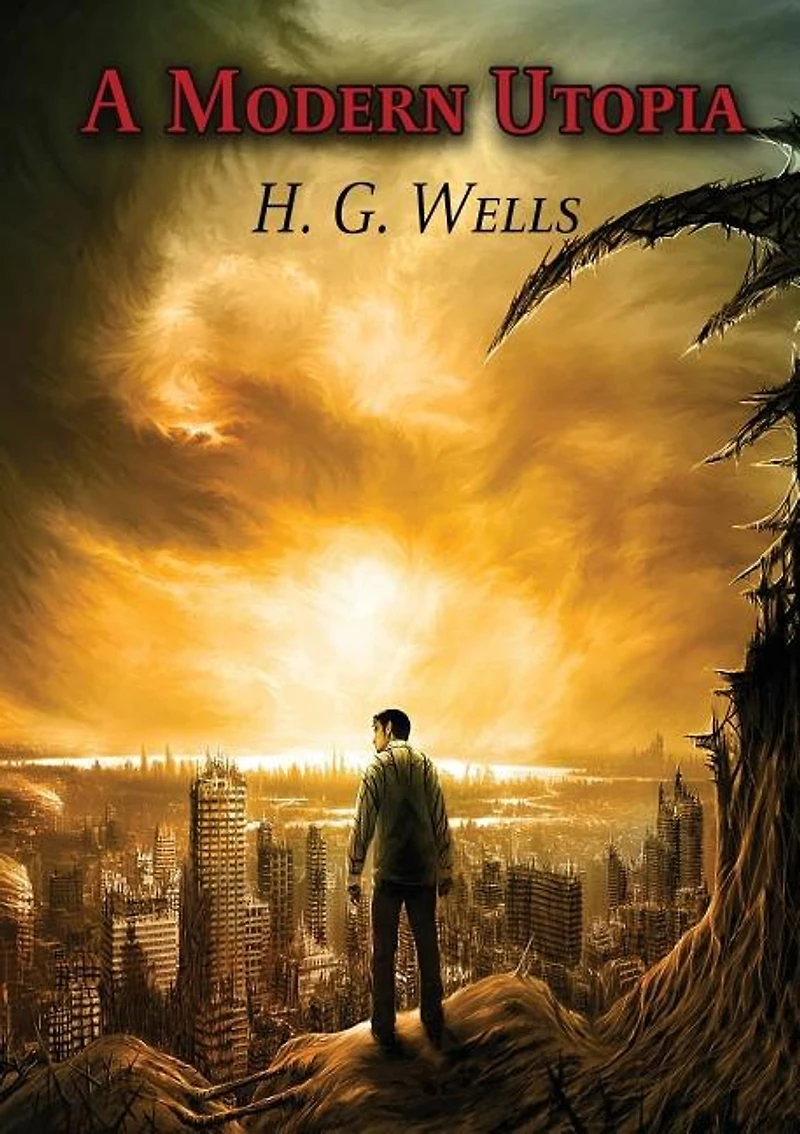
A Modern Utopia
Current price: $22.50

A Modern Utopia
Current price: $22.50
Loading Inventory...
Size: Paperback
*Product information may vary - to confirm product availability, pricing, shipping and return information please contact Indigo
In A Modern Utopia, two travelers fall into a space-warp and suddenly find themselves upon a Utopian Earth controlled by a single World Government.
The premise of the novel is that there is a planet (for "No less than a planet will serve the purpose of a modern Utopia") exactly like Earth, with the same geography and biology. They have, however, "different habits, different traditions, different knowledge, different ideas, different clothing, and different appliances." The narrator's double describes the ascetic Rule by which the samurai live; this includes a ban on alcohol and drugs and a mandatory annual one-week solitary ramble in the wilderness. He also explains the social theory of Utopia, which distinguished four "main classes of mind" The Poietic, the Kinetic, the Dull, and the Base. Poietic minds are creative or inventive; kinetic minds are able but not particularly inventive; the Dull have "inadequate imagination," and the Base are mired in egotism and lack "moral sense."
In A Modern Utopia, two travelers fall into a space-warp and suddenly find themselves upon a Utopian Earth controlled by a single World Government.
The premise of the novel is that there is a planet (for "No less than a planet will serve the purpose of a modern Utopia") exactly like Earth, with the same geography and biology. They have, however, "different habits, different traditions, different knowledge, different ideas, different clothing, and different appliances." The narrator's double describes the ascetic Rule by which the samurai live; this includes a ban on alcohol and drugs and a mandatory annual one-week solitary ramble in the wilderness. He also explains the social theory of Utopia, which distinguished four "main classes of mind" The Poietic, the Kinetic, the Dull, and the Base. Poietic minds are creative or inventive; kinetic minds are able but not particularly inventive; the Dull have "inadequate imagination," and the Base are mired in egotism and lack "moral sense."
You May Also Like







More About Indigo at Erin Mills Town Centre
The largest book retailer in Canada also offers toys, music, home décor, gifts and lifestyle products. What's Inside...Books, Magazines, CD’s and DVD’s, Toys and Gifts, Home Accents, Electronics, Baby’s and Children’s Section, Bath and Body, Kitchen and Bedroom, Stationary Located outside in the exterior plaza.
5015 Glen Erin Dr, Mississauga, ON L5M 0R7, Canada
Find Indigo at Erin Mills Town Centre in Mississauga ON
Visit Indigo at Erin Mills Town Centre in Mississauga ON