

GIVE THE PERFECT GIFT
Erin Mills Town Centre Gift Cards are the perfect choice for your gift giving needs.Purchase gift cards at kiosks near the food court or centre court, at Guest Services, or click below to purchase online.PURCHASE HEREHome
A New Understanding Of Mental Disorders by Andreas Heinz, Hardcover | Indigo Chapters
Indigo
Loading Inventory...
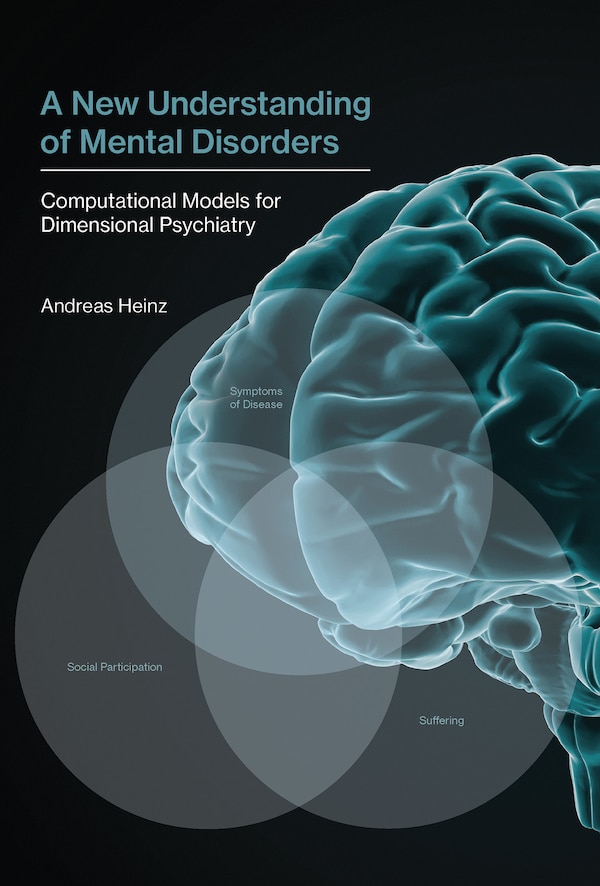
A New Understanding Of Mental Disorders by Andreas Heinz, Hardcover | Indigo Chapters
From Andreas Heinz
Current price: $34.00

From Andreas Heinz
A New Understanding Of Mental Disorders by Andreas Heinz, Hardcover | Indigo Chapters
Current price: $34.00
Loading Inventory...
Size: 0.67 x 9.31 x 1
*Product information may vary - to confirm product availability, pricing, shipping and return information please contact Indigo
A new computational and dimensional approach to understanding and classifying mental disorders: modeling key learning and decision-making mechanisms across different mental disorders. Even as researchers look for neurobiological correlates of mental disorders, many of these disorders are still classified solely according to the manifestation of clinical symptoms. Neurobiological findings rarely help diagnose a specific disease or predict its outcome. Although current diagnostic categories are questionable (sometimes labeling common states of human suffering as disorders), traditional neuroimaging approaches are not sophisticated enough to capture the neurobiological markers of mental disorder. In this book, Andreas Heinz proposes a computational and dimensional approach to understanding and classifying mental disorders: modeling key learning and decision-making mechanisms across different mental disorders. Such an approach focuses on the malleability and diversity of human behavior and its biological underpinnings. Heinz explains basic learning mechanisms and their effects on human behavior, focusing not on single disorders but on how such mechanisms work in a multitude of mental states. For example, he traces alterations in dopamine-reinforcement learning in psychotic, affective, and addictive disorders. He investigates to what extent these basic dimensions of mental disorders can account for such syndromes as craving and loss of control in addiction, positive and negative mood states in affective disorders, and the altered experience of self and world associated with psychotic states. Finally, Heinz explores the clinical and therapeutic implications of such accounts. He argues that a focus on learning mechanisms, with its emphasis on human creativity and resilience, should help reduce the stigma of mental disorder. | A New Understanding Of Mental Disorders by Andreas Heinz, Hardcover | Indigo Chapters
A new computational and dimensional approach to understanding and classifying mental disorders: modeling key learning and decision-making mechanisms across different mental disorders. Even as researchers look for neurobiological correlates of mental disorders, many of these disorders are still classified solely according to the manifestation of clinical symptoms. Neurobiological findings rarely help diagnose a specific disease or predict its outcome. Although current diagnostic categories are questionable (sometimes labeling common states of human suffering as disorders), traditional neuroimaging approaches are not sophisticated enough to capture the neurobiological markers of mental disorder. In this book, Andreas Heinz proposes a computational and dimensional approach to understanding and classifying mental disorders: modeling key learning and decision-making mechanisms across different mental disorders. Such an approach focuses on the malleability and diversity of human behavior and its biological underpinnings. Heinz explains basic learning mechanisms and their effects on human behavior, focusing not on single disorders but on how such mechanisms work in a multitude of mental states. For example, he traces alterations in dopamine-reinforcement learning in psychotic, affective, and addictive disorders. He investigates to what extent these basic dimensions of mental disorders can account for such syndromes as craving and loss of control in addiction, positive and negative mood states in affective disorders, and the altered experience of self and world associated with psychotic states. Finally, Heinz explores the clinical and therapeutic implications of such accounts. He argues that a focus on learning mechanisms, with its emphasis on human creativity and resilience, should help reduce the stigma of mental disorder. | A New Understanding Of Mental Disorders by Andreas Heinz, Hardcover | Indigo Chapters
You May Also Like









More About Indigo at Erin Mills Town Centre
The largest book retailer in Canada also offers toys, music, home décor, gifts and lifestyle products. What's Inside...Books, Magazines, CD’s and DVD’s, Toys and Gifts, Home Accents, Electronics, Baby’s and Children’s Section, Bath and Body, Kitchen and Bedroom, Stationary Located outside in the exterior plaza.
5015 Glen Erin Dr, Mississauga, ON L5M 0R7, Canada
Find Indigo at Erin Mills Town Centre in Mississauga ON
Visit Indigo at Erin Mills Town Centre in Mississauga ON