

GIVE THE PERFECT GIFT
Erin Mills Town Centre Gift Cards are the perfect choice for your gift giving needs.Purchase gift cards at kiosks near the food court or centre court, at Guest Services, or click below to purchase online.PURCHASE HEREHome
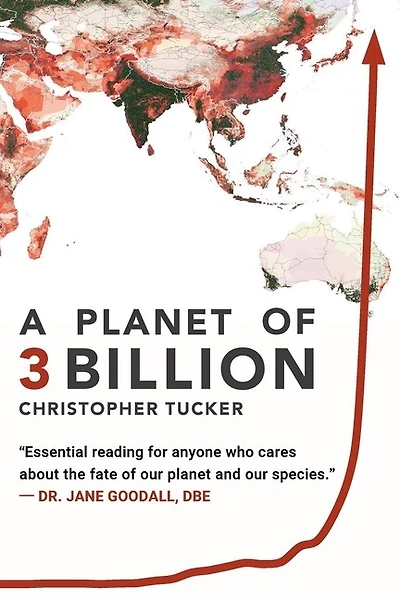
A Planet of 3 Billion: Mapping Humanity's Long History of Ecological Destruction and Finding Our Way to a Resilient Future | A Global Citizen's Guide to Saving the Planet
Indigo
Loading Inventory...
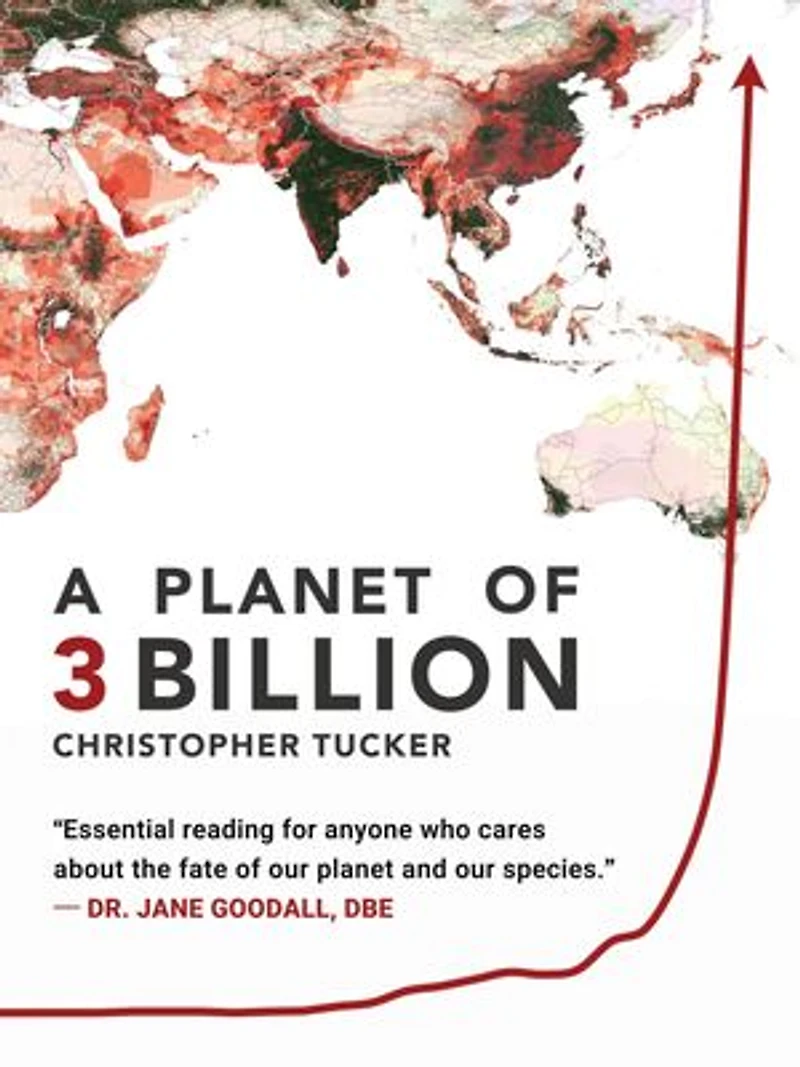
A Planet of 3 Billion: Mapping Humanity's Long History of Ecological Destruction and Finding Our Way to a Resilient Future | A Global Citizen's Guide to Saving the Planet
Current price: $16.99
Original price: $20.14

A Planet of 3 Billion: Mapping Humanity's Long History of Ecological Destruction and Finding Our Way to a Resilient Future | A Global Citizen's Guide to Saving the Planet
Current price: $16.99
Original price: $20.14
Loading Inventory...
Size: Kobo eBook
*Product information may vary - to confirm product availability, pricing, shipping and return information please contact Indigo
How many people can the Earth support? Tucker makes the case that the Earth’s 'carrying capacity' is limited to 3 billion humans, and that humanity’s century long binge has incurred an unsustainable ecological debt that must be paid down promptly, or else cataclysm awaits. Given that our species has already surpassed 7.5 billion, and is fast approaching 9 billion or more, this is an audacious claim that everyone who cares about the fate of our planet and our species has a responsibility to evaluate for themselves. Tucker, in his exploration of the frontiers of scientific knowledge, urges all of us to question his estimate. He encourages us to marshal our own data and calculations, if we are so inclined, so that we can all engage in this existential debate as educated global citizens equipped to navigate what promises to be an uncertain future.
Equal parts history, science, economics, demography, conservation thinking, ethics, and foreign affairs - all through a geographic lens - this provocative book fundamentally redefines how you will think about the fate of humanity, and the planet from which our species evolved. In part a continuation of E.O. Wilson’s Half-Earth thesis, Tucker decrypts the complex story of how humanity has come to burden the finite geography of our planet in unsustainable ways. Tucker argues that we in fact have "A People Problem” which goes far beyond the very real perils of climate change and biodiversity loss. Tucker takes us on a journey through the history and geography of the ecological devastation wrought by humanity, and the persistent wastes that we have accumulated, as our population has grown relentlessly. Only by thinking geographically, Tucker argues, can we truly understand the threats to humanity and the Planet Earth that sustains us. In A Planet of 3 Billion , biogeography, human geography, and geostrategic thinking collide to illuminate the most pressing issues facing our world today.
Beyond a detailed tour of this seemingly insurmountable challenge, Tucker offers solutions. Tucker makes a convincing case that renewal is possible, and that we can indeed find our way to a new sustainable population plateau of 3 billion without some ominous genocide, epidemic, or ecological collapse. Women - educated, empowered, integrated in to the workforce, and with access to family planning technologies - hold the key to our ecological salvation. All of us bear the responsibility for empowering women if we are to collectively chart a safe path to this new lower population plateau. And, together we must conjure up new ways to give Earth’s panoply of unique ecoregions a voice, if we are to achieve an ecologically sustainable planet for our species over the long run.
This book is for anyone who is interested in the world around them, concerned about the fate of the planet, and seeking insights that can help them become part of the solutions that would put us on a path to a resilient future.
How many people can the Earth support? Tucker makes the case that the Earth’s 'carrying capacity' is limited to 3 billion humans, and that humanity’s century long binge has incurred an unsustainable ecological debt that must be paid down promptly, or else cataclysm awaits. Given that our species has already surpassed 7.5 billion, and is fast approaching 9 billion or more, this is an audacious claim that everyone who cares about the fate of our planet and our species has a responsibility to evaluate for themselves. Tucker, in his exploration of the frontiers of scientific knowledge, urges all of us to question his estimate. He encourages us to marshal our own data and calculations, if we are so inclined, so that we can all engage in this existential debate as educated global citizens equipped to navigate what promises to be an uncertain future.
Equal parts history, science, economics, demography, conservation thinking, ethics, and foreign affairs - all through a geographic lens - this provocative book fundamentally redefines how you will think about the fate of humanity, and the planet from which our species evolved. In part a continuation of E.O. Wilson’s Half-Earth thesis, Tucker decrypts the complex story of how humanity has come to burden the finite geography of our planet in unsustainable ways. Tucker argues that we in fact have "A People Problem” which goes far beyond the very real perils of climate change and biodiversity loss. Tucker takes us on a journey through the history and geography of the ecological devastation wrought by humanity, and the persistent wastes that we have accumulated, as our population has grown relentlessly. Only by thinking geographically, Tucker argues, can we truly understand the threats to humanity and the Planet Earth that sustains us. In A Planet of 3 Billion , biogeography, human geography, and geostrategic thinking collide to illuminate the most pressing issues facing our world today.
Beyond a detailed tour of this seemingly insurmountable challenge, Tucker offers solutions. Tucker makes a convincing case that renewal is possible, and that we can indeed find our way to a new sustainable population plateau of 3 billion without some ominous genocide, epidemic, or ecological collapse. Women - educated, empowered, integrated in to the workforce, and with access to family planning technologies - hold the key to our ecological salvation. All of us bear the responsibility for empowering women if we are to collectively chart a safe path to this new lower population plateau. And, together we must conjure up new ways to give Earth’s panoply of unique ecoregions a voice, if we are to achieve an ecologically sustainable planet for our species over the long run.
This book is for anyone who is interested in the world around them, concerned about the fate of the planet, and seeking insights that can help them become part of the solutions that would put us on a path to a resilient future.
You May Also Like








More About Indigo at Erin Mills Town Centre
The largest book retailer in Canada also offers toys, music, home décor, gifts and lifestyle products. What's Inside...Books, Magazines, CD’s and DVD’s, Toys and Gifts, Home Accents, Electronics, Baby’s and Children’s Section, Bath and Body, Kitchen and Bedroom, Stationary Located outside in the exterior plaza.
5015 Glen Erin Dr, Mississauga, ON L5M 0R7, Canada
Find Indigo at Erin Mills Town Centre in Mississauga ON
Visit Indigo at Erin Mills Town Centre in Mississauga ON