

GIVE THE PERFECT GIFT
Erin Mills Town Centre Gift Cards are the perfect choice for your gift giving needs.Purchase gift cards at kiosks near the food court or centre court, at Guest Services, or click below to purchase online.PURCHASE HEREHome
A Political Economy of Power: Ordoliberalism Context, 1932-1950
Indigo
Loading Inventory...
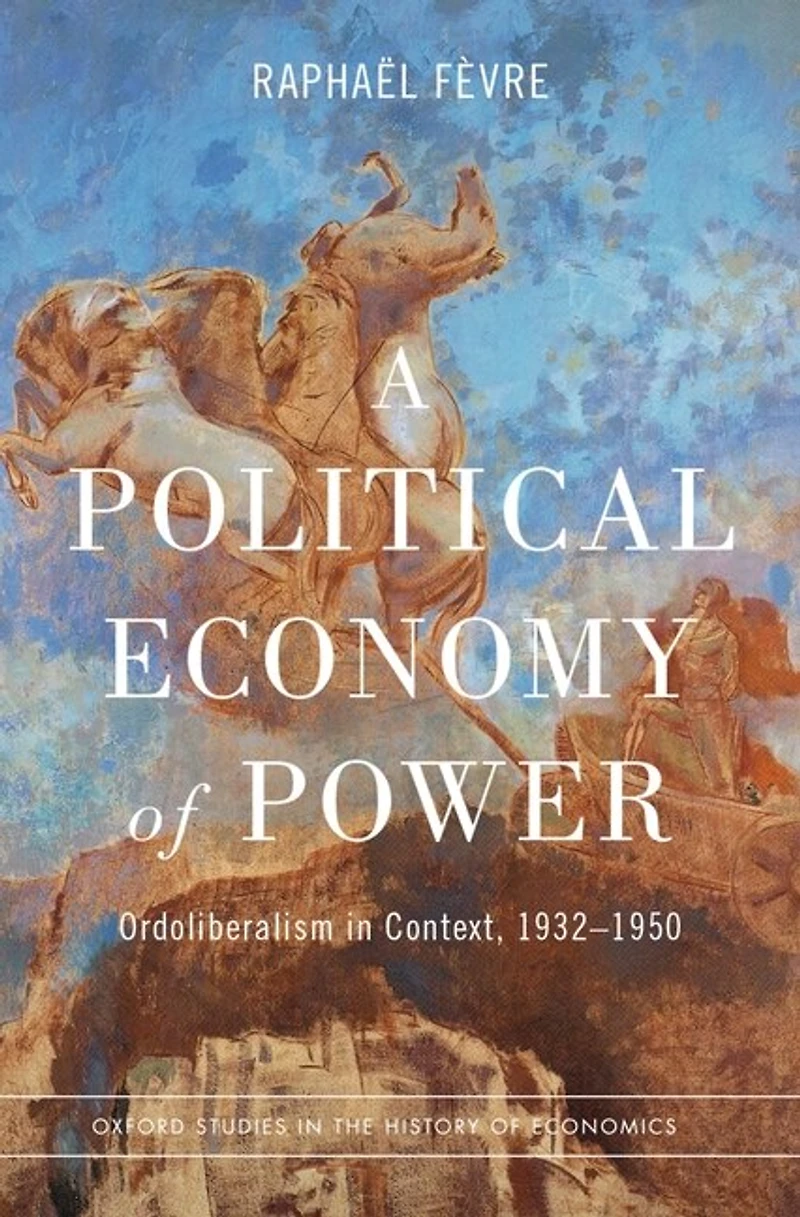
A Political Economy of Power: Ordoliberalism Context, 1932-1950
Current price: $157.78

A Political Economy of Power: Ordoliberalism Context, 1932-1950
Current price: $157.78
Loading Inventory...
Size: Hardcover
*Product information may vary - to confirm product availability, pricing, shipping and return information please contact Indigo
The first English analysis of German ordoliberalism from the perspective of both intellectual history and history of economic thought.
In comparison with Keynesianism, monetarism, or other economic paradigms of the twentieth century, ordoliberalism has been generally neglected. However, after first emerging in Germany during interwar years, ordoliberalism is now at the center of the ongoing debates about the foundations, the present governance, and the future prospects of the European Union.
In A Political Economy of Power, Raphaël Fèvre retraces the intellectual history of ordoliberalism, focusing on the works of its main representatives Walter Eucken and Wilhelm Röpke, together with the contributions of Franz Böhm, Alexander Rüstow, Leonhard Miksch, and Friedrich Lutz. Fèvre provides a clear and comprehensive definition of ordoliberalism, describes in detail its principles, and explains how ordoliberalism came to heavily influence German post-war reconstruction despite its emergence during the Nazi period. He also investigates the reasons for its success in West Germany in the immediate aftermath of the war, and its lasting influence through a partial transformation to a contemporary form of neoliberal orthodoxy. A Political Economy of Power provides a contextualized and interdisciplinary study of ordoliberalism-one of the most influential intellectual projects of the second half of the twentieth century in Europe.
The first English analysis of German ordoliberalism from the perspective of both intellectual history and history of economic thought.
In comparison with Keynesianism, monetarism, or other economic paradigms of the twentieth century, ordoliberalism has been generally neglected. However, after first emerging in Germany during interwar years, ordoliberalism is now at the center of the ongoing debates about the foundations, the present governance, and the future prospects of the European Union.
In A Political Economy of Power, Raphaël Fèvre retraces the intellectual history of ordoliberalism, focusing on the works of its main representatives Walter Eucken and Wilhelm Röpke, together with the contributions of Franz Böhm, Alexander Rüstow, Leonhard Miksch, and Friedrich Lutz. Fèvre provides a clear and comprehensive definition of ordoliberalism, describes in detail its principles, and explains how ordoliberalism came to heavily influence German post-war reconstruction despite its emergence during the Nazi period. He also investigates the reasons for its success in West Germany in the immediate aftermath of the war, and its lasting influence through a partial transformation to a contemporary form of neoliberal orthodoxy. A Political Economy of Power provides a contextualized and interdisciplinary study of ordoliberalism-one of the most influential intellectual projects of the second half of the twentieth century in Europe.
You May Also Like














More About Indigo at Erin Mills Town Centre
The largest book retailer in Canada also offers toys, music, home décor, gifts and lifestyle products. What's Inside...Books, Magazines, CD’s and DVD’s, Toys and Gifts, Home Accents, Electronics, Baby’s and Children’s Section, Bath and Body, Kitchen and Bedroom, Stationary Located outside in the exterior plaza.
5015 Glen Erin Dr, Mississauga, ON L5M 0R7, Canada
Find Indigo at Erin Mills Town Centre in Mississauga ON
Visit Indigo at Erin Mills Town Centre in Mississauga ON