

GIVE THE PERFECT GIFT
Erin Mills Town Centre Gift Cards are the perfect choice for your gift giving needs.Purchase gift cards at kiosks near the food court or centre court, at Guest Services, or click below to purchase online.PURCHASE HEREHome
A Reverie on Mark Spencer’s Essay (2021) "The Many Phenomenological Reductions"
Indigo
Loading Inventory...
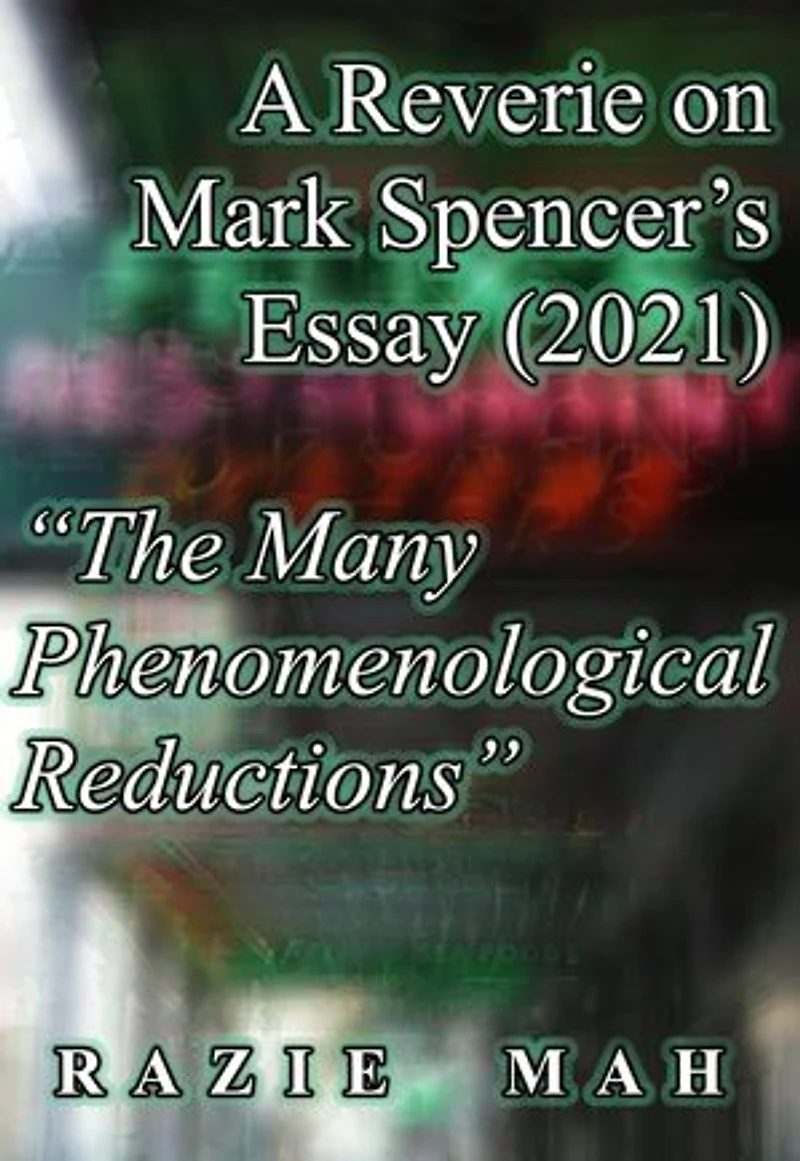
A Reverie on Mark Spencer’s Essay (2021) "The Many Phenomenological Reductions"
Current price: $4.99

A Reverie on Mark Spencer’s Essay (2021) "The Many Phenomenological Reductions"
Current price: $4.99
Loading Inventory...
Size: Kobo eBook
*Product information may vary - to confirm product availability, pricing, shipping and return information please contact Indigo
Mark K. Spencer publishes an article in the American Catholic Philosophical Quarterly (volume XX, 2021). The full title is "The Many Phenomenological Reductions and Catholic Metaphysical Anti-Reductionism".
There are as many types of phenomenology as phenomenologists. Or, so it seems. But, according to Spencer, they have one feature in common. They all follow Husserl in attempting to experience the noumenon, the thing itself. In doing so, they swim against the tide of science. Scientists focus on phenomena. Phenomena are observed, measured, modeled and discussed in disciplinary conferences.
I find it odd that Husserl names his inquiry after phenomena, not their noumenon. Also, phenomenological reductionism is not quite the same as scientific reductionism.
Scientific reductionism says, "Look at only the observable and measurable aspects of the thing itself. Build models. Publish these models using specialized disciplinary language. The thing reduces to its models."
Phenomenological reductionism says, "Reduction involves bracketing out all judgments, especially the scientific empirio-schematic judgment. The thing itself may then be directly and intuitively grasped."
Phenomenology is anti-reductionist when it comes to science.
So is Christian metaphysics.
What does this imply?
Spencer proposes an alliance. He discusses the history of phenomenology, how phenomenology and metaphysics challenge one another, and how they might value each other.
What he does not mention is the foil. Both phenomenology and Christian metaphysics compete in their desire to situate the Positivist's judgment, where a positivist intellect holds together the noumenon, its phenomena and the empirio-schematic judgment.
Spencer does not mention science.
This lacunae has implications. My comments sound a series of reveries. Wake up and smell the coffee. Imagine what phenomenology and metaphysics have in store for one another.
Mark K. Spencer publishes an article in the American Catholic Philosophical Quarterly (volume XX, 2021). The full title is "The Many Phenomenological Reductions and Catholic Metaphysical Anti-Reductionism".
There are as many types of phenomenology as phenomenologists. Or, so it seems. But, according to Spencer, they have one feature in common. They all follow Husserl in attempting to experience the noumenon, the thing itself. In doing so, they swim against the tide of science. Scientists focus on phenomena. Phenomena are observed, measured, modeled and discussed in disciplinary conferences.
I find it odd that Husserl names his inquiry after phenomena, not their noumenon. Also, phenomenological reductionism is not quite the same as scientific reductionism.
Scientific reductionism says, "Look at only the observable and measurable aspects of the thing itself. Build models. Publish these models using specialized disciplinary language. The thing reduces to its models."
Phenomenological reductionism says, "Reduction involves bracketing out all judgments, especially the scientific empirio-schematic judgment. The thing itself may then be directly and intuitively grasped."
Phenomenology is anti-reductionist when it comes to science.
So is Christian metaphysics.
What does this imply?
Spencer proposes an alliance. He discusses the history of phenomenology, how phenomenology and metaphysics challenge one another, and how they might value each other.
What he does not mention is the foil. Both phenomenology and Christian metaphysics compete in their desire to situate the Positivist's judgment, where a positivist intellect holds together the noumenon, its phenomena and the empirio-schematic judgment.
Spencer does not mention science.
This lacunae has implications. My comments sound a series of reveries. Wake up and smell the coffee. Imagine what phenomenology and metaphysics have in store for one another.
You May Also Like












More About Indigo at Erin Mills Town Centre
The largest book retailer in Canada also offers toys, music, home décor, gifts and lifestyle products. What's Inside...Books, Magazines, CD’s and DVD’s, Toys and Gifts, Home Accents, Electronics, Baby’s and Children’s Section, Bath and Body, Kitchen and Bedroom, Stationary Located outside in the exterior plaza.
5015 Glen Erin Dr, Mississauga, ON L5M 0R7, Canada
Find Indigo at Erin Mills Town Centre in Mississauga ON
Visit Indigo at Erin Mills Town Centre in Mississauga ON