

GIVE THE PERFECT GIFT
Erin Mills Town Centre Gift Cards are the perfect choice for your gift giving needs.Purchase gift cards at kiosks near the food court or centre court, at Guest Services, or click below to purchase online.PURCHASE HEREHome
Accelerating The Kill Chain Via Future Unmanned Aircraft
Indigo
Loading Inventory...
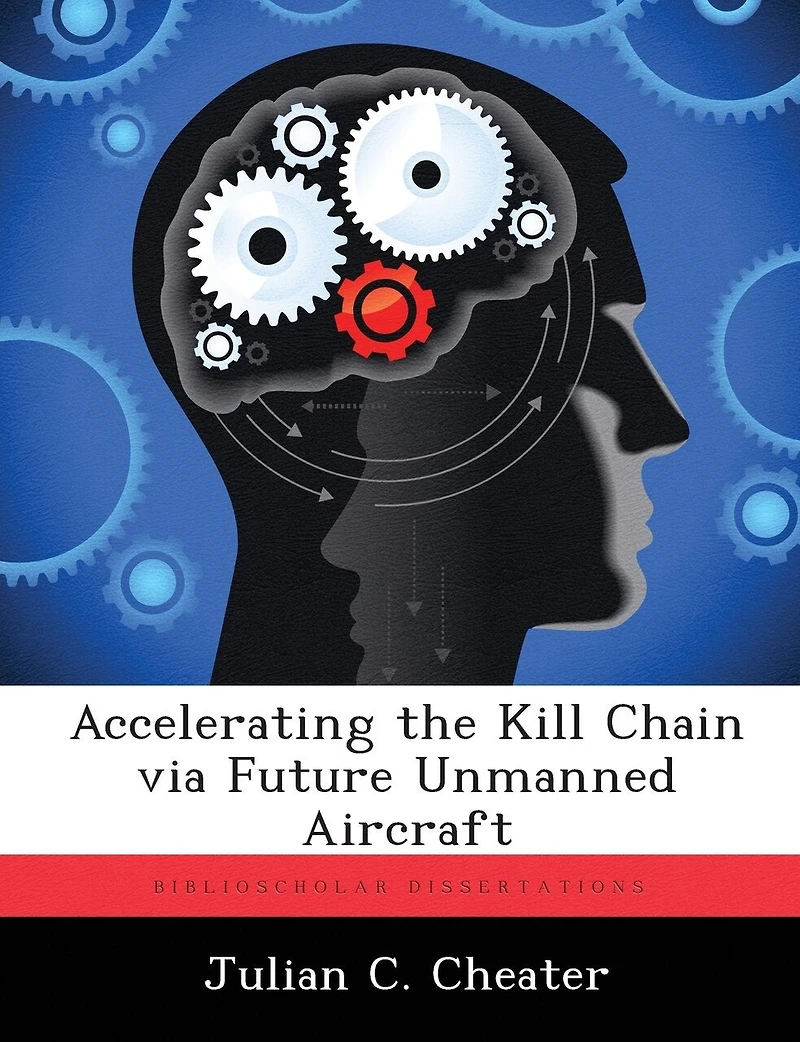
Accelerating The Kill Chain Via Future Unmanned Aircraft
Current price: $18.92

Accelerating The Kill Chain Via Future Unmanned Aircraft
Current price: $18.92
Loading Inventory...
Size: Paperback
*Product information may vary - to confirm product availability, pricing, shipping and return information please contact Indigo
Unmanned aircraft (UA) have evolved from simple reconnaissance assets into capable and persistent strike platforms in a short period of time. Looking ahead to the year 2025, what technologies will help the US military reduce the time it takes to find, track, and neutralize a target with UA? The United States can have the greatest impact in accelerating the kill chain by investing in research that advances autonomous UA operations and enables a Mobile Ad-hoc Network (MANET) using UA as communications nodes. This MANET should interface with the Internet to provide maximum warfighter access and it will relay information via a combination of radio frequency, laser communication, and satellite communication links. As warfighters, we tend to focus more on the kinetic effects such as improving munitions instead of unglamorous but critical tasks such as gathering, analyzing, and distributing vital information to the right person for action. Autonomous UA operations will reduce manpower and bandwidth requirements while an improved airborne communications network will increase situational awareness for warfighters and decrease reliance on satellites. The military often seeks to "revolutionize" warfighting via cutting-edge technologies, but it can often gain more by selectively improving existing technologies to promote autonomy and interoperability with less risk. Ironically, accelerating the kill chain with capable sensor-shooters may be delayed more by political, cultural, and service doctrine biases than technological barriers. UA airspace integration, deconfliction methods, and inter-service command and control still warrant attention. By overcoming both technical and cultural barriers, the United States can accelerate the kill chain and anticipate enemy actions instead of reacting to attacks.
Unmanned aircraft (UA) have evolved from simple reconnaissance assets into capable and persistent strike platforms in a short period of time. Looking ahead to the year 2025, what technologies will help the US military reduce the time it takes to find, track, and neutralize a target with UA? The United States can have the greatest impact in accelerating the kill chain by investing in research that advances autonomous UA operations and enables a Mobile Ad-hoc Network (MANET) using UA as communications nodes. This MANET should interface with the Internet to provide maximum warfighter access and it will relay information via a combination of radio frequency, laser communication, and satellite communication links. As warfighters, we tend to focus more on the kinetic effects such as improving munitions instead of unglamorous but critical tasks such as gathering, analyzing, and distributing vital information to the right person for action. Autonomous UA operations will reduce manpower and bandwidth requirements while an improved airborne communications network will increase situational awareness for warfighters and decrease reliance on satellites. The military often seeks to "revolutionize" warfighting via cutting-edge technologies, but it can often gain more by selectively improving existing technologies to promote autonomy and interoperability with less risk. Ironically, accelerating the kill chain with capable sensor-shooters may be delayed more by political, cultural, and service doctrine biases than technological barriers. UA airspace integration, deconfliction methods, and inter-service command and control still warrant attention. By overcoming both technical and cultural barriers, the United States can accelerate the kill chain and anticipate enemy actions instead of reacting to attacks.
You May Also Like











More About Indigo at Erin Mills Town Centre
The largest book retailer in Canada also offers toys, music, home décor, gifts and lifestyle products. What's Inside...Books, Magazines, CD’s and DVD’s, Toys and Gifts, Home Accents, Electronics, Baby’s and Children’s Section, Bath and Body, Kitchen and Bedroom, Stationary Located outside in the exterior plaza.
5015 Glen Erin Dr, Mississauga, ON L5M 0R7, Canada
Find Indigo at Erin Mills Town Centre in Mississauga ON
Visit Indigo at Erin Mills Town Centre in Mississauga ON