

GIVE THE PERFECT GIFT
Erin Mills Town Centre Gift Cards are the perfect choice for your gift giving needs.Purchase gift cards at kiosks near the food court or centre court, at Guest Services, or click below to purchase online.PURCHASE HEREHome
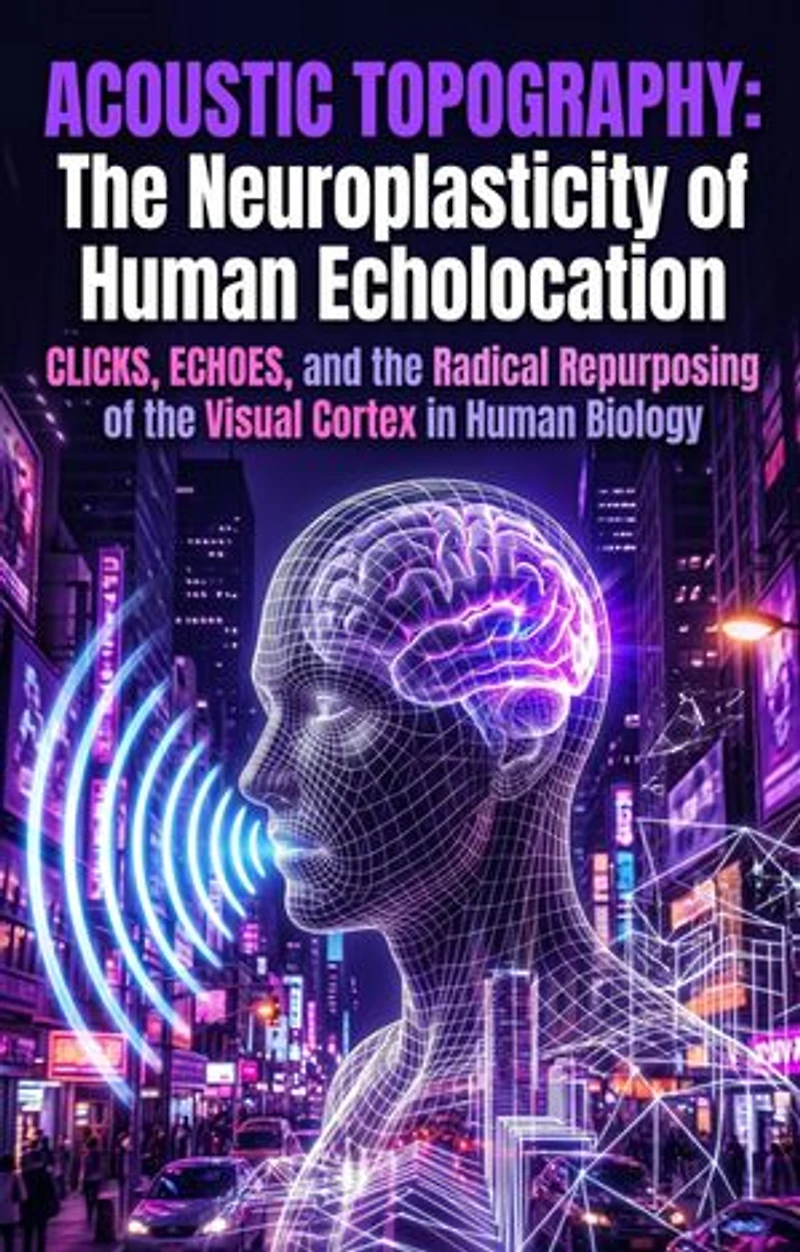
Acoustic Topography: The Neuroplasticity of Human Echolocation: Clicks, Echoes, and the Radical Repurposing of the Visual Cortex in Human Biology
Indigo
Loading Inventory...
Acoustic Topography: The Neuroplasticity of Human Echolocation: Clicks, Echoes, and the Radical Repurposing of the Visual Cortex in Human Biology
Current price: $7.99

Acoustic Topography: The Neuroplasticity of Human Echolocation: Clicks, Echoes, and the Radical Repurposing of the Visual Cortex in Human Biology
Current price: $7.99
Loading Inventory...
Size: Kobo eBook
*Product information may vary - to confirm product availability, pricing, shipping and return information please contact Indigo
How is it physically possible for a completely blind individual to confidently ride a bicycle through a crowded, unfamiliar city street without a cane? The answer lies in one of the most staggering demonstrations of human biological adaptability ever recorded by modern science: human echolocation. By producing sharp, precise tongue clicks, certain blind individuals have trained themselves to analyze the returning acoustic echoes to determine the exact size, distance, and density of surrounding physical objects. When neuroscientists placed these expert echolocators inside functional MRI machines, the results were paradigm-shattering. The returning auditory echoes were not simply being processed by the brain's auditory centers; they were actively illuminating the visual cortex. The brain had literally rewired its own hardware, translating raw acoustic data into highly accurate spatial geometry. This profound medical analysis explores the absolute limits of sensory substitution. It unpacks the acoustic physics of the tongue click, the grueling cognitive training required to master environmental mapping, and the radical implications for rehabilitative neurology. Redefine your understanding of the human senses. Exploring human echolocation proves that our brains are not rigidly wired machines, but fluid, desperately adaptive engines capable of seeing the world entirely through sound.
How is it physically possible for a completely blind individual to confidently ride a bicycle through a crowded, unfamiliar city street without a cane? The answer lies in one of the most staggering demonstrations of human biological adaptability ever recorded by modern science: human echolocation. By producing sharp, precise tongue clicks, certain blind individuals have trained themselves to analyze the returning acoustic echoes to determine the exact size, distance, and density of surrounding physical objects. When neuroscientists placed these expert echolocators inside functional MRI machines, the results were paradigm-shattering. The returning auditory echoes were not simply being processed by the brain's auditory centers; they were actively illuminating the visual cortex. The brain had literally rewired its own hardware, translating raw acoustic data into highly accurate spatial geometry. This profound medical analysis explores the absolute limits of sensory substitution. It unpacks the acoustic physics of the tongue click, the grueling cognitive training required to master environmental mapping, and the radical implications for rehabilitative neurology. Redefine your understanding of the human senses. Exploring human echolocation proves that our brains are not rigidly wired machines, but fluid, desperately adaptive engines capable of seeing the world entirely through sound.
You May Also Like













More About Indigo at Erin Mills Town Centre
The largest book retailer in Canada also offers toys, music, home décor, gifts and lifestyle products. What's Inside...Books, Magazines, CD’s and DVD’s, Toys and Gifts, Home Accents, Electronics, Baby’s and Children’s Section, Bath and Body, Kitchen and Bedroom, Stationary Located outside in the exterior plaza.
5015 Glen Erin Dr, Mississauga, ON L5M 0R7, Canada
Find Indigo at Erin Mills Town Centre in Mississauga ON
Visit Indigo at Erin Mills Town Centre in Mississauga ON