

GIVE THE PERFECT GIFT
Erin Mills Town Centre Gift Cards are the perfect choice for your gift giving needs.Purchase gift cards at kiosks near the food court or centre court, at Guest Services, or click below to purchase online.PURCHASE HEREHome
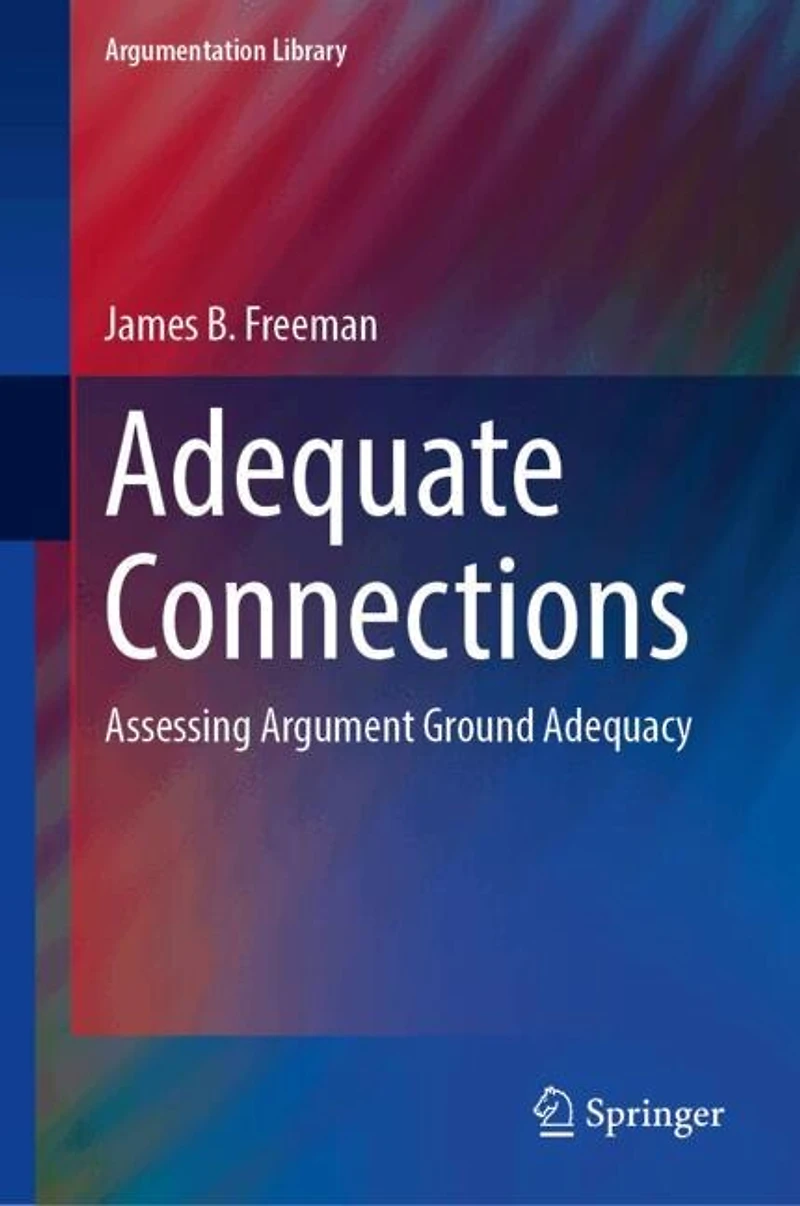
Adequate Connections: Assessing Argument Ground Adequacy
Indigo
Loading Inventory...
Adequate Connections: Assessing Argument Ground Adequacy
Current price: $189.95

Adequate Connections: Assessing Argument Ground Adequacy
Current price: $189.95
Loading Inventory...
Size: Hardcover
*Product information may vary - to confirm product availability, pricing, shipping and return information please contact Indigo
This book presents a comprehensive picture of when the premises of an argument are adequately connected to its conclusion. The author draws upon the familiar Toulmin model, Rescher's discussion of presumption and burden of proof, and L. Jonathan Cohen's presentation of the method of relevant variables. The book first assesses the warrant or inference rule connecting the premises to the conclusion. To analyzes this, the author asks a series of questions such as - should the warrant be evaluated by conclusive or defeasible standards? Does the argument require that its premises, if acceptable, guarantee that the conclusion is acceptable also or does it allow the premises just to present a body of relevant evidence? Is the inference rule backed or supported a priori or a posteriori? These distinctions form four categories of warrants: conclusive a priori, defeasible a posteriori, defeasible a priori, and virtually conclusive a posteriori. The warrants in each category are evaluated differently for how strongly the premises support the conclusion of arguments instancing those warrants. After presenting the rationale for this division and discussing our nonprobabilistic approach, the author analyzes the connection adequacy for each of these types of warrants. This book is of interest to scholars of argumentation theory.
This book presents a comprehensive picture of when the premises of an argument are adequately connected to its conclusion. The author draws upon the familiar Toulmin model, Rescher's discussion of presumption and burden of proof, and L. Jonathan Cohen's presentation of the method of relevant variables. The book first assesses the warrant or inference rule connecting the premises to the conclusion. To analyzes this, the author asks a series of questions such as - should the warrant be evaluated by conclusive or defeasible standards? Does the argument require that its premises, if acceptable, guarantee that the conclusion is acceptable also or does it allow the premises just to present a body of relevant evidence? Is the inference rule backed or supported a priori or a posteriori? These distinctions form four categories of warrants: conclusive a priori, defeasible a posteriori, defeasible a priori, and virtually conclusive a posteriori. The warrants in each category are evaluated differently for how strongly the premises support the conclusion of arguments instancing those warrants. After presenting the rationale for this division and discussing our nonprobabilistic approach, the author analyzes the connection adequacy for each of these types of warrants. This book is of interest to scholars of argumentation theory.
You May Also Like












More About Indigo at Erin Mills Town Centre
The largest book retailer in Canada also offers toys, music, home décor, gifts and lifestyle products. What's Inside...Books, Magazines, CD’s and DVD’s, Toys and Gifts, Home Accents, Electronics, Baby’s and Children’s Section, Bath and Body, Kitchen and Bedroom, Stationary Located outside in the exterior plaza.
5015 Glen Erin Dr, Mississauga, ON L5M 0R7, Canada
Find Indigo at Erin Mills Town Centre in Mississauga ON
Visit Indigo at Erin Mills Town Centre in Mississauga ON