

GIVE THE PERFECT GIFT
Erin Mills Town Centre Gift Cards are the perfect choice for your gift giving needs.Purchase gift cards at kiosks near the food court or centre court, at Guest Services, or click below to purchase online.PURCHASE HEREHome
Advanced Arithmetic for the Digital Computer: Design of Arithmetic Units
Indigo
Loading Inventory...
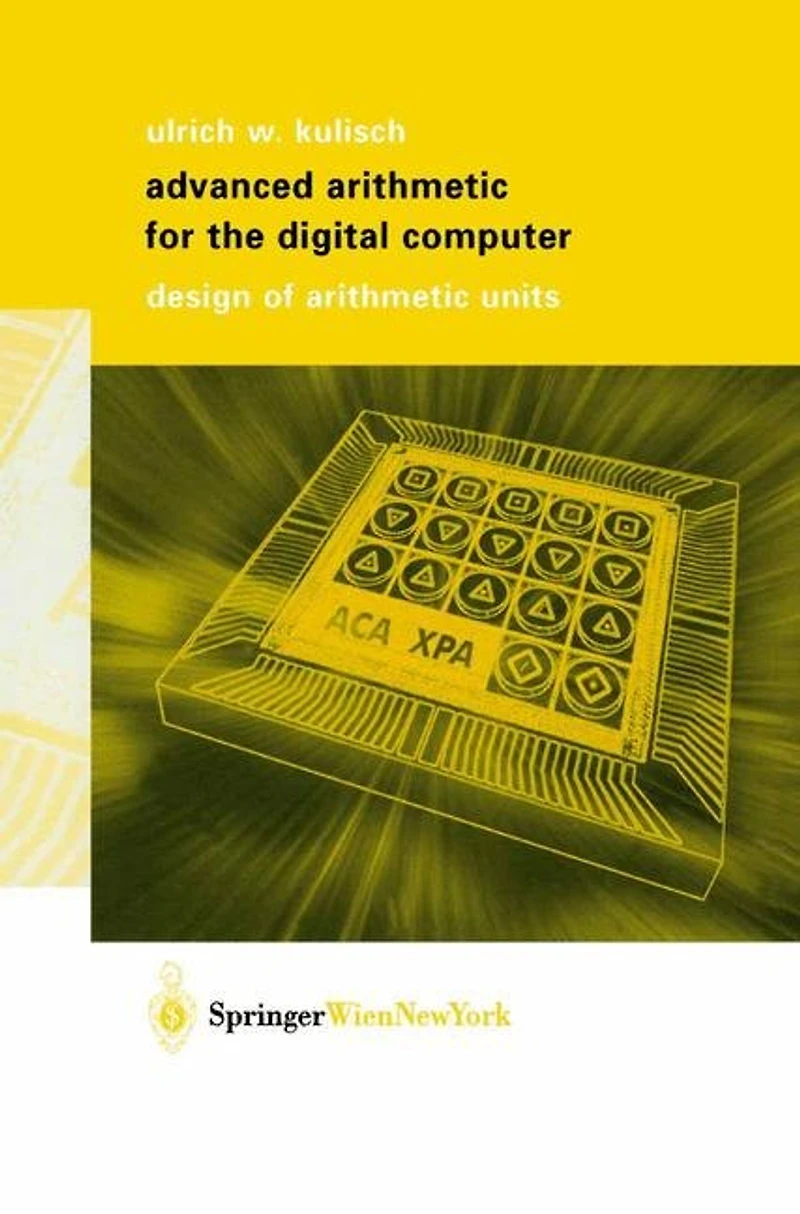
Advanced Arithmetic for the Digital Computer: Design of Arithmetic Units
Current price: $33.95

Advanced Arithmetic for the Digital Computer: Design of Arithmetic Units
Current price: $33.95
Loading Inventory...
Size: Paperback
*Product information may vary - to confirm product availability, pricing, shipping and return information please contact Indigo
The number one requirement for computer arithmetic has always been speed. It is the main force that drives the technology. With increased speed larger problems can be attempted. To gain speed, advanced processors and pro gramming languages offer, for instance, compound arithmetic operations like matmul and dotproduct. But there is another side to the computational coin - the accuracy and reliability of the computed result. Progress on this side is very important, if not essential. Compound arithmetic operations, for instance, should always deliver a correct result. The user should not be obliged to perform an error analysis every time a compound arithmetic operation, implemented by the hardware manufacturer or in the programming language, is employed. This treatise deals with computer arithmetic in a more general sense than usual. Advanced computer arithmetic extends the accuracy of the elementary floating-point operations, for instance, as defined by the IEEE arithmetic standard, to all operations in the usual product spaces of computation: the complex numbers, the real and complex intervals, and the real and complex vectors and matrices and their interval counterparts. The implementation of advanced computer arithmetic by fast hardware is examined in this book. Arithmetic units for its elementary components are described. It is shown that the requirements for speed and for reliability do not conflict with each other. Advanced computer arithmetic is superior to other arithmetic with respect to accuracy, costs, and speed.
The number one requirement for computer arithmetic has always been speed. It is the main force that drives the technology. With increased speed larger problems can be attempted. To gain speed, advanced processors and pro gramming languages offer, for instance, compound arithmetic operations like matmul and dotproduct. But there is another side to the computational coin - the accuracy and reliability of the computed result. Progress on this side is very important, if not essential. Compound arithmetic operations, for instance, should always deliver a correct result. The user should not be obliged to perform an error analysis every time a compound arithmetic operation, implemented by the hardware manufacturer or in the programming language, is employed. This treatise deals with computer arithmetic in a more general sense than usual. Advanced computer arithmetic extends the accuracy of the elementary floating-point operations, for instance, as defined by the IEEE arithmetic standard, to all operations in the usual product spaces of computation: the complex numbers, the real and complex intervals, and the real and complex vectors and matrices and their interval counterparts. The implementation of advanced computer arithmetic by fast hardware is examined in this book. Arithmetic units for its elementary components are described. It is shown that the requirements for speed and for reliability do not conflict with each other. Advanced computer arithmetic is superior to other arithmetic with respect to accuracy, costs, and speed.
You May Also Like

![Arithmetic [Elementary, Intermediate, Advanced]](https://cdn.mall.adeptmind.ai/https%253A%252F%252Fcdn.shopify.com%252Fs%252Ffiles%252F1%252F0655%252F8980%252F5233%252Ffiles%252F1_4f9c436f-01d2-441f-ad91-4d2ea3c06c53.jpg_medium.webp)







More About Indigo at Erin Mills Town Centre
The largest book retailer in Canada also offers toys, music, home décor, gifts and lifestyle products. What's Inside...Books, Magazines, CD’s and DVD’s, Toys and Gifts, Home Accents, Electronics, Baby’s and Children’s Section, Bath and Body, Kitchen and Bedroom, Stationary Located outside in the exterior plaza.
5015 Glen Erin Dr, Mississauga, ON L5M 0R7, Canada
Find Indigo at Erin Mills Town Centre in Mississauga ON
Visit Indigo at Erin Mills Town Centre in Mississauga ON