

GIVE THE PERFECT GIFT
Erin Mills Town Centre Gift Cards are the perfect choice for your gift giving needs.Purchase gift cards at kiosks near the food court or centre court, at Guest Services, or click below to purchase online.PURCHASE HEREHome
Advanced Design Techniques for RF Power Amplifiers
Indigo
Loading Inventory...
Advanced Design Techniques for RF Power Amplifiers
Current price: $160.95

Advanced Design Techniques for RF Power Amplifiers
Current price: $160.95
Loading Inventory...
Size: Hardcover
*Product information may vary - to confirm product availability, pricing, shipping and return information please contact Indigo
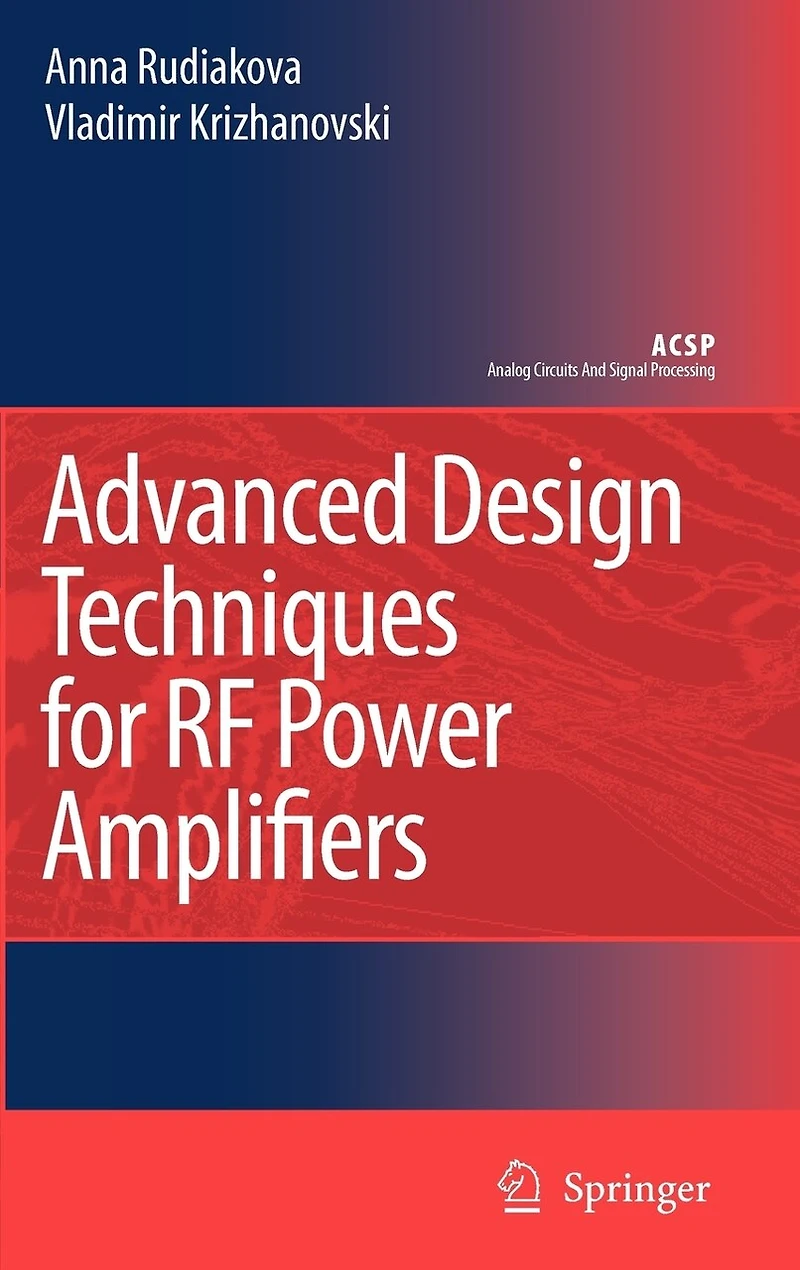
Advanced Design Techniques for RF Power Amplifiers' main aim is to provide the reader with a deep analysis of theoretical aspects, modelling, and design strategies of RF high-efficiency power amplifiers. Advanced Design Techniques for RF Power Amplifiers begins with an analytical review of current state of the problem. Then it moves to the theoretical analysis of BJT class-F power amplifier near transition frequency and presents the necessary realization conditions. The next part concerns the practical verification and demonstration of the theoretical results. It is followed by the part devoted to the output networks of high-efficiency power ampifiers. The novel type of photonic band-gap structure providing improved characteristics both in the pass and stop bands is proposed. Finally, the fifth-harmonic peaking class F power amplifier design based on the above structure is presented.
Advanced Design Techniques for RF Power Amplifiers' main aim is to provide the reader with a deep analysis of theoretical aspects, modelling, and design strategies of RF high-efficiency power amplifiers. Advanced Design Techniques for RF Power Amplifiers begins with an analytical review of current state of the problem. Then it moves to the theoretical analysis of BJT class-F power amplifier near transition frequency and presents the necessary realization conditions. The next part concerns the practical verification and demonstration of the theoretical results. It is followed by the part devoted to the output networks of high-efficiency power ampifiers. The novel type of photonic band-gap structure providing improved characteristics both in the pass and stop bands is proposed. Finally, the fifth-harmonic peaking class F power amplifier design based on the above structure is presented.
You May Also Like














More About Indigo at Erin Mills Town Centre
The largest book retailer in Canada also offers toys, music, home décor, gifts and lifestyle products. What's Inside...Books, Magazines, CD’s and DVD’s, Toys and Gifts, Home Accents, Electronics, Baby’s and Children’s Section, Bath and Body, Kitchen and Bedroom, Stationary Located outside in the exterior plaza.
5015 Glen Erin Dr, Mississauga, ON L5M 0R7, Canada
Find Indigo at Erin Mills Town Centre in Mississauga ON
Visit Indigo at Erin Mills Town Centre in Mississauga ON