

GIVE THE PERFECT GIFT
Erin Mills Town Centre Gift Cards are the perfect choice for your gift giving needs.Purchase gift cards at kiosks near the food court or centre court, at Guest Services, or click below to purchase online.PURCHASE HEREHome
Advances Analysis and Geometry: New Developments Using Clifford Algebras
Indigo
Loading Inventory...
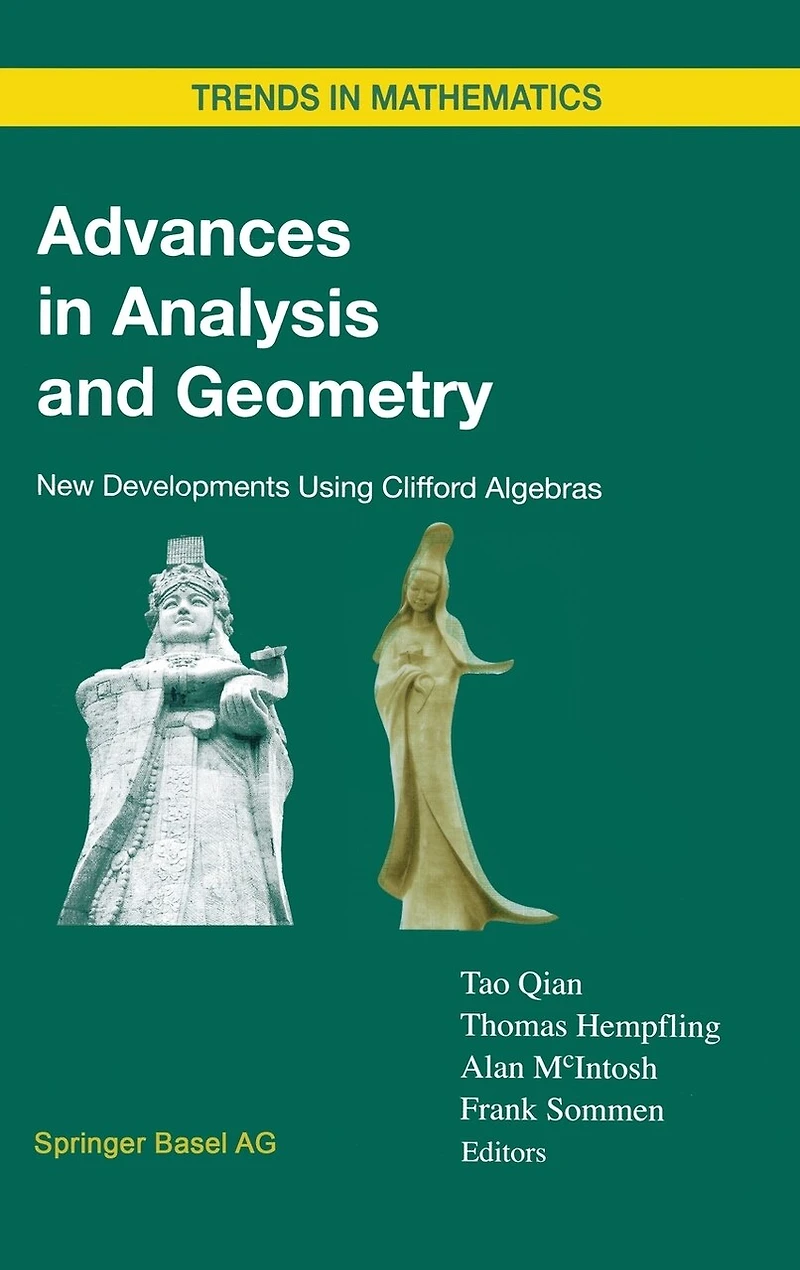
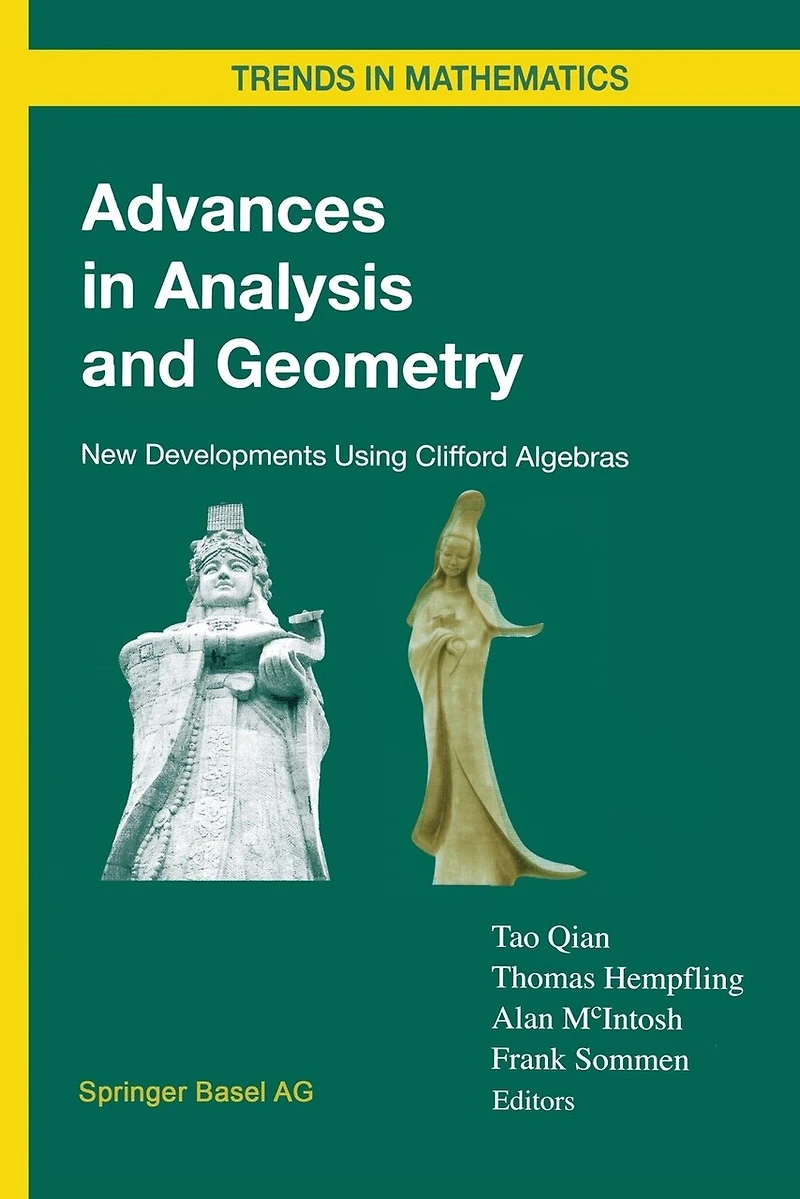
Advances Analysis and Geometry: New Developments Using Clifford Algebras
Current price: $142.95

Advances Analysis and Geometry: New Developments Using Clifford Algebras
Current price: $142.95
Loading Inventory...
Size: Hardcover
*Product information may vary - to confirm product availability, pricing, shipping and return information please contact Indigo
On the 16th of October 1843, Sir William R. Hamilton made the discovery of the quaternion algebra H = qo + qli + q2j + q3k whereby the product is determined by the defining relations -2 -2 1 Z =] = - , ij = -ji = k. In fact he was inspired by the beautiful geometric model of the complex numbers in which rotations are represented by simple multiplications z ----t az. His goal was to obtain an algebra structure for three dimensional visual space with in particular the possibility of representing all spatial rotations by algebra multiplications and since 1835 he started looking for generalized complex numbers (hypercomplex numbers) of the form a + bi + cj. It hence took him a long time to accept that a fourth dimension was necessary and that commutativity couldn't be kept and he wondered about a possible real life meaning of this fourth dimension which he identified with the scalar part qo as opposed to the vector part ql i + q2j + q3k which represents a point in space.
On the 16th of October 1843, Sir William R. Hamilton made the discovery of the quaternion algebra H = qo + qli + q2j + q3k whereby the product is determined by the defining relations -2 -2 1 Z =] = - , ij = -ji = k. In fact he was inspired by the beautiful geometric model of the complex numbers in which rotations are represented by simple multiplications z ----t az. His goal was to obtain an algebra structure for three dimensional visual space with in particular the possibility of representing all spatial rotations by algebra multiplications and since 1835 he started looking for generalized complex numbers (hypercomplex numbers) of the form a + bi + cj. It hence took him a long time to accept that a fourth dimension was necessary and that commutativity couldn't be kept and he wondered about a possible real life meaning of this fourth dimension which he identified with the scalar part qo as opposed to the vector part ql i + q2j + q3k which represents a point in space.
You May Also Like













More About Indigo at Erin Mills Town Centre
The largest book retailer in Canada also offers toys, music, home décor, gifts and lifestyle products. What's Inside...Books, Magazines, CD’s and DVD’s, Toys and Gifts, Home Accents, Electronics, Baby’s and Children’s Section, Bath and Body, Kitchen and Bedroom, Stationary Located outside in the exterior plaza.
5015 Glen Erin Dr, Mississauga, ON L5M 0R7, Canada
Find Indigo at Erin Mills Town Centre in Mississauga ON
Visit Indigo at Erin Mills Town Centre in Mississauga ON