

GIVE THE PERFECT GIFT
Erin Mills Town Centre Gift Cards are the perfect choice for your gift giving needs.Purchase gift cards at kiosks near the food court or centre court, at Guest Services, or click below to purchase online.PURCHASE HEREHome
Advances Fluid Catalytic Cracking: Testing, Characterization, and Environmental Regulations
Indigo
Loading Inventory...
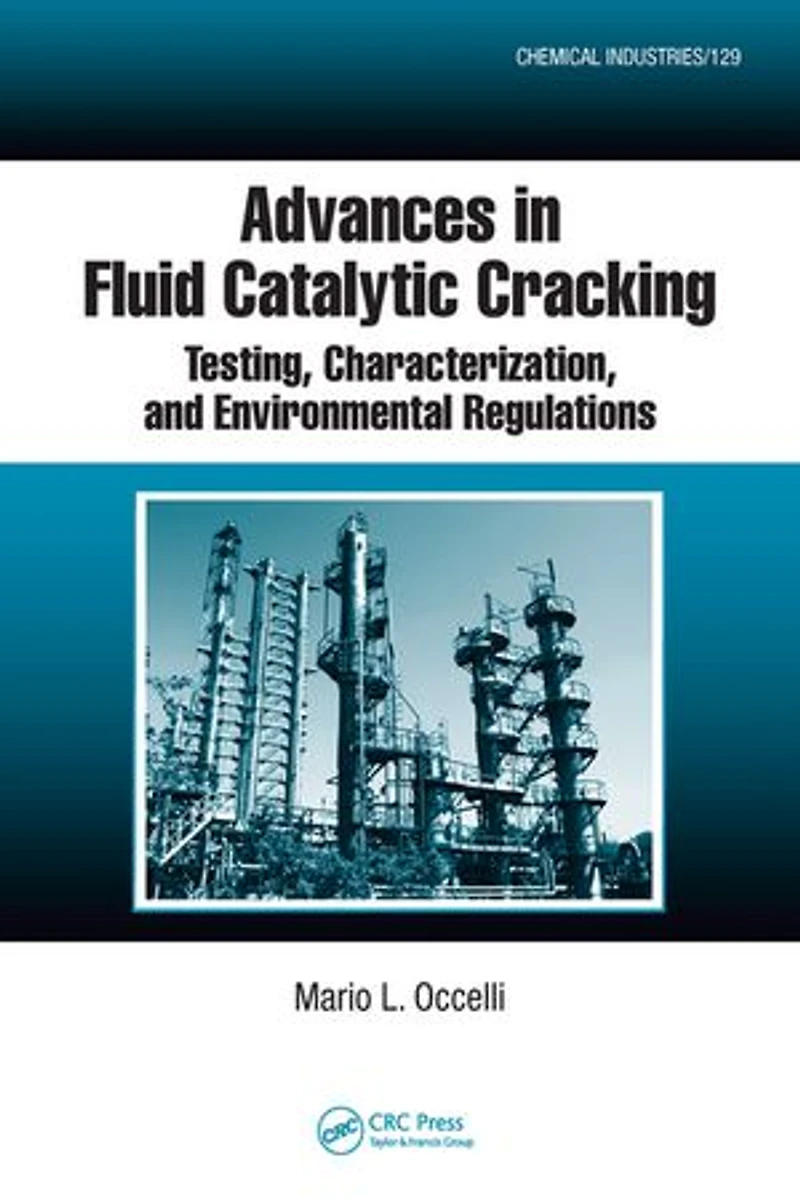

Advances Fluid Catalytic Cracking: Testing, Characterization, and Environmental Regulations
Current price: $142.49

Advances Fluid Catalytic Cracking: Testing, Characterization, and Environmental Regulations
Current price: $142.49
Loading Inventory...
Size: Kobo eBook
*Product information may vary - to confirm product availability, pricing, shipping and return information please contact Indigo
Refiners' efforts to conform to increasingly stringent laws and a preference for fuels derived from renewable sources have mandated changes in fluid cracking catalyst technology. Advances in Fluid Catalytic Cracking: Testing, Characterization, and Environmental Regulations explores recent advances and innovations in this important component of petroleum refining technology and evaluates how the industry has been changed by environmental regulations worldwide. Measurement, testing, and improvement Modern spectroscopic techniques continue to be essential to the understanding of catalyst performance and feedstock properties. The book contains a detailed review of the use of adsorption microcalorimetry to measure acidity, acid site density, and the strength of the strongest acid sites in heterogenous catalysts. It also discusses the use of 1 H-NMR to characterize the properties of a FCCU feedstock. In addition, the book dedicates several chapters to pilot plant testing of catalysts and nontraditional feedstocks, maximizing and improving LCO (heating oil) production and quality, and improving FCCU operations. Complying with the EPA The EPA has identified the petroleum refining industry as a targeted enforcement area for the Clean Air Act (CAA) passed in 1970 and the CAA Amendments of 1990. The final chapters of the book examine the evolution of the EPA's attempts to encourage the refining industry to enter into voluntary consent decrees to comply with the CAA and the 1990 amendments. The book describes consent decree negotiations as well as FCC emissions (SO x , NO x , CO, PM) reduction technologies through consent decree implementations. Containing contributions from a panel of worldwide experts, the book demonstrates how the global shift toward environmentalism has engineered significant changes in the petroleum refining industry at a critical level.
Refiners' efforts to conform to increasingly stringent laws and a preference for fuels derived from renewable sources have mandated changes in fluid cracking catalyst technology. Advances in Fluid Catalytic Cracking: Testing, Characterization, and Environmental Regulations explores recent advances and innovations in this important component of petroleum refining technology and evaluates how the industry has been changed by environmental regulations worldwide. Measurement, testing, and improvement Modern spectroscopic techniques continue to be essential to the understanding of catalyst performance and feedstock properties. The book contains a detailed review of the use of adsorption microcalorimetry to measure acidity, acid site density, and the strength of the strongest acid sites in heterogenous catalysts. It also discusses the use of 1 H-NMR to characterize the properties of a FCCU feedstock. In addition, the book dedicates several chapters to pilot plant testing of catalysts and nontraditional feedstocks, maximizing and improving LCO (heating oil) production and quality, and improving FCCU operations. Complying with the EPA The EPA has identified the petroleum refining industry as a targeted enforcement area for the Clean Air Act (CAA) passed in 1970 and the CAA Amendments of 1990. The final chapters of the book examine the evolution of the EPA's attempts to encourage the refining industry to enter into voluntary consent decrees to comply with the CAA and the 1990 amendments. The book describes consent decree negotiations as well as FCC emissions (SO x , NO x , CO, PM) reduction technologies through consent decree implementations. Containing contributions from a panel of worldwide experts, the book demonstrates how the global shift toward environmentalism has engineered significant changes in the petroleum refining industry at a critical level.
You May Also Like









More About Indigo at Erin Mills Town Centre
The largest book retailer in Canada also offers toys, music, home décor, gifts and lifestyle products. What's Inside...Books, Magazines, CD’s and DVD’s, Toys and Gifts, Home Accents, Electronics, Baby’s and Children’s Section, Bath and Body, Kitchen and Bedroom, Stationary Located outside in the exterior plaza.
5015 Glen Erin Dr, Mississauga, ON L5M 0R7, Canada
Find Indigo at Erin Mills Town Centre in Mississauga ON
Visit Indigo at Erin Mills Town Centre in Mississauga ON