

GIVE THE PERFECT GIFT
Erin Mills Town Centre Gift Cards are the perfect choice for your gift giving needs.Purchase gift cards at kiosks near the food court or centre court, at Guest Services, or click below to purchase online.PURCHASE HEREHome
Advances the Ecology of Stream-Dwelling Salmonids
Indigo
Loading Inventory...
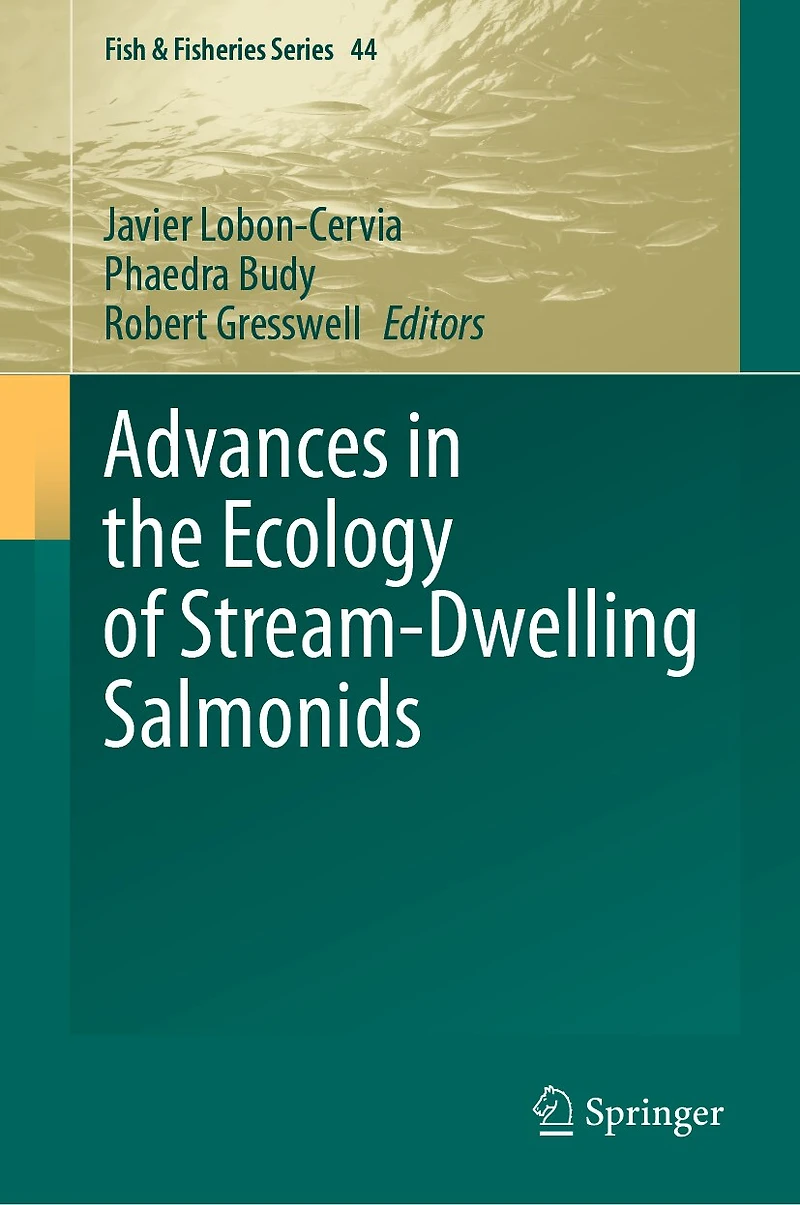
Advances the Ecology of Stream-Dwelling Salmonids
Current price: $437.95

Advances the Ecology of Stream-Dwelling Salmonids
Current price: $437.95
Loading Inventory...
Size: Hardcover
*Product information may vary - to confirm product availability, pricing, shipping and return information please contact Indigo
Many salmonids inhabit streams during the whole, or a substantial part of their lifetime. Streams, as networks of cold waters running over rifles, pools and tables of gravel, pebble and stony substratum, are fed by rainfall and snowmelt and may be subject to spates and droughts. Hence, these lotic systems are heterogeneous by nature and vary substantially in temperature and discharge along their environmental gradients. In these habitats, salmonids encounter suitable reproductive and feeding habitats where they exhibit a dizzying array of life-history traits and an overwhelming variability in size, growth and density. Essentially predators upon organisms drifting across the water column, they become apex piscivores at large sizes. They may also serve as prey for aquatic macroinvertebrates at the youngest stages, and as they grow, they may become prey for birds and mammals. In addition, many populations play a major role in the recycling of biogeochemical elements critical for the trophic dynamics of their home streams. Empirical assessment of the ecological functioning of stream salmonids has been a tireless endeavor since the pioneer studies by Allen (1951), Chapman (1966), McFadden (1964) and Northcote (1966) further enhanced by the IBP (1964-1974; Gerking 1967) and extended to experimental approaches during the last decades (Northcote Lobon-Cervia 2010, Lobon-Cervia & Sanz 2017, Kershner et al. 2019). It has become increasingly apparent that streams are severely threatened by human abuse and misuse, including over-extraction, diversion, damming and pollution, in addition to the more recent threat of global warming. Furthermore, salmonids themselves are threatened by genetic introgressions, diseases, and parasites related to uncontrolled introductions of individuals from aquaculture, and over-exploitation by angling. These threats have triggered important social and political concerns, to the extent of becoming research priorities for major agenciesand institutions. In this context, we attempt to add an overview to this endeavor by updating and summarizing the documented ecology of stream-living salmonids, with reference to the factors and mechanisms underlying the growth, density and life history that interact to determine the size, number, and distribution of individuals encountered in any wild population.
Many salmonids inhabit streams during the whole, or a substantial part of their lifetime. Streams, as networks of cold waters running over rifles, pools and tables of gravel, pebble and stony substratum, are fed by rainfall and snowmelt and may be subject to spates and droughts. Hence, these lotic systems are heterogeneous by nature and vary substantially in temperature and discharge along their environmental gradients. In these habitats, salmonids encounter suitable reproductive and feeding habitats where they exhibit a dizzying array of life-history traits and an overwhelming variability in size, growth and density. Essentially predators upon organisms drifting across the water column, they become apex piscivores at large sizes. They may also serve as prey for aquatic macroinvertebrates at the youngest stages, and as they grow, they may become prey for birds and mammals. In addition, many populations play a major role in the recycling of biogeochemical elements critical for the trophic dynamics of their home streams. Empirical assessment of the ecological functioning of stream salmonids has been a tireless endeavor since the pioneer studies by Allen (1951), Chapman (1966), McFadden (1964) and Northcote (1966) further enhanced by the IBP (1964-1974; Gerking 1967) and extended to experimental approaches during the last decades (Northcote Lobon-Cervia 2010, Lobon-Cervia & Sanz 2017, Kershner et al. 2019). It has become increasingly apparent that streams are severely threatened by human abuse and misuse, including over-extraction, diversion, damming and pollution, in addition to the more recent threat of global warming. Furthermore, salmonids themselves are threatened by genetic introgressions, diseases, and parasites related to uncontrolled introductions of individuals from aquaculture, and over-exploitation by angling. These threats have triggered important social and political concerns, to the extent of becoming research priorities for major agenciesand institutions. In this context, we attempt to add an overview to this endeavor by updating and summarizing the documented ecology of stream-living salmonids, with reference to the factors and mechanisms underlying the growth, density and life history that interact to determine the size, number, and distribution of individuals encountered in any wild population.
You May Also Like








More About Indigo at Erin Mills Town Centre
The largest book retailer in Canada also offers toys, music, home décor, gifts and lifestyle products. What's Inside...Books, Magazines, CD’s and DVD’s, Toys and Gifts, Home Accents, Electronics, Baby’s and Children’s Section, Bath and Body, Kitchen and Bedroom, Stationary Located outside in the exterior plaza.
5015 Glen Erin Dr, Mississauga, ON L5M 0R7, Canada
Find Indigo at Erin Mills Town Centre in Mississauga ON
Visit Indigo at Erin Mills Town Centre in Mississauga ON