

GIVE THE PERFECT GIFT
Erin Mills Town Centre Gift Cards are the perfect choice for your gift giving needs.Purchase gift cards at kiosks near the food court or centre court, at Guest Services, or click below to purchase online.PURCHASE HEREHome
African Farmers, Value Chains and Agricultural Development: An Economic and Institutional Perspective
Indigo
Loading Inventory...
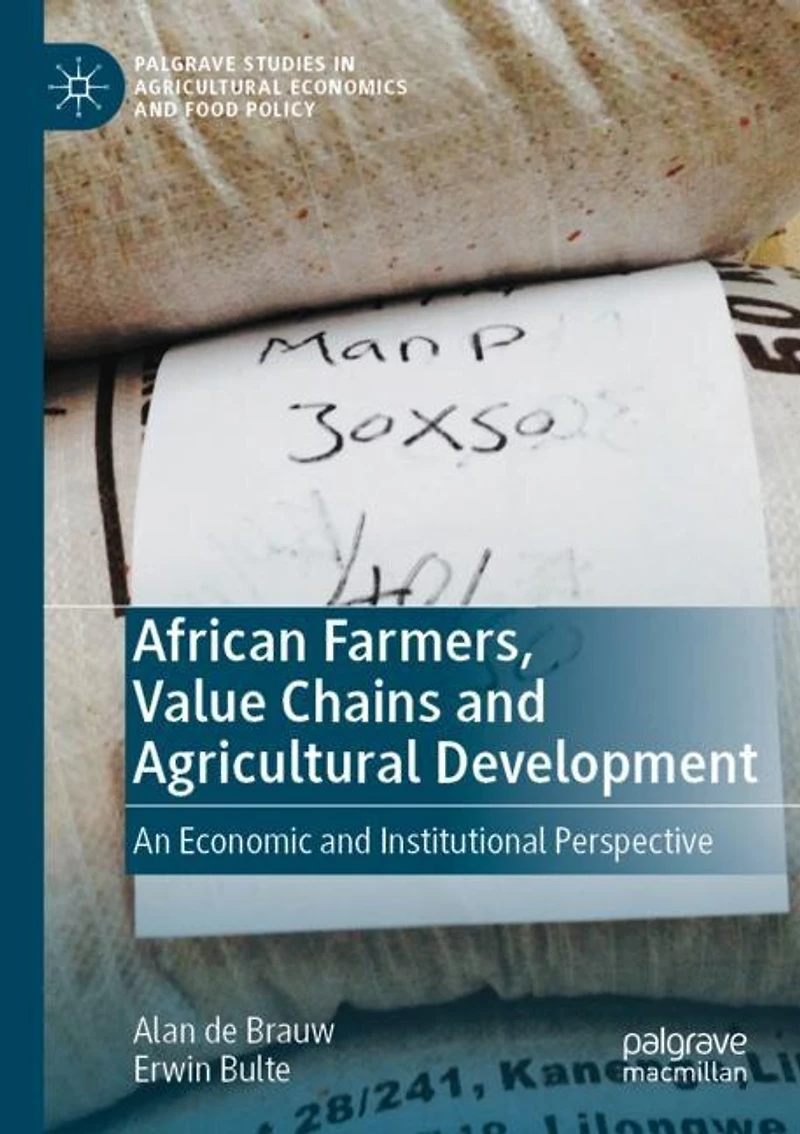
African Farmers, Value Chains and Agricultural Development: An Economic and Institutional Perspective
Current price: $204.50

African Farmers, Value Chains and Agricultural Development: An Economic and Institutional Perspective
Current price: $204.50
Loading Inventory...
Size: Paperback
*Product information may vary - to confirm product availability, pricing, shipping and return information please contact Indigo
This book provides a thorough introduction to and examination of agricultural value chains in Sub-Saharan Africa. First, the authors introduce the economic theory of agri-food value chains and value chain governance, focusing on domestic and regional trade in (and consumption of) food crops in a low-income country context. In addition to mainstream and heterodox thinking about value chain development, the book pays attention to political economy considerations. The book also reviews the empirical evidence on value chain development and performance in Africa. It adopts multiple lenses to examine agricultural value chains, zooming out from the micro level (e.g., relational contracting in a context of market imperfections) to the meso level (e.g., distributional implications of various value chain interventions, inclusion of specific social groups) and the macro level (underlying income, population and urbanization trends, volumes and prices, etc.).Furthermore, this book places value chain development in the context of a process the authors refer to as structural transformation 2.0 , which refers to a process where production factors (labor, land and capital) move from low-productivity agriculture to high-productivity agriculture . Finally, throughout the book the authors interpret the evidence in light of three important debates: (i) how competitive are rural factor and product markets, and what does this imply for distribution and innovation? (ii) what role do foreign investment and factor proportions play in the development of agri-food value chains in Africa? (iii) what complementary government policies can help facilitate a process of agricultural value chain transformation, towards high-productive activities and enhancing the capacity of value chains to generate employment opportunities and food security for a growing population.
This book provides a thorough introduction to and examination of agricultural value chains in Sub-Saharan Africa. First, the authors introduce the economic theory of agri-food value chains and value chain governance, focusing on domestic and regional trade in (and consumption of) food crops in a low-income country context. In addition to mainstream and heterodox thinking about value chain development, the book pays attention to political economy considerations. The book also reviews the empirical evidence on value chain development and performance in Africa. It adopts multiple lenses to examine agricultural value chains, zooming out from the micro level (e.g., relational contracting in a context of market imperfections) to the meso level (e.g., distributional implications of various value chain interventions, inclusion of specific social groups) and the macro level (underlying income, population and urbanization trends, volumes and prices, etc.).Furthermore, this book places value chain development in the context of a process the authors refer to as structural transformation 2.0 , which refers to a process where production factors (labor, land and capital) move from low-productivity agriculture to high-productivity agriculture . Finally, throughout the book the authors interpret the evidence in light of three important debates: (i) how competitive are rural factor and product markets, and what does this imply for distribution and innovation? (ii) what role do foreign investment and factor proportions play in the development of agri-food value chains in Africa? (iii) what complementary government policies can help facilitate a process of agricultural value chain transformation, towards high-productive activities and enhancing the capacity of value chains to generate employment opportunities and food security for a growing population.
You May Also Like








More About Indigo at Erin Mills Town Centre
The largest book retailer in Canada also offers toys, music, home décor, gifts and lifestyle products. What's Inside...Books, Magazines, CD’s and DVD’s, Toys and Gifts, Home Accents, Electronics, Baby’s and Children’s Section, Bath and Body, Kitchen and Bedroom, Stationary Located outside in the exterior plaza.
5015 Glen Erin Dr, Mississauga, ON L5M 0R7, Canada
Find Indigo at Erin Mills Town Centre in Mississauga ON
Visit Indigo at Erin Mills Town Centre in Mississauga ON