

GIVE THE PERFECT GIFT
Erin Mills Town Centre Gift Cards are the perfect choice for your gift giving needs.Purchase gift cards at kiosks near the food court or centre court, at Guest Services, or click below to purchase online.PURCHASE HEREHome
Against Knowledge Closure
Indigo
Loading Inventory...
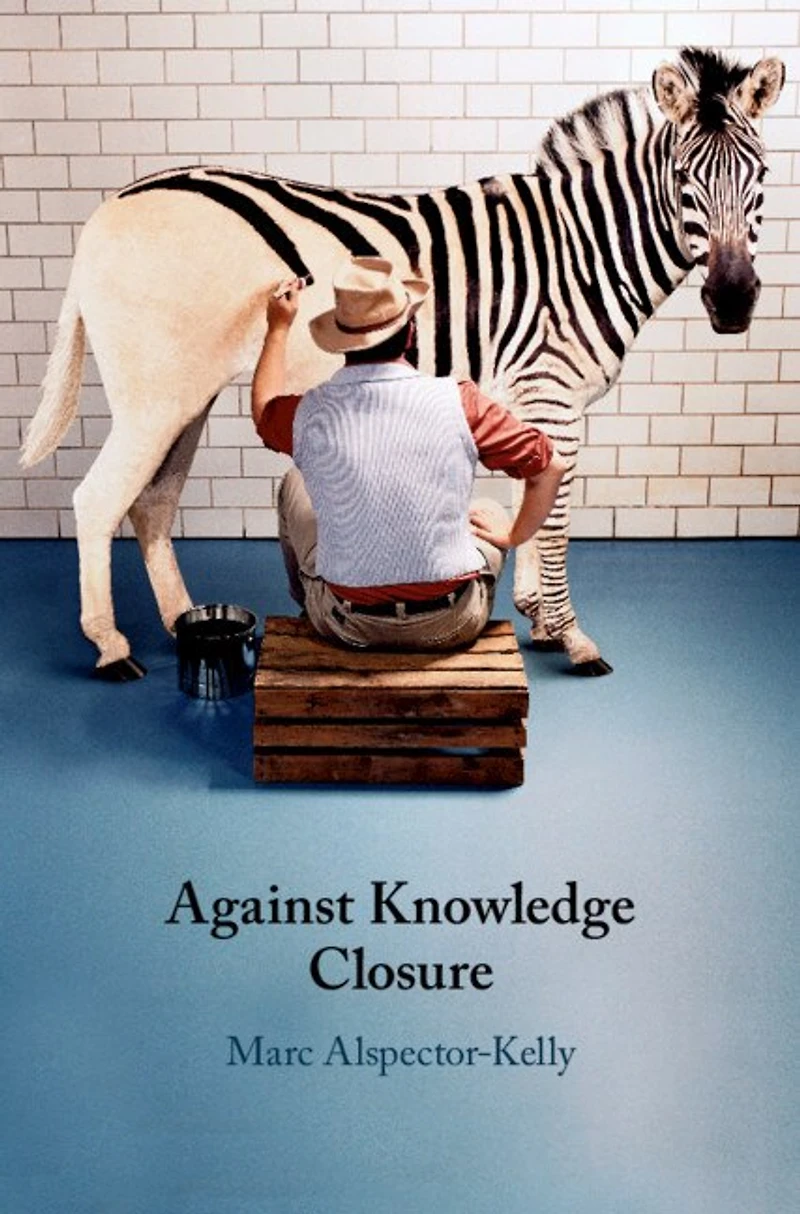
Against Knowledge Closure
Current price: $144.95

Against Knowledge Closure
Current price: $144.95
Loading Inventory...
Size: Hardcover
*Product information may vary - to confirm product availability, pricing, shipping and return information please contact Indigo
Knowledge closure is the claim that, if an agent S knows P, recognizes that P implies Q, and believes Q because it is implied by P, then S knows Q. Closure is a pivotal epistemological principle that is widely endorsed by contemporary epistemologists. Against Knowledge Closure is the first book-length treatment of the issue and the most sustained argument for closure failure to date. Unlike most prior arguments for closure failure, Marc Alspector-Kelly's critique of closure does not presuppose any particular epistemological theory; his argument is, instead, intuitively compelling and applicable to a wide variety of epistemological views. His discussion ranges over much of the epistemological landscape, including skepticism, warrant, transmission and transmission failure, fallibilism, sensitivity, safety, evidentialism, reliabilism, contextualism, entitlement, circularity and bootstrapping, justification, and justification closure. As a result, the volume will be of interest to any epistemologist or student of epistemology and related subjects.
Knowledge closure is the claim that, if an agent S knows P, recognizes that P implies Q, and believes Q because it is implied by P, then S knows Q. Closure is a pivotal epistemological principle that is widely endorsed by contemporary epistemologists. Against Knowledge Closure is the first book-length treatment of the issue and the most sustained argument for closure failure to date. Unlike most prior arguments for closure failure, Marc Alspector-Kelly's critique of closure does not presuppose any particular epistemological theory; his argument is, instead, intuitively compelling and applicable to a wide variety of epistemological views. His discussion ranges over much of the epistemological landscape, including skepticism, warrant, transmission and transmission failure, fallibilism, sensitivity, safety, evidentialism, reliabilism, contextualism, entitlement, circularity and bootstrapping, justification, and justification closure. As a result, the volume will be of interest to any epistemologist or student of epistemology and related subjects.
You May Also Like













More About Indigo at Erin Mills Town Centre
The largest book retailer in Canada also offers toys, music, home décor, gifts and lifestyle products. What's Inside...Books, Magazines, CD’s and DVD’s, Toys and Gifts, Home Accents, Electronics, Baby’s and Children’s Section, Bath and Body, Kitchen and Bedroom, Stationary Located outside in the exterior plaza.
5015 Glen Erin Dr, Mississauga, ON L5M 0R7, Canada
Find Indigo at Erin Mills Town Centre in Mississauga ON
Visit Indigo at Erin Mills Town Centre in Mississauga ON