

GIVE THE PERFECT GIFT
Erin Mills Town Centre Gift Cards are the perfect choice for your gift giving needs.Purchase gift cards at kiosks near the food court or centre court, at Guest Services, or click below to purchase online.PURCHASE HEREHome
Agriculturally Important Fungi for Sustainable Agriculture: Volume 1: Perspective Diversity and Crop Productivity
Indigo
Loading Inventory...
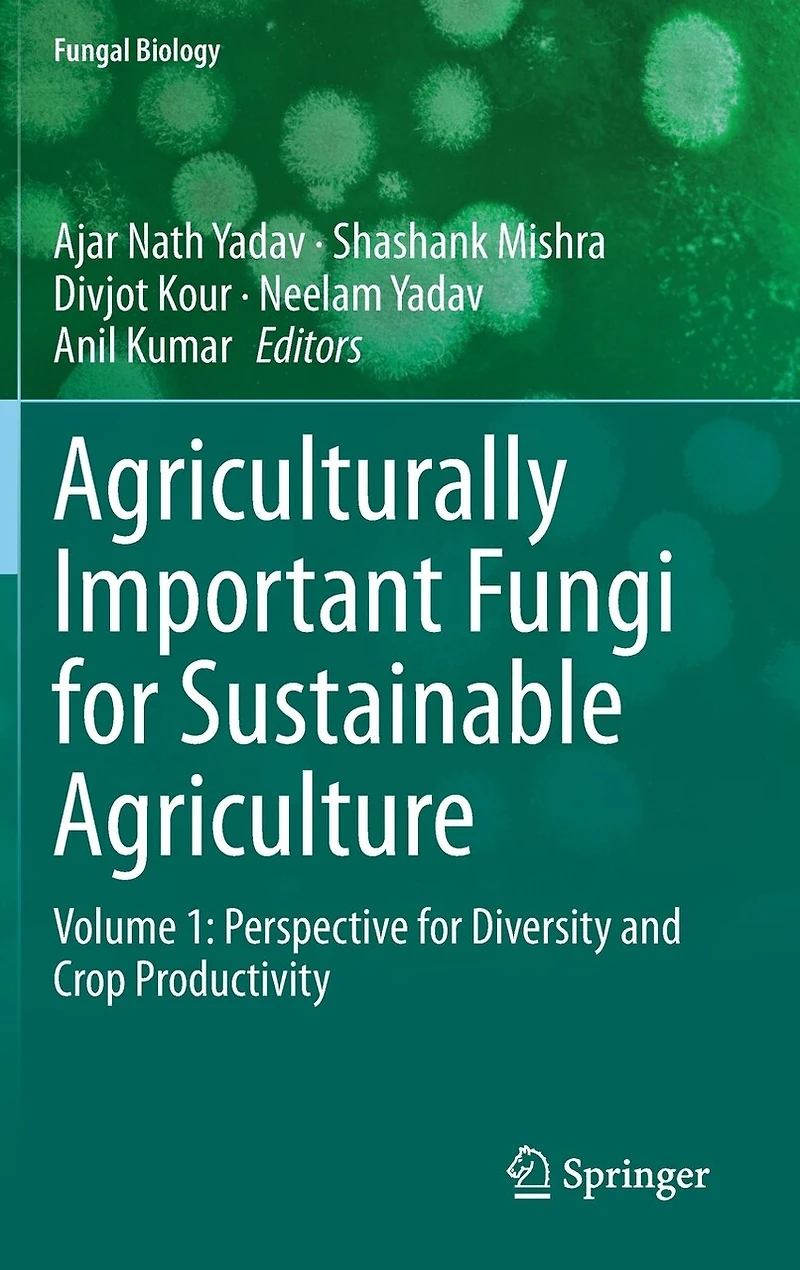
Agriculturally Important Fungi for Sustainable Agriculture: Volume 1: Perspective Diversity and Crop Productivity
Current price: $248.50

Agriculturally Important Fungi for Sustainable Agriculture: Volume 1: Perspective Diversity and Crop Productivity
Current price: $248.50
Loading Inventory...
Size: Hardcover
*Product information may vary - to confirm product availability, pricing, shipping and return information please contact Indigo
Microbes are ubiquitous in nature. Among microbes, fungal communities play an important role in agriculture, the environment, and medicine. Vast fungal diversity has been associated with plant systems, namely epiphytic fungi, endophytic fungi, and rhizospheric fungi. These fungi associated with plant systems play an important role in plant growth, crop yield, and soil health. Rhizospheric fungi, present in rhizospheric zones, get their nutrients from root exudates released by plant root systems, which help with their growth, development, and microbe activity. Endophytic fungi typically enter plant hosts through naturally occurring wounds that are the result of plant growth, through root hairs, or at epidermal conjunctions. Phyllospheric fungi may survive or proliferate on leaves depending on material influences in leaf diffuseness or exudates. The diverse nature of these fungal communities is a key component of soil-plant systems, where they are engaged in anetwork of interactions endophytically, phyllospherically, as well as in the rhizosphere, and thus have emerged as a promising tool for sustainable agriculture. These fungal communities promote plant growth directly and indirectly by using plant growth promoting (PGP) attributes. These PGP fungi can be used as biofertilizers and biocontrol agents in place of chemical fertilizers and pesticides for a more eco-friendly method of promoting sustainable agriculture and environments. This first volume of a two-volume set covers the biodiversity of plant-associated fungal communities and their role in plant growth promotion, the mitigation of abiotic stress, and soil fertility for sustainable agriculture. This book should be useful to those working in the biological sciences, especially for microbiologists, microbial biotechnologists, biochemists, and researchers and scientists of fungal biotechnology.
Microbes are ubiquitous in nature. Among microbes, fungal communities play an important role in agriculture, the environment, and medicine. Vast fungal diversity has been associated with plant systems, namely epiphytic fungi, endophytic fungi, and rhizospheric fungi. These fungi associated with plant systems play an important role in plant growth, crop yield, and soil health. Rhizospheric fungi, present in rhizospheric zones, get their nutrients from root exudates released by plant root systems, which help with their growth, development, and microbe activity. Endophytic fungi typically enter plant hosts through naturally occurring wounds that are the result of plant growth, through root hairs, or at epidermal conjunctions. Phyllospheric fungi may survive or proliferate on leaves depending on material influences in leaf diffuseness or exudates. The diverse nature of these fungal communities is a key component of soil-plant systems, where they are engaged in anetwork of interactions endophytically, phyllospherically, as well as in the rhizosphere, and thus have emerged as a promising tool for sustainable agriculture. These fungal communities promote plant growth directly and indirectly by using plant growth promoting (PGP) attributes. These PGP fungi can be used as biofertilizers and biocontrol agents in place of chemical fertilizers and pesticides for a more eco-friendly method of promoting sustainable agriculture and environments. This first volume of a two-volume set covers the biodiversity of plant-associated fungal communities and their role in plant growth promotion, the mitigation of abiotic stress, and soil fertility for sustainable agriculture. This book should be useful to those working in the biological sciences, especially for microbiologists, microbial biotechnologists, biochemists, and researchers and scientists of fungal biotechnology.
You May Also Like









More About Indigo at Erin Mills Town Centre
The largest book retailer in Canada also offers toys, music, home décor, gifts and lifestyle products. What's Inside...Books, Magazines, CD’s and DVD’s, Toys and Gifts, Home Accents, Electronics, Baby’s and Children’s Section, Bath and Body, Kitchen and Bedroom, Stationary Located outside in the exterior plaza.
5015 Glen Erin Dr, Mississauga, ON L5M 0R7, Canada
Find Indigo at Erin Mills Town Centre in Mississauga ON
Visit Indigo at Erin Mills Town Centre in Mississauga ON