

GIVE THE PERFECT GIFT
Erin Mills Town Centre Gift Cards are the perfect choice for your gift giving needs.Purchase gift cards at kiosks near the food court or centre court, at Guest Services, or click below to purchase online.PURCHASE HEREHome
Agroforestry Systems India: Livelihood Security and Ecosystem Services
Indigo
Loading Inventory...
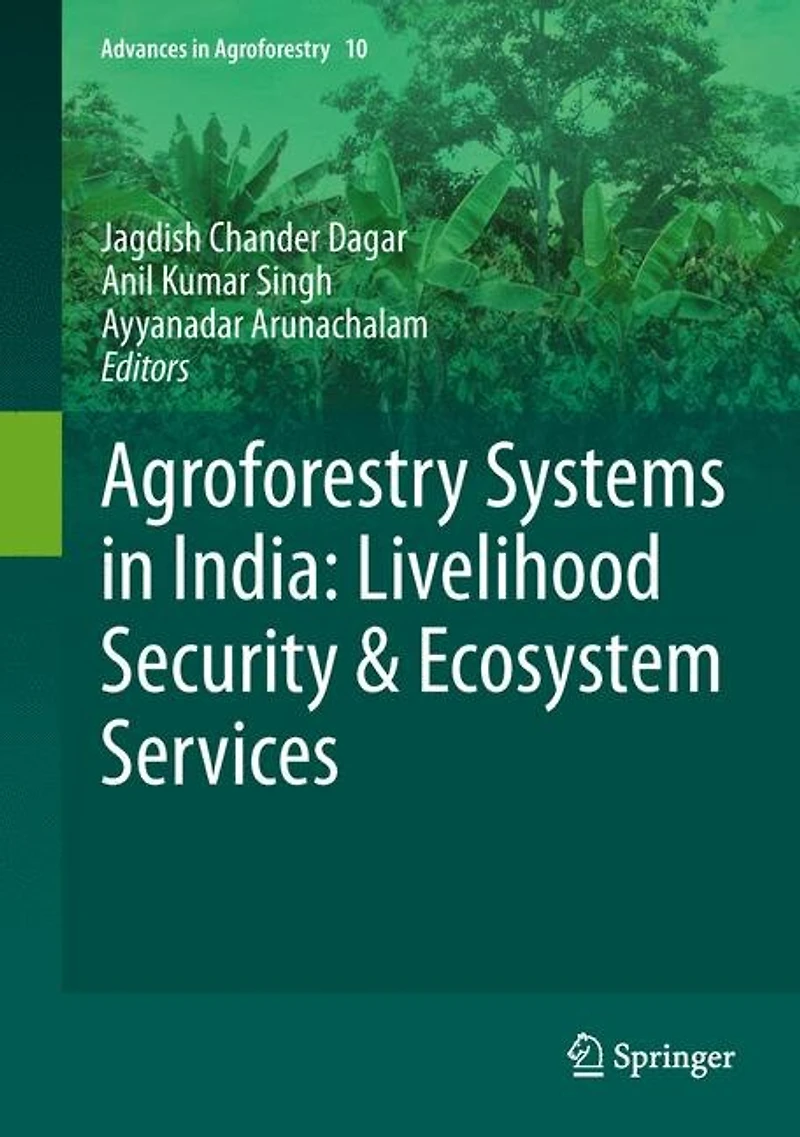
Agroforestry Systems India: Livelihood Security and Ecosystem Services
Current price: $248.50

Agroforestry Systems India: Livelihood Security and Ecosystem Services
Current price: $248.50
Loading Inventory...
Size: Hardcover
*Product information may vary - to confirm product availability, pricing, shipping and return information please contact Indigo
Agroforestry, the word coined in early seventies, has made its place in all the developed and the developing countries of the world and is now recognized as an important approach to ensuring food security and rebuilding resilient rural environments. India has been an all-time leader in agroforestry. The South and Southeast Asia region comprising India is often described as the cradle of agroforestry. Almost all forms of agroforestry systems exist across India in ecozones ranging from humid tropical lowlands to high-altitude and temperate biomes, and perhumid rainforest zones to parched drylands. The country ranks foremost among the community of nations not only in terms of this enormous diversity and long tradition of the practice of agroforestry, but also in fostering scientific developments in the subject. Agroforestry applies to private agricultural and forest lands and communities that also include highly erodible, flood-prone, economically marginal and environmentally sensitive lands. The typical situation is agricultural, where trees are added to create desired benefits. Agroforestry allows for the diversification of farm activities and makes better use of environmental resources. Owing to an increase in the population of human and cattle, there is increasing demand of food as well as fodder, particularly in developing countries like India. So far, there is no policy that deals with specifics in agroforestry in India. But, the Indian Council of Agricultural Research has been discussing on the scope of having a National Agroforestry Policy in appropriate platforms. However, evolving a policy requires good and reliable datasets from different corners of the country on the subject matter. This synthesis volume containing 13 chapters is an attempt to collate available information in a classified manner into different system ecologies, problems and solutions, and converging them into a policy support.
Agroforestry, the word coined in early seventies, has made its place in all the developed and the developing countries of the world and is now recognized as an important approach to ensuring food security and rebuilding resilient rural environments. India has been an all-time leader in agroforestry. The South and Southeast Asia region comprising India is often described as the cradle of agroforestry. Almost all forms of agroforestry systems exist across India in ecozones ranging from humid tropical lowlands to high-altitude and temperate biomes, and perhumid rainforest zones to parched drylands. The country ranks foremost among the community of nations not only in terms of this enormous diversity and long tradition of the practice of agroforestry, but also in fostering scientific developments in the subject. Agroforestry applies to private agricultural and forest lands and communities that also include highly erodible, flood-prone, economically marginal and environmentally sensitive lands. The typical situation is agricultural, where trees are added to create desired benefits. Agroforestry allows for the diversification of farm activities and makes better use of environmental resources. Owing to an increase in the population of human and cattle, there is increasing demand of food as well as fodder, particularly in developing countries like India. So far, there is no policy that deals with specifics in agroforestry in India. But, the Indian Council of Agricultural Research has been discussing on the scope of having a National Agroforestry Policy in appropriate platforms. However, evolving a policy requires good and reliable datasets from different corners of the country on the subject matter. This synthesis volume containing 13 chapters is an attempt to collate available information in a classified manner into different system ecologies, problems and solutions, and converging them into a policy support.
You May Also Like








More About Indigo at Erin Mills Town Centre
The largest book retailer in Canada also offers toys, music, home décor, gifts and lifestyle products. What's Inside...Books, Magazines, CD’s and DVD’s, Toys and Gifts, Home Accents, Electronics, Baby’s and Children’s Section, Bath and Body, Kitchen and Bedroom, Stationary Located outside in the exterior plaza.
5015 Glen Erin Dr, Mississauga, ON L5M 0R7, Canada
Find Indigo at Erin Mills Town Centre in Mississauga ON
Visit Indigo at Erin Mills Town Centre in Mississauga ON