

GIVE THE PERFECT GIFT
Erin Mills Town Centre Gift Cards are the perfect choice for your gift giving needs.Purchase gift cards at kiosks near the food court or centre court, at Guest Services, or click below to purchase online.PURCHASE HEREHome
Algorithmic Decimation: The Geometric Architecture of Level of Detail: Polygons, Distance, and the Mathematical Deconstruction of 3D Meshes in Modern Game Rendering
Indigo
Loading Inventory...
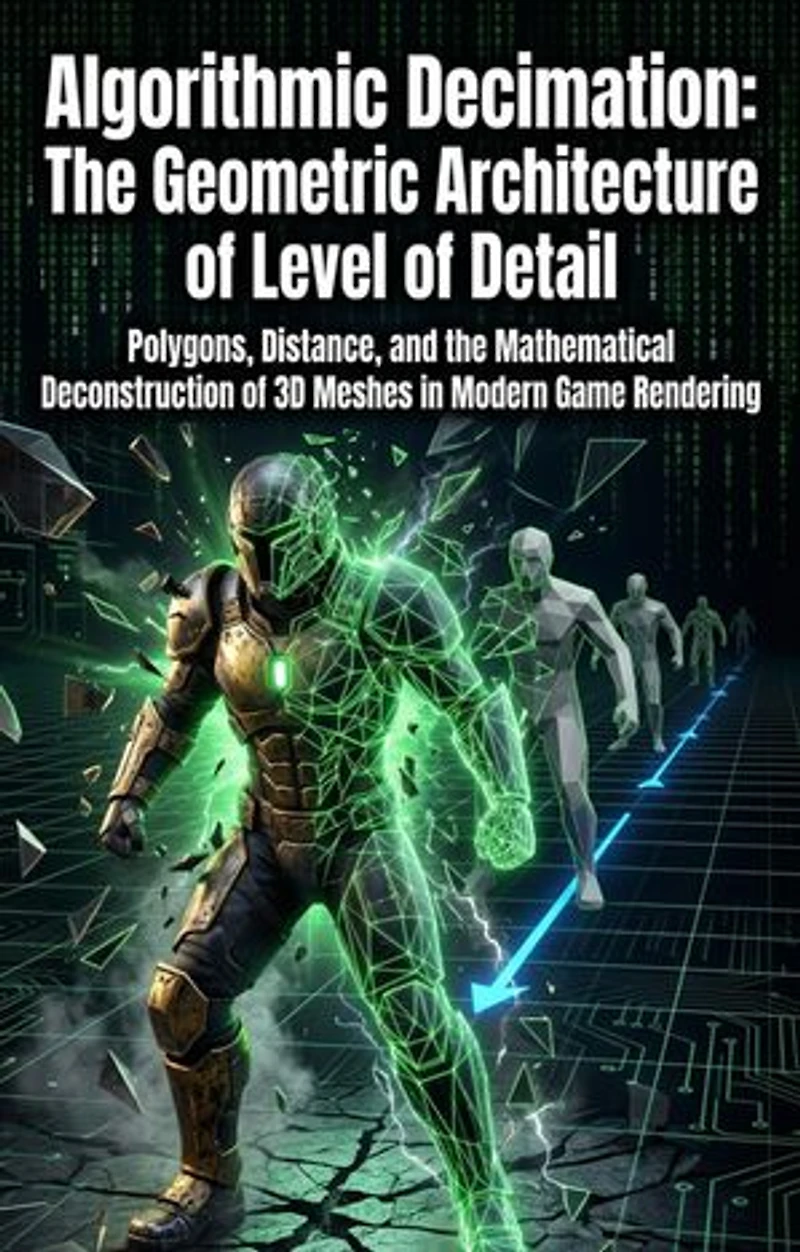
Algorithmic Decimation: The Geometric Architecture of Level of Detail: Polygons, Distance, and the Mathematical Deconstruction of 3D Meshes in Modern Game Rendering
Current price: $7.99

Algorithmic Decimation: The Geometric Architecture of Level of Detail: Polygons, Distance, and the Mathematical Deconstruction of 3D Meshes in Modern Game Rendering
Current price: $7.99
Loading Inventory...
Size: Kobo eBook
*Product information may vary - to confirm product availability, pricing, shipping and return information please contact Indigo
If a modern video game rendered every single leaf on a distant mountain with the same graphical fidelity as the character standing right in front of the camera, the console's graphics card would instantly overheat and crash. To simulate vast, detailed worlds, software engineers use a brilliant, aggressive optimization technique known as Level of Detail (LOD) management. This technical deep-dive explores the brutal math of mesh decimation. As an object moves further away from the player's virtual camera, the game engine actively deletes thousands of polygons from its 3D model, seamlessly swapping the high-resolution sculpture for a low-quality, blocky stand-in. Because the object is far away, the human eye completely fails to notice the graphical downgrade. We dissect the intricate algorithms required to calculate these transitions in real-time, and analyze the infamous "pop-in" effect that occurs when the processor fails to swap the models fast enough. Master the illusion of endless detail. Understand how game developers actively destroy the geometry of their own worlds to save the processing power required to run them.
If a modern video game rendered every single leaf on a distant mountain with the same graphical fidelity as the character standing right in front of the camera, the console's graphics card would instantly overheat and crash. To simulate vast, detailed worlds, software engineers use a brilliant, aggressive optimization technique known as Level of Detail (LOD) management. This technical deep-dive explores the brutal math of mesh decimation. As an object moves further away from the player's virtual camera, the game engine actively deletes thousands of polygons from its 3D model, seamlessly swapping the high-resolution sculpture for a low-quality, blocky stand-in. Because the object is far away, the human eye completely fails to notice the graphical downgrade. We dissect the intricate algorithms required to calculate these transitions in real-time, and analyze the infamous "pop-in" effect that occurs when the processor fails to swap the models fast enough. Master the illusion of endless detail. Understand how game developers actively destroy the geometry of their own worlds to save the processing power required to run them.
You May Also Like















More About Indigo at Erin Mills Town Centre
The largest book retailer in Canada also offers toys, music, home décor, gifts and lifestyle products. What's Inside...Books, Magazines, CD’s and DVD’s, Toys and Gifts, Home Accents, Electronics, Baby’s and Children’s Section, Bath and Body, Kitchen and Bedroom, Stationary Located outside in the exterior plaza.
5015 Glen Erin Dr, Mississauga, ON L5M 0R7, Canada
Find Indigo at Erin Mills Town Centre in Mississauga ON
Visit Indigo at Erin Mills Town Centre in Mississauga ON