

GIVE THE PERFECT GIFT
Erin Mills Town Centre Gift Cards are the perfect choice for your gift giving needs.Purchase gift cards at kiosks near the food court or centre court, at Guest Services, or click below to purchase online.PURCHASE HEREHome
Algorithmic Infinity: The Logic of Wave Function Collapse: Tiles, Constraints, and the Mathematical Generation of Coherent Virtual Cities
Indigo
Loading Inventory...
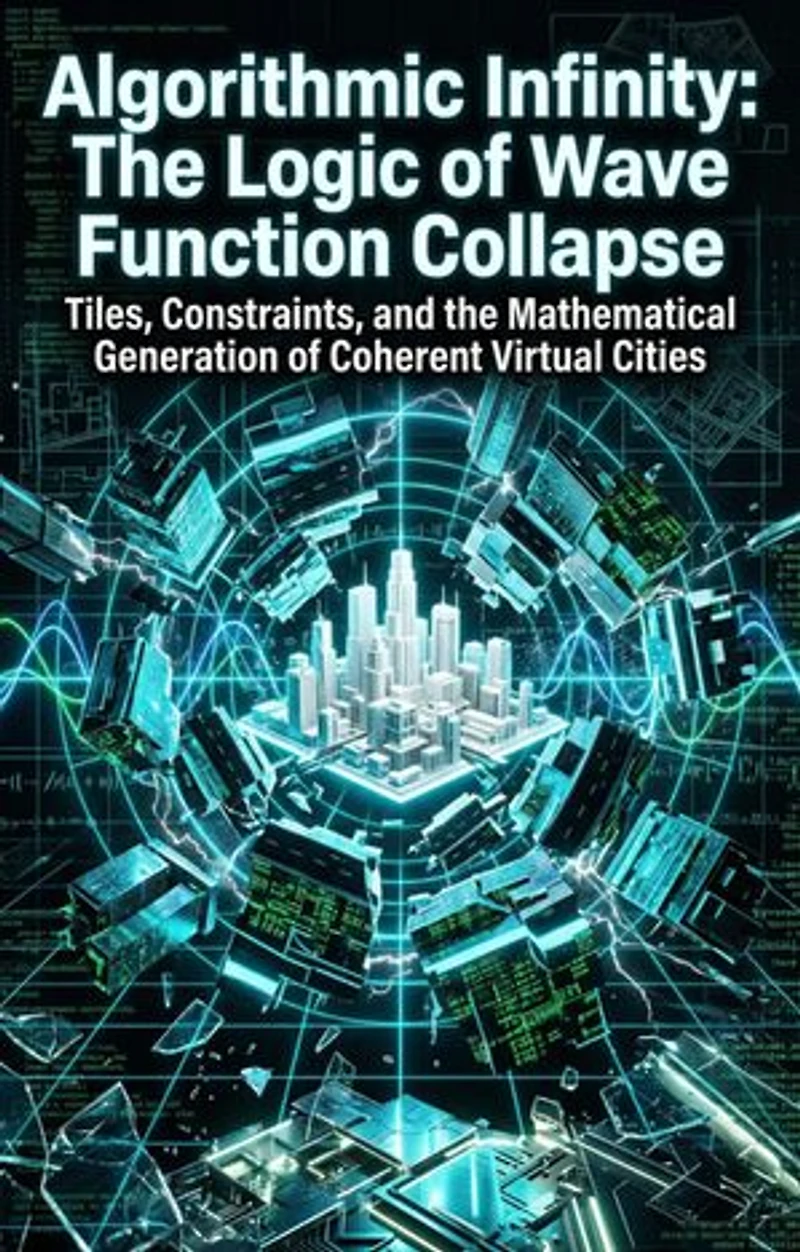
Algorithmic Infinity: The Logic of Wave Function Collapse: Tiles, Constraints, and the Mathematical Generation of Coherent Virtual Cities
Current price: $7.99

Algorithmic Infinity: The Logic of Wave Function Collapse: Tiles, Constraints, and the Mathematical Generation of Coherent Virtual Cities
Current price: $7.99
Loading Inventory...
Size: Kobo eBook
*Product information may vary - to confirm product availability, pricing, shipping and return information please contact Indigo
When video games generate random, infinite worlds, they run the risk of creating nonsensical chaos—doors leading into solid walls, or roads ending in the sky. To build procedurally generated environments that follow strict architectural logic, programmers borrow a concept directly from quantum mechanics: the Wave Function Collapse algorithm. This textbook dissects the brilliant mathematics of procedural architecture. The algorithm starts with a grid where every space exists in a "superposition" of all possible tiles (road, building, grass). The moment one tile is defined, the algorithm calculates the constraints, instantly "collapsing" the probabilities of the adjacent tiles to ensure that only logical connections are drawn, cascading perfectly across the entire map. We explore how indie developers and massive studios utilize this constraint-solving math to instantly build sprawling, unrepeating, and structurally flawless digital cities without relying on manual level designers. Master the geometry of infinite creation. Learn how software engineers use quantum logic to force digital chaos into perfect, structured reality.
When video games generate random, infinite worlds, they run the risk of creating nonsensical chaos—doors leading into solid walls, or roads ending in the sky. To build procedurally generated environments that follow strict architectural logic, programmers borrow a concept directly from quantum mechanics: the Wave Function Collapse algorithm. This textbook dissects the brilliant mathematics of procedural architecture. The algorithm starts with a grid where every space exists in a "superposition" of all possible tiles (road, building, grass). The moment one tile is defined, the algorithm calculates the constraints, instantly "collapsing" the probabilities of the adjacent tiles to ensure that only logical connections are drawn, cascading perfectly across the entire map. We explore how indie developers and massive studios utilize this constraint-solving math to instantly build sprawling, unrepeating, and structurally flawless digital cities without relying on manual level designers. Master the geometry of infinite creation. Learn how software engineers use quantum logic to force digital chaos into perfect, structured reality.
You May Also Like

















More About Indigo at Erin Mills Town Centre
The largest book retailer in Canada also offers toys, music, home décor, gifts and lifestyle products. What's Inside...Books, Magazines, CD’s and DVD’s, Toys and Gifts, Home Accents, Electronics, Baby’s and Children’s Section, Bath and Body, Kitchen and Bedroom, Stationary Located outside in the exterior plaza.
5015 Glen Erin Dr, Mississauga, ON L5M 0R7, Canada
Find Indigo at Erin Mills Town Centre in Mississauga ON
Visit Indigo at Erin Mills Town Centre in Mississauga ON