

GIVE THE PERFECT GIFT
Erin Mills Town Centre Gift Cards are the perfect choice for your gift giving needs.Purchase gift cards at kiosks near the food court or centre court, at Guest Services, or click below to purchase online.PURCHASE HEREHome
Altruism in Private Law: Liability for Nonfeasance and Negotiorum Gestio
Indigo
Loading Inventory...
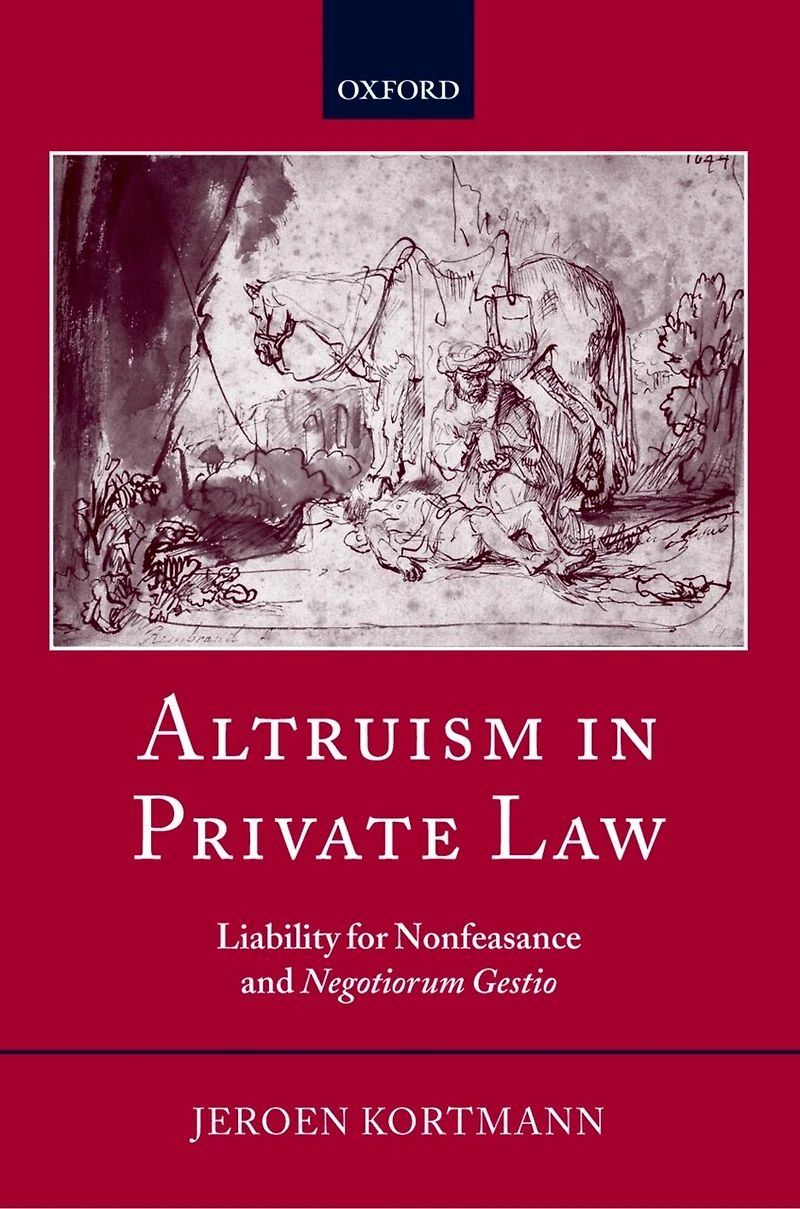
Altruism in Private Law: Liability for Nonfeasance and Negotiorum Gestio
Current price: $223.21

Altruism in Private Law: Liability for Nonfeasance and Negotiorum Gestio
Current price: $223.21
Loading Inventory...
Size: Hardcover
*Product information may vary - to confirm product availability, pricing, shipping and return information please contact Indigo
This book examines two problems in Private law which are posed by the ''good Samaritan'': First, do we have a legal duty to give aid to our fellow human beings? In particular: can we be held liable for damages if we fail to do so? Second, if we do come to the rescue, as the good Samaritan did,
will we have any claim for the expenses that we incurred, or perhaps even for a reward? Kortmann examines and compares the varied responses of the Roman, French, German, and English legal systems to these problems, providing the first comprehensive treatment of English law in relation to ''liability
for nonfeasance'' (or ''liability for omissions'') and ''negotiorum gestio'' (or ''the doctrine of necessity'').
In Part I, Kortmann examines English law which draws a distinction between action and inaction, or ''feasance'' and ''nonfeasance''. In general, one is not held liable for failing to act. He explores the theoretical justifications for drawing this distinction and reveals through a short comparative
survey the fundamentally different approaches taken in France and Germany, concluding that the English rule of no liability for nonfeasance requires a reconsideration.
In Part II the English approach to the problem of reimbursement or reward is examined, detailing its profound differences from the Continental European approach. In principle, English law does not grant the necessitous intervener a claim against the beneficiary of his intervention. Kortamnn examines
the theoretical justifications for assuming this position and again concludes that the law deserves reconsideration.
Finally, Kortmann concludes by demonstrating close interconnections between the two, traditionally independent issues. He argues that the law ought not to introduce a general duty to intervene without at the same time granting the intervener a claim, at the very least for reimbursement of expenses
and compensation of any loss suffered in the course of the intervention.
This book examines two problems in Private law which are posed by the ''good Samaritan'': First, do we have a legal duty to give aid to our fellow human beings? In particular: can we be held liable for damages if we fail to do so? Second, if we do come to the rescue, as the good Samaritan did,
will we have any claim for the expenses that we incurred, or perhaps even for a reward? Kortmann examines and compares the varied responses of the Roman, French, German, and English legal systems to these problems, providing the first comprehensive treatment of English law in relation to ''liability
for nonfeasance'' (or ''liability for omissions'') and ''negotiorum gestio'' (or ''the doctrine of necessity'').
In Part I, Kortmann examines English law which draws a distinction between action and inaction, or ''feasance'' and ''nonfeasance''. In general, one is not held liable for failing to act. He explores the theoretical justifications for drawing this distinction and reveals through a short comparative
survey the fundamentally different approaches taken in France and Germany, concluding that the English rule of no liability for nonfeasance requires a reconsideration.
In Part II the English approach to the problem of reimbursement or reward is examined, detailing its profound differences from the Continental European approach. In principle, English law does not grant the necessitous intervener a claim against the beneficiary of his intervention. Kortamnn examines
the theoretical justifications for assuming this position and again concludes that the law deserves reconsideration.
Finally, Kortmann concludes by demonstrating close interconnections between the two, traditionally independent issues. He argues that the law ought not to introduce a general duty to intervene without at the same time granting the intervener a claim, at the very least for reimbursement of expenses
and compensation of any loss suffered in the course of the intervention.
You May Also Like













More About Indigo at Erin Mills Town Centre
The largest book retailer in Canada also offers toys, music, home décor, gifts and lifestyle products. What's Inside...Books, Magazines, CD’s and DVD’s, Toys and Gifts, Home Accents, Electronics, Baby’s and Children’s Section, Bath and Body, Kitchen and Bedroom, Stationary Located outside in the exterior plaza.
5015 Glen Erin Dr, Mississauga, ON L5M 0R7, Canada
Find Indigo at Erin Mills Town Centre in Mississauga ON
Visit Indigo at Erin Mills Town Centre in Mississauga ON