

GIVE THE PERFECT GIFT
Erin Mills Town Centre Gift Cards are the perfect choice for your gift giving needs.Purchase gift cards at kiosks near the food court or centre court, at Guest Services, or click below to purchase online.PURCHASE HEREHome
American Collegiate Populations: A Test of the Traditional View
Indigo
Loading Inventory...
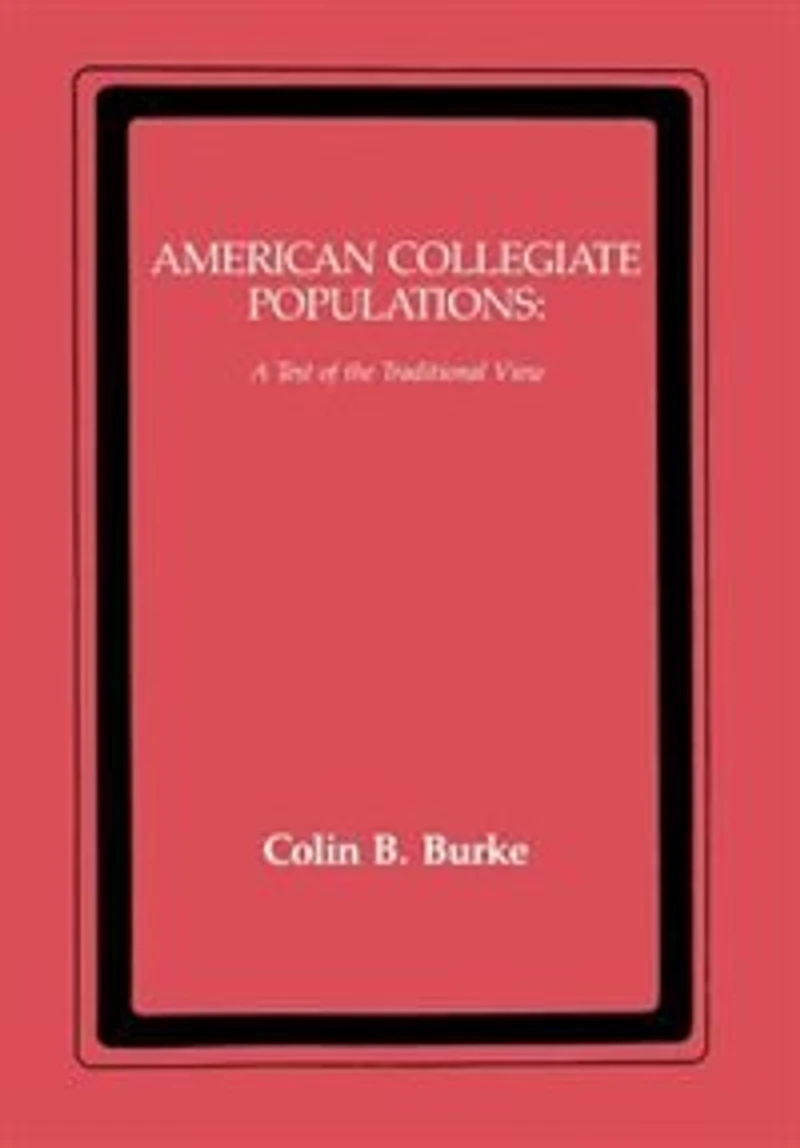
American Collegiate Populations: A Test of the Traditional View
Current price: $137.53

American Collegiate Populations: A Test of the Traditional View
Current price: $137.53
Loading Inventory...
Size: Hardcover
*Product information may vary - to confirm product availability, pricing, shipping and return information please contact Indigo
American Collegiate Populations is an exhaustive and definitive study of the membership of American colleges and universities in the nineteenth century. Colin B. Burke explores the questions of who went, who stayed and where they came from, presenting as answers to these questions a mass of new data put together in an original and interpretive manner. The author offers a devastating critique of the two reference works which until now have commanded scholars'' attention. Burke examines Bailey Burritt''s Professional Distribution of College and University Undergraduates (1912) noting that Burritt''s categories oversimplify the data of the 37 institutions he studies. Donald G. Tewksbury''s American Colleges and Universities Before the Civil War (1932), the author explains, presents a skewed interpretation of collegiate decline in the antebellum period. Using a far larger data base and capitalizing on the advances in quantitative history made in the last decade, Burke adopts appropriate analytic categories for college students and their subsequent careers. Amierican Collegiate Populations thus becomes the referent work to replace Burritt and Tewksbury and will likely have an equal longevity in print. American Collegiate Populations systematically compares denominational colleges, colleges by region, and student groups from a host of angles - age entering college, geographical origins, parental occupations. subsequent careers, and professional choices. Burke shows the reach of American colleges back into the socio-economic fabric of the culture. a reach that carries implications for many subjects - religious, economic, social, and intellectual - beyond the mere subject of college alone. Few works force the re-thinking of a whole field of historical inquiry - particularly one that has important bearings on current policy - as Burke''s study does. The findings and implications presented in American Collegiate Populations will profoundly affect the scholarly community for decades to come.
American Collegiate Populations is an exhaustive and definitive study of the membership of American colleges and universities in the nineteenth century. Colin B. Burke explores the questions of who went, who stayed and where they came from, presenting as answers to these questions a mass of new data put together in an original and interpretive manner. The author offers a devastating critique of the two reference works which until now have commanded scholars'' attention. Burke examines Bailey Burritt''s Professional Distribution of College and University Undergraduates (1912) noting that Burritt''s categories oversimplify the data of the 37 institutions he studies. Donald G. Tewksbury''s American Colleges and Universities Before the Civil War (1932), the author explains, presents a skewed interpretation of collegiate decline in the antebellum period. Using a far larger data base and capitalizing on the advances in quantitative history made in the last decade, Burke adopts appropriate analytic categories for college students and their subsequent careers. Amierican Collegiate Populations thus becomes the referent work to replace Burritt and Tewksbury and will likely have an equal longevity in print. American Collegiate Populations systematically compares denominational colleges, colleges by region, and student groups from a host of angles - age entering college, geographical origins, parental occupations. subsequent careers, and professional choices. Burke shows the reach of American colleges back into the socio-economic fabric of the culture. a reach that carries implications for many subjects - religious, economic, social, and intellectual - beyond the mere subject of college alone. Few works force the re-thinking of a whole field of historical inquiry - particularly one that has important bearings on current policy - as Burke''s study does. The findings and implications presented in American Collegiate Populations will profoundly affect the scholarly community for decades to come.
You May Also Like







More About Indigo at Erin Mills Town Centre
The largest book retailer in Canada also offers toys, music, home décor, gifts and lifestyle products. What's Inside...Books, Magazines, CD’s and DVD’s, Toys and Gifts, Home Accents, Electronics, Baby’s and Children’s Section, Bath and Body, Kitchen and Bedroom, Stationary Located outside in the exterior plaza.
5015 Glen Erin Dr, Mississauga, ON L5M 0R7, Canada
Find Indigo at Erin Mills Town Centre in Mississauga ON
Visit Indigo at Erin Mills Town Centre in Mississauga ON