

GIVE THE PERFECT GIFT
Erin Mills Town Centre Gift Cards are the perfect choice for your gift giving needs.Purchase gift cards at kiosks near the food court or centre court, at Guest Services, or click below to purchase online.PURCHASE HEREHome
An Economic Theory of Gender and Population Change: Integrating Neoclassical New Growth
Indigo
Loading Inventory...
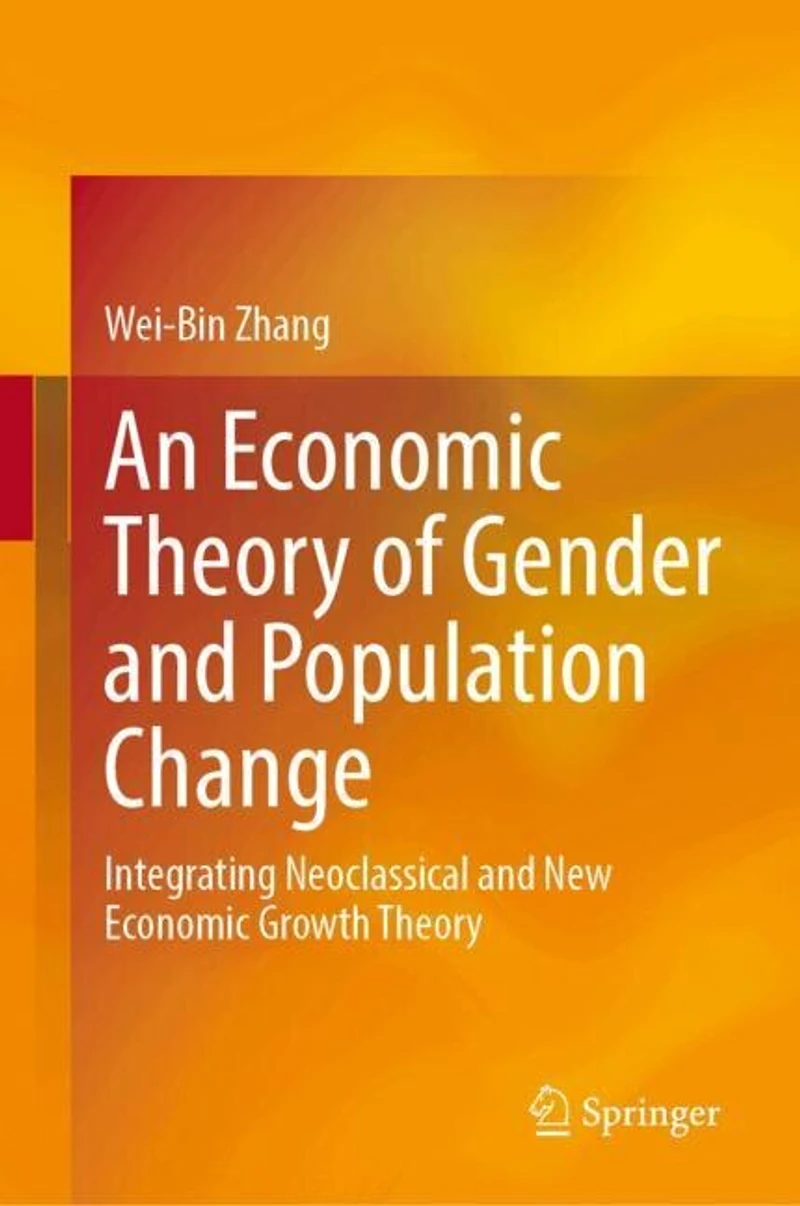
An Economic Theory of Gender and Population Change: Integrating Neoclassical New Growth
Current price: $204.50

An Economic Theory of Gender and Population Change: Integrating Neoclassical New Growth
Current price: $204.50
Loading Inventory...
Size: Hardcover
*Product information may vary - to confirm product availability, pricing, shipping and return information please contact Indigo
This book proposes an economic theory of gender and population change by integrating neoclassical and new economic theories. Modern economies are characterized by complicated dynamic interdependence between many variables such as population growth, human capital accumulation, wealth accumulation, gender division of labor, children caring, environmental changes, various types of conflicts, wars, and so on. However modern dynamic economic theories deal with simplified interdependence between a few variables. Any genuine modeling of economic dynamics result in high-dimensional nonlinear dynamics. Nevertheless, it is only in recent years that it is possible to examine the behavior of highly dimensional dynamics. This partly explains why economic theory has been dominated by modeling dynamic economic systems with a few variables with linear (linearized) relations. Since Malthus published his An Essay on the Principle of Population in 1798, economists have made great efforts to reveal the dynamic complexity of population change. Modern economies have experienced unprecedented population dynamics. No one in human history could even have rationally predicted the natural declination of the national population in modern times. These failures in predicting family structural changes and life expectancy lead to many socioeconomic problems, such as health costs in association with aging and pension systems, that many societies fail to be prepared for. This book contributes to the literature on macroeconomics based on microeconomics, neoclassical growth theory, new growth theory, and family economics by integrating some important ideas in neoclassical growth theory and family economics. This book extensively applies the ideas in the literature to deal with the complexity of population change.
This book proposes an economic theory of gender and population change by integrating neoclassical and new economic theories. Modern economies are characterized by complicated dynamic interdependence between many variables such as population growth, human capital accumulation, wealth accumulation, gender division of labor, children caring, environmental changes, various types of conflicts, wars, and so on. However modern dynamic economic theories deal with simplified interdependence between a few variables. Any genuine modeling of economic dynamics result in high-dimensional nonlinear dynamics. Nevertheless, it is only in recent years that it is possible to examine the behavior of highly dimensional dynamics. This partly explains why economic theory has been dominated by modeling dynamic economic systems with a few variables with linear (linearized) relations. Since Malthus published his An Essay on the Principle of Population in 1798, economists have made great efforts to reveal the dynamic complexity of population change. Modern economies have experienced unprecedented population dynamics. No one in human history could even have rationally predicted the natural declination of the national population in modern times. These failures in predicting family structural changes and life expectancy lead to many socioeconomic problems, such as health costs in association with aging and pension systems, that many societies fail to be prepared for. This book contributes to the literature on macroeconomics based on microeconomics, neoclassical growth theory, new growth theory, and family economics by integrating some important ideas in neoclassical growth theory and family economics. This book extensively applies the ideas in the literature to deal with the complexity of population change.
You May Also Like









More About Indigo at Erin Mills Town Centre
The largest book retailer in Canada also offers toys, music, home décor, gifts and lifestyle products. What's Inside...Books, Magazines, CD’s and DVD’s, Toys and Gifts, Home Accents, Electronics, Baby’s and Children’s Section, Bath and Body, Kitchen and Bedroom, Stationary Located outside in the exterior plaza.
5015 Glen Erin Dr, Mississauga, ON L5M 0R7, Canada
Find Indigo at Erin Mills Town Centre in Mississauga ON
Visit Indigo at Erin Mills Town Centre in Mississauga ON