

GIVE THE PERFECT GIFT
Erin Mills Town Centre Gift Cards are the perfect choice for your gift giving needs.Purchase gift cards at kiosks near the food court or centre court, at Guest Services, or click below to purchase online.PURCHASE HEREHome
An Empire of Magnetism: Global Science and the British Magnetic Enterprise in the Age of Imperialism
Indigo
Loading Inventory...
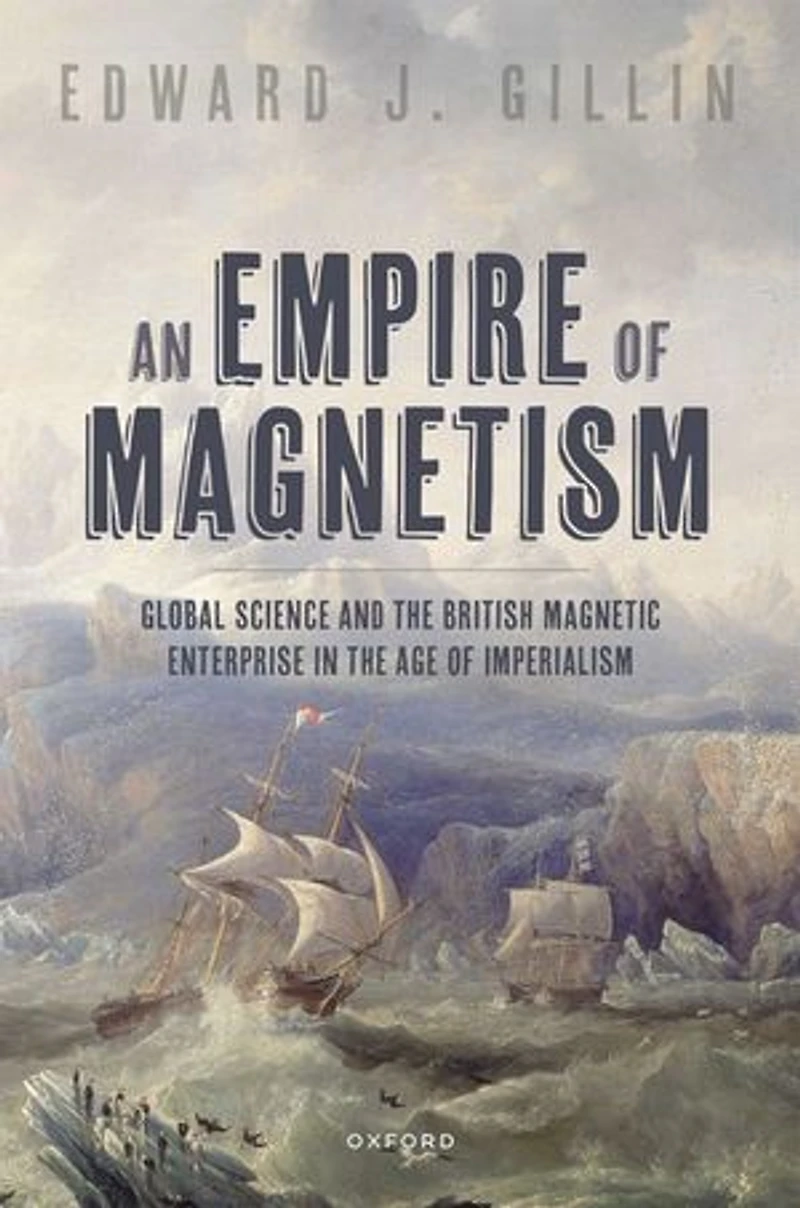
An Empire of Magnetism: Global Science and the British Magnetic Enterprise in the Age of Imperialism
Current price: $92.29
Original price: $115.30

An Empire of Magnetism: Global Science and the British Magnetic Enterprise in the Age of Imperialism
Current price: $92.29
Original price: $115.30
Loading Inventory...
Size: Kobo eBook
*Product information may vary - to confirm product availability, pricing, shipping and return information please contact Indigo
During the 1840s and 1850s, the British government financed a world-wide investigation into how the Earth's magnetic phenomena operated, consisting of a network of naval expeditions and colonial observatories. Questions surrounding terrestrial magnetism were not just philosophical, but engendered urgent concerns over accurate navigation, on which Britain's commercial and colonial power relied. The British Magnetic Survey was celebrated at the time as the most extensive state-orchestrated scientific enterprise ever conducted. Yet although it was a fundamentally global endeavour, both in terms of its scale and its impact, the experimental instruments and techniques required were to be found amid Britain's booming local industry, where the harnessing of coal and iron, and use of steam power, shaped a scientific culture prominently concerned with the relationship between heat, pressure, and motion. In particular, it was philosophical apparatus fashioned within the mines of Cornwall that the government was able to conscript within this world-wide magnetic investigation. These locally produced experimental techniques and technologies proved capable of transformation into a system for obtaining magnetic measurements from over great expanses of time and space. As An Empire of Magnetism demonstrates, this not only sustained an immense world-wide scientific investigation, but became inseparable from the proliferation of empire, sustaining colonial expansion and unprecedented multi-cultural exchanges as British naval crews and natural philosophers surveyed previously unknown regions in the search for magnetic data. In so doing, Edward Gillin argues that the British Magnetic Survey had broader implications over the formation of the 'modern state', the expansion of nineteenth-century empire, and the development of global science.
During the 1840s and 1850s, the British government financed a world-wide investigation into how the Earth's magnetic phenomena operated, consisting of a network of naval expeditions and colonial observatories. Questions surrounding terrestrial magnetism were not just philosophical, but engendered urgent concerns over accurate navigation, on which Britain's commercial and colonial power relied. The British Magnetic Survey was celebrated at the time as the most extensive state-orchestrated scientific enterprise ever conducted. Yet although it was a fundamentally global endeavour, both in terms of its scale and its impact, the experimental instruments and techniques required were to be found amid Britain's booming local industry, where the harnessing of coal and iron, and use of steam power, shaped a scientific culture prominently concerned with the relationship between heat, pressure, and motion. In particular, it was philosophical apparatus fashioned within the mines of Cornwall that the government was able to conscript within this world-wide magnetic investigation. These locally produced experimental techniques and technologies proved capable of transformation into a system for obtaining magnetic measurements from over great expanses of time and space. As An Empire of Magnetism demonstrates, this not only sustained an immense world-wide scientific investigation, but became inseparable from the proliferation of empire, sustaining colonial expansion and unprecedented multi-cultural exchanges as British naval crews and natural philosophers surveyed previously unknown regions in the search for magnetic data. In so doing, Edward Gillin argues that the British Magnetic Survey had broader implications over the formation of the 'modern state', the expansion of nineteenth-century empire, and the development of global science.
You May Also Like








More About Indigo at Erin Mills Town Centre
The largest book retailer in Canada also offers toys, music, home décor, gifts and lifestyle products. What's Inside...Books, Magazines, CD’s and DVD’s, Toys and Gifts, Home Accents, Electronics, Baby’s and Children’s Section, Bath and Body, Kitchen and Bedroom, Stationary Located outside in the exterior plaza.
5015 Glen Erin Dr, Mississauga, ON L5M 0R7, Canada
Find Indigo at Erin Mills Town Centre in Mississauga ON
Visit Indigo at Erin Mills Town Centre in Mississauga ON