

GIVE THE PERFECT GIFT
Erin Mills Town Centre Gift Cards are the perfect choice for your gift giving needs.Purchase gift cards at kiosks near the food court or centre court, at Guest Services, or click below to purchase online.PURCHASE HEREHome
An Essay on Man: Moral Essays and Satires
Indigo
Loading Inventory...
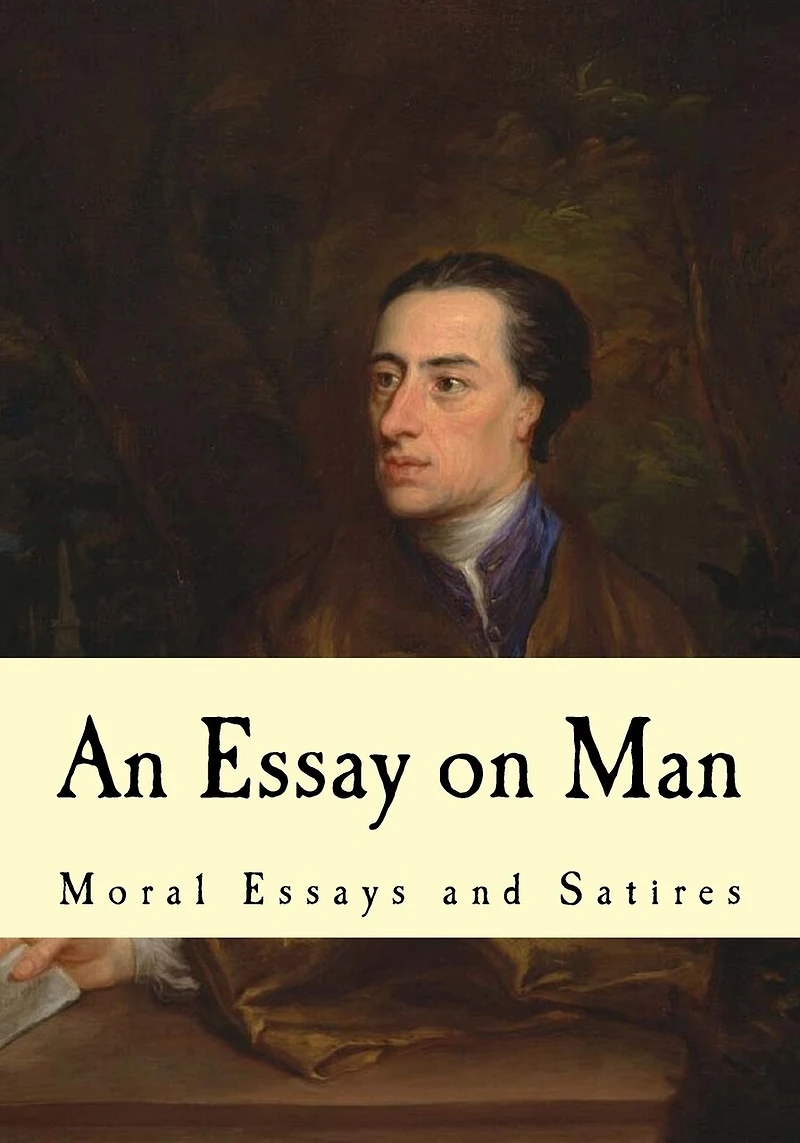
An Essay on Man: Moral Essays and Satires
Current price: $15.95

An Essay on Man: Moral Essays and Satires
Current price: $15.95
Loading Inventory...
Size: Paperback
*Product information may vary - to confirm product availability, pricing, shipping and return information please contact Indigo
An Essay on Man - Moral Essays and Satires by Alexander Pope - An Essay on Man is a poem published by Alexander Pope in 1733-1734. It is an effort to rationalize or rather "vindicate the ways of God to man" (l.16), a variation of John Milton's claim in the opening lines of Paradise Lost, that he will "justify the ways of God to men" (1.26). It is concerned with the natural order God has decreed for man. Because man cannot know God's purposes, he cannot complain about his position in the Great Chain of Being (ll.33-34) and must accept that "Whatever IS, is RIGHT" (l.292), a theme that was satirized by Voltaire in Candide (1759). More than any other work, it popularized optimistic philosophy throughout England and the rest of Europe. Pope's Essay on Man and Moral Epistles were designed to be the parts of a system of ethics which he wanted to express in poetry. Moral Epistles has been known under various other names including Ethic Epistles and Moral Essays. On its publication, An Essay on Man received great admiration throughout Europe. Voltaire called it "the most beautiful, the most useful, the most sublime didactic poem ever written in any language." In 1756 Rousseau wrote to Voltaire admiring the poem and saying that it "softens my ills and brings me patience." Kant was fond of the poem and would recite long passages from it to his students.
An Essay on Man - Moral Essays and Satires by Alexander Pope - An Essay on Man is a poem published by Alexander Pope in 1733-1734. It is an effort to rationalize or rather "vindicate the ways of God to man" (l.16), a variation of John Milton's claim in the opening lines of Paradise Lost, that he will "justify the ways of God to men" (1.26). It is concerned with the natural order God has decreed for man. Because man cannot know God's purposes, he cannot complain about his position in the Great Chain of Being (ll.33-34) and must accept that "Whatever IS, is RIGHT" (l.292), a theme that was satirized by Voltaire in Candide (1759). More than any other work, it popularized optimistic philosophy throughout England and the rest of Europe. Pope's Essay on Man and Moral Epistles were designed to be the parts of a system of ethics which he wanted to express in poetry. Moral Epistles has been known under various other names including Ethic Epistles and Moral Essays. On its publication, An Essay on Man received great admiration throughout Europe. Voltaire called it "the most beautiful, the most useful, the most sublime didactic poem ever written in any language." In 1756 Rousseau wrote to Voltaire admiring the poem and saying that it "softens my ills and brings me patience." Kant was fond of the poem and would recite long passages from it to his students.
You May Also Like
![A Philosophical, Historical, and Moral Essay On Old Maids, by a Friend to the Sisterhood [W. Hayley]. - Primary Source Edition](https://cdn.mall.adeptmind.ai/https%253A%252F%252Fcdn.shopify.com%252Fs%252Ffiles%252F1%252F0655%252F8980%252F5233%252Ffiles%252F1_9f3614d6-f86b-4ac0-b4bf-7ed91721deb8.jpg_medium.webp)
![A General Volume Of Epitaphs, Original And Selected, And An Historical And Moral Essay On The Subject, By A Clergyman [b. Richings]](https://cdn.mall.adeptmind.ai/https%253A%252F%252Fcdn.shopify.com%252Fs%252Ffiles%252F1%252F0655%252F8980%252F5233%252Ffiles%252F1_2229e925-ef75-46ff-bc71-82e31f02b8de.jpg_medium.webp)







More About Indigo at Erin Mills Town Centre
The largest book retailer in Canada also offers toys, music, home décor, gifts and lifestyle products. What's Inside...Books, Magazines, CD’s and DVD’s, Toys and Gifts, Home Accents, Electronics, Baby’s and Children’s Section, Bath and Body, Kitchen and Bedroom, Stationary Located outside in the exterior plaza.
5015 Glen Erin Dr, Mississauga, ON L5M 0R7, Canada
Find Indigo at Erin Mills Town Centre in Mississauga ON
Visit Indigo at Erin Mills Town Centre in Mississauga ON