

GIVE THE PERFECT GIFT
Erin Mills Town Centre Gift Cards are the perfect choice for your gift giving needs.Purchase gift cards at kiosks near the food court or centre court, at Guest Services, or click below to purchase online.PURCHASE HEREHome
Anatomy and Injuries of the Foot Ankle
Indigo
Loading Inventory...
Anatomy and Injuries of the Foot Ankle
Current price: $32.50

Anatomy and Injuries of the Foot Ankle
Current price: $32.50
Loading Inventory...
Size: Hardcover (2004 A)
*Product information may vary - to confirm product availability, pricing, shipping and return information please contact Indigo
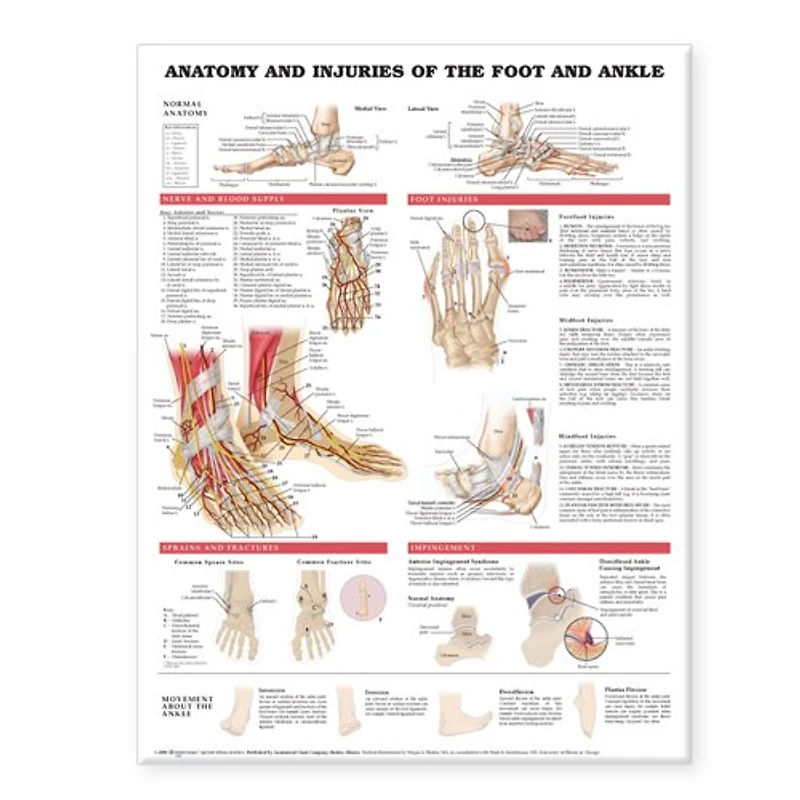
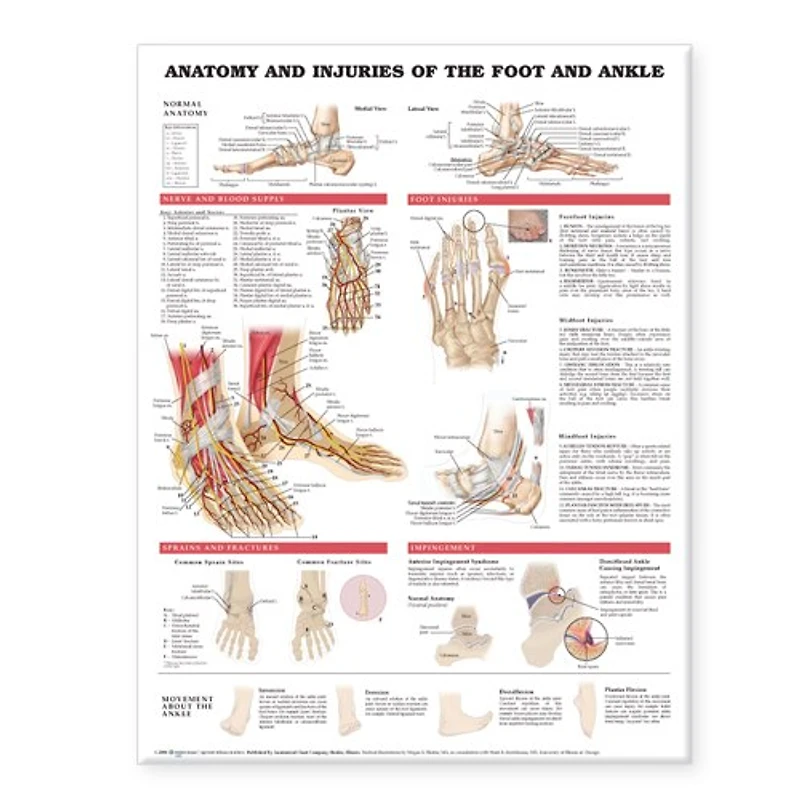
This chart shows medial and lateral views of the bones and ligaments of the foot and ankle, and illustrates nerve and blood supply to this region, including plantar view of arteries and nerves. It also shows common fractures and sprains and anterior impingement syndrome. Anatomy and Injuries of the Foot and Ankle describes and shows locations of forefoot, midfoot, and hindfoot injuries such as bunions, Morton's neuroma, bunionette (Tailor's bunion), hammertoe, Jones' fracture, Chopart avulsion fracture, Lisfranc dislocation, metatarsal stress fracture, Achilles' tendon rupture, tarsal tunnel syndrome (which is becoming more common among snowboarders), calcaneal fracture and plantar fasciitis with hell spurs. The chart also visually and textually describes movement about the ankle: inversion, eversion, dorsiflexion, and plantar flexion.
This chart shows medial and lateral views of the bones and ligaments of the foot and ankle, and illustrates nerve and blood supply to this region, including plantar view of arteries and nerves. It also shows common fractures and sprains and anterior impingement syndrome. Anatomy and Injuries of the Foot and Ankle describes and shows locations of forefoot, midfoot, and hindfoot injuries such as bunions, Morton's neuroma, bunionette (Tailor's bunion), hammertoe, Jones' fracture, Chopart avulsion fracture, Lisfranc dislocation, metatarsal stress fracture, Achilles' tendon rupture, tarsal tunnel syndrome (which is becoming more common among snowboarders), calcaneal fracture and plantar fasciitis with hell spurs. The chart also visually and textually describes movement about the ankle: inversion, eversion, dorsiflexion, and plantar flexion.
You May Also Like














More About Indigo at Erin Mills Town Centre
The largest book retailer in Canada also offers toys, music, home décor, gifts and lifestyle products. What's Inside...Books, Magazines, CD’s and DVD’s, Toys and Gifts, Home Accents, Electronics, Baby’s and Children’s Section, Bath and Body, Kitchen and Bedroom, Stationary Located outside in the exterior plaza.
5015 Glen Erin Dr, Mississauga, ON L5M 0R7, Canada
Find Indigo at Erin Mills Town Centre in Mississauga ON
Visit Indigo at Erin Mills Town Centre in Mississauga ON